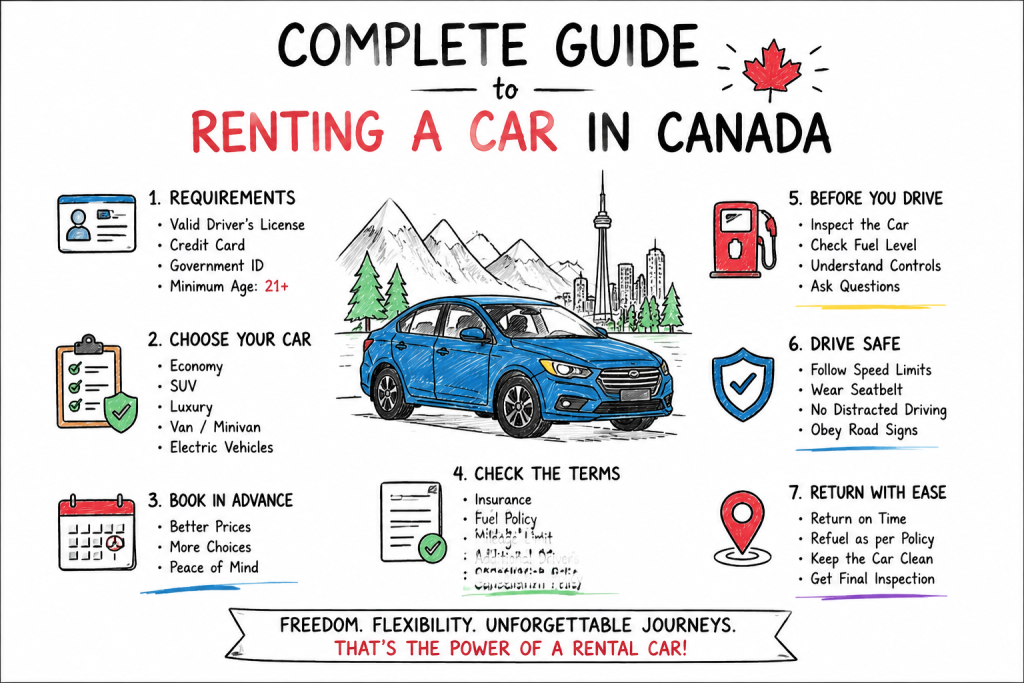
Canada is one of the world’s most beautiful travel destinations, known for its breathtaking mountains, scenic highways, vibrant cities, national parks, and charming small towns. Whether you are visiting for a vacation, studying abroad, relocating temporarily, or traveling for business, having access to a vehicle can make your journey much more comfortable and flexible.
While public transportation is available in major cities, many travelers quickly discover that renting a car in Canada provides freedom, convenience, and access to destinations that buses and trains may not reach easily.
This complete guide explains everything you need to know about renting a car in Canada, including eligibility requirements, rental costs, insurance options, safety tips, vehicle types, and how MotoShare Canada can help you find the right vehicle for your needs.
Why Renting a Car in Canada Is a Smart Choice
Canada is the second-largest country in the world by land area. Distances between cities and attractions can be significant, making personal transportation extremely valuable.
Some advantages of renting a car include:
- Travel at your own pace
- Access remote attractions and national parks
- Save time compared to public transportation
- Convenient for family trips
- Ideal for business travelers
- Better luggage flexibility
- Cost-effective for group travel
For example, travelers exploring destinations such as Banff, Jasper, Niagara Falls, Whistler, Prince Edward Island, and the Cabot Trail often find that a rental car offers the most practical transportation solution.
Who Should Rent a Car in Canada?
Car rentals are suitable for many different types of travelers.
Tourists
Visitors can explore multiple destinations without depending on fixed transportation schedules.
International Students
Students can rent vehicles for weekend trips, moving accommodations, shopping, or visiting nearby attractions.
Working Professionals
Business travelers often benefit from flexible transportation between meetings, hotels, and airports.
Families
Families with children usually find rental cars more convenient than public transportation.
Backpackers
Backpackers exploring multiple provinces can enjoy greater flexibility and comfort.
Daily Commuters
Temporary residents and newcomers may use rental vehicles before purchasing their own car.
Benefits of Renting a Car for First-Time Travelers
First-time visitors to Canada often experience several advantages from renting a vehicle.
Greater Freedom
You decide your schedule without depending on public transportation timetables.
Access to Scenic Routes
Canada is famous for road trips such as:
- Icefields Parkway
- Sea-to-Sky Highway
- Cabot Trail
- Trans-Canada Highway
- Viking Trail
Better Comfort
Travel comfortably with luggage, shopping bags, sports equipment, or camping gear.
Time Savings
Avoid waiting for buses, trains, or ride-sharing services.
Enhanced Travel Experience
Many of Canada’s best attractions are best experienced through self-drive exploration.
Types of Cars You Can Rent in Canada
Different travelers have different transportation needs. Understanding vehicle categories helps you choose the right option.
Economy Cars
Best for:
- Solo travelers
- Students
- Budget-conscious visitors
Benefits:
- Lower rental costs
- Excellent fuel efficiency
- Easy city parking
Compact Cars
Best for:
- Couples
- Small families
Benefits:
- Affordable
- Comfortable for city and highway driving
Sedans
Best for:
- Business travelers
- Long-distance trips
Benefits:
- Smooth ride quality
- Spacious interiors
SUVs
Best for:
- Families
- Winter travel
- Outdoor adventures
Benefits:
- More luggage space
- Better road visibility
- Suitable for snow conditions
Luxury Vehicles
Best for:
- Executive travel
- Special occasions
Benefits:
- Premium comfort
- Advanced technology features
Pickup Trucks
Best for:
- Outdoor activities
- Moving furniture
- Construction-related needs
Benefits:
- High cargo capacity
- Rugged performance
Electric Vehicles
Best for:
- Eco-conscious travelers
Benefits:
- Lower operating costs
- Reduced environmental impact
How to Choose the Right Rental Car
Choosing the right vehicle depends on several factors.
Consider Your Group Size
- Solo traveler: Economy car
- Couple: Compact car
- Family: SUV or minivan
- Group trip: Larger SUV
Evaluate Your Destination
City travel:
- Compact cars
- Sedans
Mountain or winter travel:
- AWD SUVs
Think About Luggage
Ensure sufficient cargo space for all travelers.
Consider Fuel Costs
Smaller vehicles generally consume less fuel.
Review Weather Conditions
Winter driving may require SUVs equipped with winter tires.
Documents Usually Needed to Rent a Car in Canada
Rental requirements vary slightly between providers but generally include the following.
Valid Driver’s License
A valid driver’s license is mandatory.
Visitors may use:
- Canadian driver’s license
- U.S. driver’s license
- International driver’s license
- Foreign license with English translation
International Driving Permit
Some rental companies recommend or require an International Driving Permit for visitors whose licenses are not in English or French.
Passport or Government Identification
Identity verification is commonly required.
Credit Card
Many rental providers require a credit card for security deposits.
Security Deposit Requirements
Most companies place a temporary hold on your credit card during the rental period.
Deposit amounts vary depending on:
- Vehicle category
- Rental duration
- Insurance selection
Things to Check Before Renting a Car
Careful inspection can help prevent misunderstandings later.
Vehicle Condition
Inspect for:
- Scratches
- Dents
- Tire condition
- Windshield damage
Take photos before departure.
Fuel Policy
Understand whether the vehicle must be returned:
- Full-to-full
- Prepaid fuel option
- Same fuel level
Insurance Coverage
Review:
- Collision coverage
- Liability protection
- Theft coverage
Mileage Limits
Some rentals offer unlimited mileage while others impose restrictions.
Winter Tire Availability
For winter travel, verify whether winter tires are included.
Rental Agreement Terms
Read all terms carefully before signing.
Pay attention to:
- Late return fees
- Additional driver charges
- Cross-border restrictions
- Cancellation policies
Safety Tips for Driving a Rental Car in Canada
Canada is generally a safe driving destination, but preparation is important.
Follow Traffic Rules
Always obey:
- Speed limits
- Traffic signs
- Parking regulations
Wear Seat Belts
Seat belt use is mandatory throughout Canada.
Avoid Distracted Driving
Avoid:
- Texting
- Handheld phone use
- Other distractions
Check Weather Conditions
Weather can change quickly.
Monitor:
- Snow forecasts
- Rain conditions
- Road advisories
Keep Emergency Contacts Handy
Save:
- Roadside assistance numbers
- Rental company support
- Local emergency services
Drive According to Conditions
Reduce speed during:
- Snowfall
- Ice
- Fog
- Heavy rain
Cost of Renting a Car in Canada
Rental prices vary depending on:
- Location
- Season
- Vehicle type
- Rental duration
Average daily rental rates:
| Vehicle Type | Average Daily Cost |
|---|---|
| Economy Car | CAD 40 – CAD 80 |
| Compact Car | CAD 50 – CAD 90 |
| Sedan | CAD 60 – CAD 120 |
| SUV | CAD 80 – CAD 180 |
| Luxury Vehicle | CAD 150 – CAD 400+ |
| Pickup Truck | CAD 90 – CAD 220 |
Additional costs may include:
- Insurance
- Fuel
- Additional driver fees
- GPS rental
- Child seats
- Taxes
Factors That Affect Rental Costs
Travel Season
Summer and holiday seasons often see higher rates.
Booking Time
Advance reservations typically provide better pricing.
Vehicle Category
Premium vehicles cost more than economy options.
Pickup Location
Airport rentals may have additional fees.
Rental Duration
Weekly rentals often offer lower daily rates.
Common Mistakes First-Time Renters Should Avoid
Booking at the Last Minute
This may limit vehicle availability and increase costs.
Ignoring Insurance Details
Always understand what is covered before driving.
Not Inspecting the Vehicle
Document existing damage before leaving.
Choosing the Wrong Vehicle
Select a vehicle appropriate for your group and travel plans.
Overlooking Fuel Policies
Returning the vehicle incorrectly fueled can result in extra charges.
Forgetting Winter Driving Needs
Winter tires are essential in many Canadian regions.
Rental Car vs Public Transport vs Taxi
The best transportation option depends on your travel style.
| Factor | Rental Car | Public Transport | Taxi/Rideshare |
| Cost for Long Trips | High Value | Moderate | Expensive |
| Convenience | Excellent | Moderate | Good |
| Flexibility | Excellent | Limited | Moderate |
| Comfort | High | Moderate | High |
| Access to Remote Areas | Excellent | Limited | Limited |
| Family Travel | Excellent | Moderate | Expensive |
| Road Trip Experience | Excellent | Poor | Poor |
| Luggage Capacity | Excellent | Limited | Moderate |
| Schedule Freedom | Excellent | Low | Moderate |
| Best Use Case | Exploring Canada | Urban commuting | Short city trips |
Why Self-Drive Rentals Are Growing in Canada
Self-drive rentals continue to gain popularity because they offer:
- Independence
- Better privacy
- Flexible travel planning
- Easy weekend road trips
- Affordable group transportation
More travelers now prefer booking vehicles online before arriving at their destination.
How MotoShare Canada Can Help Travelers
MotoShare Canada aims to make vehicle rentals simple, transparent, and accessible.
Easy Online Booking
Users can browse available vehicles and complete bookings online with minimal effort.
Wide Range of Vehicles
Choose from:
- Economy cars
- Sedans
- SUVs
- Luxury vehicles
- Electric vehicles
Transparent Pricing
Clear pricing helps customers understand costs before booking.
Verified Vehicle Owners
Vehicle verification helps create a more reliable rental experience.
Flexible Rental Options
Options may include:
- Daily rentals
- Weekly rentals
- Long-term rentals
Availability Across Canadian Cities
Travelers can find rental options in many major destinations across Canada.
Convenient Travel Planning
MotoShare Canada helps simplify transportation planning for tourists, students, professionals, and families.
Frequently Asked Questions
1. Can tourists rent a car in Canada?
Yes. Most tourists can rent a car using a valid driver’s license, passport, and payment card.
2. Is an International Driving Permit required?
Not always. However, it is recommended if your license is not issued in English or French.
3. What is the minimum age to rent a car in Canada?
Most rental companies require drivers to be at least 21 years old. Some premium vehicles require drivers to be 25 or older.
4. How much does renting a car cost in Canada?
Costs typically range from CAD 40 to CAD 180 per day depending on vehicle type and season.
5. Is insurance included in the rental price?
Basic coverage may be included, but additional protection options are often available.
6. Are winter tires provided?
Many providers offer winter tires during colder months, particularly in regions with snow.
7. Can I rent a car without a credit card?
Some providers may offer alternatives, but credit cards remain the most commonly accepted payment method.
8. What happens if the vehicle breaks down?
Most rental providers offer roadside assistance and support services.
9. Can I drive the rental car into another province?
In most cases, yes. However, verify any restrictions before booking.
10. Can I take a rental car into the United States?
Some rental companies permit cross-border travel while others have restrictions. Always confirm beforehand.
11. Is fuel included in the rental price?
Generally, fuel is not included. Vehicles are usually returned with the same fuel level provided at pickup.
12. Can I add another driver?
Yes. Additional drivers can often be added for an extra fee.
Conclusion
Renting a car in Canada is one of the best ways to explore the country’s stunning landscapes, vibrant cities, national parks, and scenic road trips. Whether you are a tourist discovering Canada for the first time, an international student exploring your new surroundings, a professional traveling for work, or a family planning a memorable vacation, a rental vehicle offers flexibility, convenience, and comfort that public transportation often cannot match. By understanding rental requirements, comparing vehicle options, reviewing insurance coverage, and planning ahead, you can enjoy a smooth and stress-free driving experience throughout Canada.