Introduction
Canada is a wonderful country to explore by road. It offers busy cities, scenic highways, peaceful lakes, and beautiful mountain views. Renting a car can make these places easier to visit.
Many travelers prefer rental cars because they offer freedom and comfort. You can choose your route, manage your time, and stop whenever needed.
However, renting a car requires careful planning. First-time travelers may not understand rental agreements, insurance rules, deposits, or driving requirements.
A small mistake can increase your travel expenses. It may also create problems during your trip.
Whether you are visiting Toronto, Vancouver, Montreal, Calgary, or Ottawa, preparation can make your journey smoother.
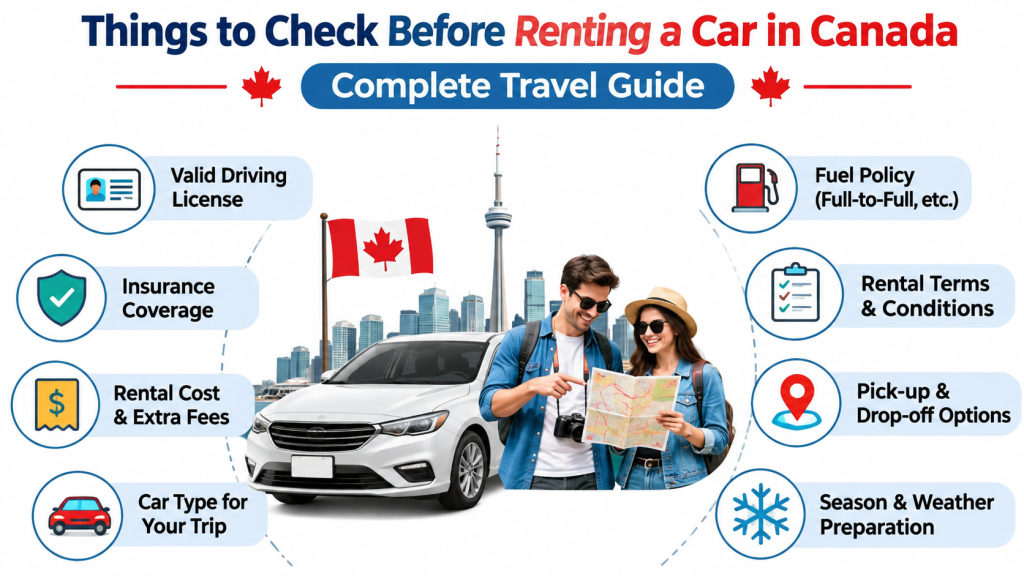
This guide explains the important things to check before renting a car in Canada. It covers rental costs, documents, insurance, vehicle condition, driving safety, and common mistakes.
Why Renting a Car in Canada Is a Smart Choice
Canada has many attractions spread across large distances. Public transport works well in several major cities. However, it may not reach every tourist destination.
A rental car gives you greater control over your travel plans.
Freedom to Explore Different Places
A rental car lets you travel at your own pace.
You can explore popular attractions without following bus or train schedules.
For example, travelers can drive from Toronto to Niagara Falls. They can also visit smaller towns along the route.
Comfortable Travel for Families
Families often carry luggage, shopping bags, and travel equipment.
A rental car provides personal space and convenient luggage storage.
It also helps families travel together without changing transport services.
Convenient for Long-Distance Travel
Canada offers many beautiful road trip routes.
Travelers can explore the mountains near Banff or the scenic roads around Vancouver.
A rental car can make these journeys more flexible.
Better Travel Planning
Rental cars allow you to create your own travel schedule.
You can start early, take breaks, and visit attractions based on your interests.
However, remember to include fuel, parking, insurance, and toll expenses in your budget.
Who Should Rent a Car in Canada?
Car rentals can benefit many types of travelers.
Your destination, budget, and travel needs will help determine whether renting makes sense.
First-Time Tourists
Tourists can explore attractions without depending on fixed transport schedules.
A rental car also makes it easier to visit places outside city centers.
International Travelers
International visitors may find rental cars useful for longer journeys.
However, they must understand Canadian driving rules and license requirements.
Students
Students may need temporary transportation for campus visits, internships, or weekend trips.
Short-term rentals can provide flexibility without long-term vehicle ownership.
Working Professionals
Business travelers often need reliable transportation between meetings.
A rental car can help them manage busy schedules.
Families and Groups
Families and groups can share one vehicle.
This may reduce transportation expenses compared with booking several separate rides.
Budget Travelers
Budget travelers can compare rental prices and share costs with companions.
However, renting is not always cheaper than public transportation.
Benefits of Renting a Car for First-Time Travelers
Renting a car can improve your travel experience when you choose the right vehicle.
Flexible Travel Schedule
You can decide when to start and finish your journey.
There is no need to follow fixed public transport schedules.
Easy Access to Tourist Attractions
Some Canadian attractions are difficult to reach using public transportation.
A rental car can make these destinations more accessible.
Comfortable Luggage Management
Rental cars provide space for bags and travel equipment.
This can be helpful during airport transfers and longer journeys.
Convenient Group Travel
Families and friends can travel together.
Sharing rental expenses may also help control costs.
More Privacy
A rental car gives you private travel space.
You can enjoy conversations, music, and rest stops without sharing your vehicle with strangers.
Types of Cars You Can Rent in Canada
Canadian rental providers offer different vehicle categories.
Choose a vehicle based on your travel distance, passenger count, and budget.
Economy Cars
Economy cars are usually smaller and fuel-efficient.
They work well for solo travelers and couples.
These vehicles are often suitable for city driving.
Compact Cars
Compact cars provide slightly more space than many economy models.
They can suit short trips and everyday travel.
Mid-Size Sedans
Mid-size sedans offer more cabin and luggage space.
They work well for small families and longer journeys.
SUVs
SUVs provide additional space for passengers and luggage.
They can suit family holidays and road trips.
However, an SUV does not replace proper winter tires or safe driving.
Luxury Cars
Luxury vehicles offer premium interiors and additional comfort features.
They may suit business travel and special occasions.
Minivans
Minivans are useful for larger families and groups.
They provide additional seating and luggage capacity.
Electric Cars
Electric vehicles offer an alternative to petrol-powered cars.
However, travelers should check charging stations and driving range before booking.
How to Choose the Right Rental Car in Canada
Choosing the right car can improve comfort and reduce unnecessary expenses.
Consider Your Travel Budget
Set a realistic rental budget before comparing vehicles.
Include the daily rental price, insurance, fuel, parking, and taxes.
Check Passenger Capacity
Choose a vehicle with enough seats for everyone.
Families may need larger vehicles than solo travelers.
Review Luggage Space
Check the luggage capacity before booking.
Winter clothing and travel equipment may require extra space.
Understand Your Travel Route
Your destination can influence your vehicle choice.
A compact car may suit Toronto city travel.
A larger vehicle may provide more comfort during family road trips.
Compare Fuel Efficiency
Fuel expenses can increase during long journeys.
Choose a vehicle that offers suitable fuel economy.
Check Transmission Type
Many Canadian rental cars have automatic transmissions.
Confirm the transmission type before booking.
Documents Usually Needed to Rent a Car in Canada
Rental providers require documents to confirm your identity and driving eligibility.
Requirements vary by province and rental company.
Valid Driving License
You need a valid driving license for the vehicle category.
International visitors should confirm whether their home-country license is accepted.
Some travelers may also need an International Driving Permit.
Passport or Government Identification
International tourists should carry their passports.
Canadian residents may use accepted government-issued identification.
International Driving Permit
An International Driving Permit may be necessary in certain situations.
Requirements depend on the province, license language, and rental provider.
An IDP does not replace your original driving license.
Payment Card
Many rental companies require a credit card in the main driver’s name.
Some providers accept debit cards under specific conditions.
Security Deposit
Rental providers may place a temporary hold on your payment card.
The amount depends on the vehicle, provider, and rental conditions.
Things to Check Before Renting a Car in Canada
Checking important rental details can help prevent unexpected expenses.
Always inspect the vehicle and understand the agreement before driving away.
Vehicle Exterior Condition
Walk around the vehicle before accepting it.
Check the doors, bumpers, windows, mirrors, and body panels.
Look for scratches, dents, and other visible damage.
Take photographs and report existing damage to the rental provider.
Interior Condition
Check the seats, dashboard, seat belts, and vehicle controls.
Make sure everything works properly.
Also, check the air conditioning and heating systems.
Tire Condition
Inspect the tires for visible damage.
Check whether they are suitable for the expected weather.
Winter driving may require special tires in certain provinces or regions.
Fuel Policy
Rental providers follow different fuel policies.
Some require you to return the vehicle with a full tank.
Others may offer prepaid fuel options.
Understand the policy before collecting the vehicle.
Insurance Coverage
Insurance is one of the most important rental considerations.
Check the available coverage and any exclusions.
Ask about collision damage protection, liability coverage, theft protection, and deductibles.
Do not assume that every protection option comes with the advertised rental price.
Mileage Limits
Some rental agreements include unlimited mileage.
Others have daily or total distance limits.
Check the mileage policy before planning long journeys.
Additional Driver Rules
If another person will drive, add them to the rental agreement when required.
Unauthorized drivers may create insurance and contract problems.
Cancellation Policy
Travel plans can change.
Check whether your booking allows free cancellation or changes.
Some discounted bookings may have stricter conditions.
Late Return Charges
Rental providers may charge extra fees for late returns.
Confirm your return date, time, and location.
Rental Agreement Terms
Read the rental agreement carefully.
Check payment conditions, insurance exclusions, damage responsibilities, and travel restrictions.
Ask the provider to explain anything unclear.
Safety Tips for Driving a Rental Car in Canada
Driving safely is essential during every road trip.
Canada has traffic rules that may differ from those in your home country.
Follow Traffic Rules
Always follow posted speed limits and traffic signs.
Speed limits appear in kilometres per hour.
Pay attention to school zones and pedestrian crossings.
Wear Seat Belts
Every passenger should wear a seat belt.
Follow provincial child safety seat requirements.
Avoid Overspeeding
Drive within posted speed limits.
Reduce your speed during rain, snow, fog, or poor visibility.
Check Weather Conditions
Canadian weather can change quickly.
Check forecasts before long journeys.
Winter roads may become slippery because of snow and ice.
Understand Winter Driving
Winter driving requires extra care.
Maintain a safe distance from other vehicles.
Avoid sudden braking and sharp turns.
Confirm whether your vehicle has suitable winter tires.
Avoid Distracted Driving
Do not use handheld phones while driving.
Set your navigation system before starting your journey.
Keep Emergency Contacts Ready
Save the rental company’s contact details.
Call 911 during emergencies.
Keep roadside assistance information available.
Cost of Renting a Car in Canada
Rental prices depend on the vehicle category, location, season, and booking duration.
Airport rentals and peak travel periods may cost more.
The following figures are broad budget estimates in Canadian dollars, not confirmed live rental quotes.
| Vehicle Type | Estimated Daily Rental Price |
|---|---|
| Economy Car | CAD 35–65 |
| Compact Car | CAD 40–75 |
| Mid-Size Sedan | CAD 50–90 |
| SUV | CAD 65–130 |
| Luxury Car | CAD 100–250+ |
| Minivan | CAD 75–150 |
| Electric Car | CAD 60–140 |
Factors That Affect Rental Prices
Several factors can change your final rental cost.
Rental Duration: Longer bookings may offer lower daily rates.
Vehicle Category: Larger and premium vehicles often cost more.
Travel Season: Prices may rise during holidays and busy travel periods.
Pickup Location: Airport rentals may include additional location charges.
Insurance: Optional protection can increase the total price.
Additional Drivers: Some companies charge extra fees for additional drivers.
Fuel: Long-distance travel increases fuel expenses.
Parking: Parking charges vary between cities and locations.
Compare the complete rental price before confirming your booking.
Common Mistakes First-Time Car Renters Should Avoid
Many rental problems happen because travelers overlook important details.
Avoid these common mistakes.
Booking Without Comparing Prices
Do not choose the first available vehicle.
Compare rental prices, insurance options, and booking conditions.
Ignoring Insurance Coverage
Always understand what the insurance covers.
Check exclusions and deductibles before accepting protection.
Skipping Vehicle Inspection
Inspect the vehicle before leaving the rental location.
Record existing scratches, dents, and damage.
Forgetting Fuel Rules
Understand how much fuel the vehicle needs upon return.
Fuel-related penalties can increase your expenses.
Ignoring Mileage Limits
Check whether the agreement includes unlimited mileage.
Extra distance charges can become expensive.
Choosing the Wrong Vehicle
Select a car that suits your passengers, luggage, and route.
A smaller vehicle may not provide enough space for family travel.
Ignoring Weather Conditions
Canadian winters can create difficult driving conditions.
Check the forecast and road conditions before departure.
Returning the Car Late
Plan your return carefully.
Allow enough time for traffic and fuel stops.
Forgetting Parking Rules
Parking regulations differ between cities.
Read signs carefully to avoid fines.
Not Reading the Agreement
Never sign a rental agreement without understanding its terms.
Ask questions before accepting the vehicle.
Car Rental vs Public Transport vs Taxi in Canada
Different transportation options suit different travel needs.
The following comparison can help you decide.
| Comparison Factor | Rental Car | Public Transport | Taxi or Ride-Hailing |
|---|---|---|---|
| Cost | Varies by rental duration and extra fees | Often affordable for city travel | Can become costly for frequent trips |
| Convenience | High for flexible travel | Depends on routes and schedules | High for direct journeys |
| Flexibility | Very high | Limited | Moderate to high |
| Comfort | Private and spacious | Shared passenger space | Private ride |
| Travel Experience | Ideal for independent road trips | Suitable for connected urban areas | Convenient for short journeys |
| Best Use Cases | Family holidays, road trips, remote attractions | Daily commuting and city sightseeing | Airport transfers and short trips |
When Should You Choose a Rental Car?
A rental car works well for longer journeys and flexible travel plans.
It is also useful for families and groups.
When Should You Choose Public Transport?
Public transport is often suitable for travel within major cities.
Toronto, Vancouver, and Montreal have established public transportation networks.
When Should You Choose a Taxi?
Taxis work well for short trips and airport transfers.
They can be convenient when you do not want to drive.
Popular Canadian Destinations to Explore by Rental Car
Canada offers many destinations for road trip lovers.
Toronto
Toronto offers museums, shopping, restaurants, and entertainment.
A rental car can also help visitors explore nearby destinations.
However, parking and traffic can make city driving expensive.
Niagara Falls
Niagara Falls is a popular destination for visitors to Ontario.
Travelers can plan a road trip from Toronto and explore nearby attractions.
Vancouver
Vancouver offers coastal scenery, parks, and mountain views.
A rental car can help travelers explore destinations outside the city.
Calgary
Calgary is a useful starting point for Alberta road trips.
Visitors can travel towards Banff and nearby mountain destinations.
Montreal
Montreal offers historic streets, cultural attractions, and restaurants.
Rental cars are useful for exploring areas beyond the city center.
Ottawa
Ottawa offers museums, historic landmarks, and scenic surroundings.
A rental car can make regional sightseeing more flexible.
Quebec City
Quebec City is known for its historic architecture and cultural attractions.
Visitors can use rental cars to explore surrounding destinations.
How MotoShare Canada Can Help Travelers
Finding suitable transportation is an important part of travel planning.
MotoShare Canada focuses on vehicle rental and sharing options for travelers seeking convenient transportation.
Before booking, travelers should confirm current vehicle availability, supported locations, and rental conditions.
Easy Online Rental Planning
Online rental platforms help travelers explore vehicle options.
They can review vehicle details and booking conditions before making decisions.
Different Vehicle Choices
Travelers have different transportation needs.
Compact cars may suit city travel, while larger vehicles can support family trips.
Clear Rental Information
Understanding the rental price helps travelers plan their budgets.
Always check deposits, insurance, mileage rules, and additional charges.
Vehicle Owner Information
Review available owner details and verification information before booking.
Customer feedback may also help travelers compare options.
Flexible Travel Requirements
Some travelers need vehicles for a day.
Others need transportation for weekends or longer journeys.
Compare available rental periods to find a suitable option.
Convenient Travel Planning
Online vehicle rental services can simplify the process of comparing transportation choices.
However, always confirm the booking terms and service availability for your destination.
Frequently Asked Questions About Renting a Car in Canada
1. Can tourists rent a car in Canada?
Yes. Tourists can generally rent cars if they meet the rental provider’s license, age, identification, and payment requirements.
2. Is an International Driving Permit required in Canada?
Not always. Requirements depend on the province, your original driving license, and the rental company.
3. How much does car rental cost in Canada?
Economy car rentals may cost around CAD 35–65 per day as a broad estimate. Actual rates vary by provider, location, and season.
4. Is insurance included in car rental prices?
Some rental agreements include basic protection. Other insurance options may cost extra. Always review the coverage details.
5. Can I rent a car without a credit card?
Some providers accept debit cards under specific conditions. Check payment requirements before booking.
6. Do rental cars in Canada come with winter tires?
Availability varies by provider and location. Some provinces also have seasonal tire requirements.
7. Can I drive a rental car between Canadian cities?
Many providers allow travel between cities. However, check mileage limits and geographic restrictions.
8. What happens if my rental car breaks down?
Contact the rental provider or roadside assistance service. Follow their instructions before arranging repairs.
9. Can I add another driver to my rental agreement?
Many providers allow additional drivers. Extra charges and eligibility requirements may apply.
10. Is there a minimum age for renting a car in Canada?
Yes. Minimum age rules vary by provider. Younger drivers may face additional charges.
11. Can I return my rental car to another location?
Some providers allow one-way rentals. Additional fees may apply.
12. Should I inspect the car before renting it?
Yes. Check the vehicle’s exterior, interior, tires, lights, and controls. Record any existing damage.
13. Is renting a car cheaper than using taxis?
It depends on your travel distance and frequency. Rental cars may offer better value for longer group journeys.
14. Are electric rental cars available in Canada?
Yes. Some providers offer electric vehicles. Check charging availability before booking.
15. What should I check before returning a rental car?
Check the fuel level, return time, vehicle condition, and personal belongings. Keep your final rental receipt.
Conclusion
Renting a car in Canada can make travel easier, more comfortable, and more flexible.However, preparation plays an important role in a successful rental experience.Before booking, check the vehicle condition, insurance coverage, driving license requirements, rental agreement, and total costs.Also, consider weather conditions, mileage limits, fuel policies, and parking expenses.First-time travelers should compare different vehicles and understand all rental conditions.Whether you are visiting Toronto, Vancouver, Calgary, Montreal, or Ottawa, choosing the right vehicle can improve your journey.A well-planned rental experience helps you explore Canada with greater confidence.