Introduction
Renting a bike in Canada is one of the most flexible and enjoyable ways to explore cities, scenic routes, lakeside roads, mountain towns, and everyday commuter areas. Whether you are visiting Toronto, Vancouver, Montreal, Calgary, Ottawa, Quebec City, Edmonton, Halifax, Victoria, or Winnipeg, a rental bike can help you travel at your own pace without depending fully on taxis, ride-hailing apps, or public transport schedules.
For tourists, students, working professionals, backpackers, and budget travelers, bike rental in Canada offers freedom, convenience, and affordability. You can rent a scooter for short city rides, a commuter bike for daily movement, a cruiser for scenic routes, or an adventure bike for longer trips across open highways and mountain regions.
This first-time bike rental guide explains everything you need to know before booking a bike in Canada. You will learn about bike types, required documents, safety checks, rental costs, insurance, deposits, riding rules, common mistakes, and how MotoShare Canada can make online bike booking easier through motoshare.ca.
Why Renting a Bike in Canada Is a Smart Choice
Canada is a large and diverse country, and every city offers a different travel experience. In major cities like Toronto, Vancouver, Montreal, Calgary, and Ottawa, a rental bike can help you avoid traffic delays, reach local attractions faster, and explore neighborhoods that may not be convenient by public transport.
Renting a bike in Canada is a smart choice because it gives you more control over your time. You do not have to wait for a bus, book repeated taxi rides, or adjust your schedule around limited transport routes. With a bike on rent in Canada, you can start early, stop wherever you want, and plan your trip based on your own comfort.
Bike rentals are also useful for travelers who want to explore beyond the main tourist spots. For example, a visitor in Vancouver can ride toward coastal roads and nearby scenic points. A traveler in Montreal can move between historic neighborhoods, food streets, parks, and riverside areas. In Calgary, a bike can be useful for short urban trips and nearby weekend plans when weather and road conditions are suitable.
Another reason bike rentals are popular is cost control. Compared to multiple taxi rides, a self-drive bike rental can be more affordable for solo travelers and couples. It is especially helpful for students, temporary workers, tourists, digital nomads, and budget-conscious travelers who want mobility without owning a vehicle.
Who Should Rent a Bike in Canada?
Bike rental in Canada is suitable for many types of travelers and local users.
Tourists can rent a bike to explore city attractions, waterfront areas, historic neighborhoods, food streets, shopping districts, and scenic routes. It is especially useful for travelers who want flexible sightseeing without depending on group tours.
Students can use two-wheeler rental in Canada for daily movement between housing, campus, part-time work, libraries, grocery stores, and social activities. In cities where public transport does not cover every route conveniently, a bike can save time.
Working professionals can rent a bike for short-term commuting, temporary projects, office travel, and weekend plans. This is useful for people who do not want to buy a vehicle but need reliable transport for a few days, weeks, or months.
Backpackers and budget travelers can use affordable bike rental in Canada to explore more places with limited spending. Instead of spending heavily on taxis, they can plan practical routes and manage daily travel costs better.
Local residents can also use rental bikes when their own vehicle is unavailable, when they need a different type of bike for a trip, or when they want to test a bike style before buying one.
Benefits of Renting a Bike for First-Time Travelers
Renting a bike gives first-time travelers more independence. You can decide your route, stop for photos, visit local cafes, explore less-crowded streets, and avoid the pressure of fixed schedules.
A self-drive bike rental also helps you understand a destination more closely. Instead of moving only between hotel, taxi, and attraction points, you experience local roads, neighborhoods, markets, viewpoints, and open spaces in a more personal way.
For short city trips, renting a scooter or commuter bike can be easier than renting a car. Parking is often simpler, fuel consumption is lower, and city movement can be more convenient when traffic is heavy.
Bike rentals are also useful for weekend travel. If you are in Toronto, you can plan a short ride around nearby waterfront areas. In Vancouver, you can enjoy scenic urban routes. In Montreal, you can explore cultural neighborhoods. In Calgary, you can plan a seasonal ride based on weather and road safety. In Ottawa, a bike can help you cover museums, parks, markets, and riverside areas more freely.
For travelers who enjoy adventure, a motorcycle rental in Canada can make road trips more exciting. However, first-time riders should always choose a bike based on skill level, road conditions, weather, distance, and licensing requirements.
Types of Bikes You Can Rent in Canada
Scooters
Scooters are ideal for short-distance city rides, local errands, campus travel, and easy urban movement. They are usually lightweight, simple to handle, and suitable for riders who prefer comfort over speed.
A scooter rental in Canada can be useful in cities where parking space is limited and travel distances are moderate. Scooters are best for calm city routes, daily commuting, quick shopping trips, and relaxed sightseeing.
Before booking a scooter, check whether your licence allows you to ride that category. Rules may vary by province and vehicle type, so always confirm the rental terms and local requirements.
Commuter Bikes
Commuter bikes are practical, fuel-efficient, and comfortable for daily use. They are a good option for students, office workers, delivery-style local movement, and travelers who want a balanced vehicle for city and suburban routes.
These bikes are usually easier to manage than heavy motorcycles. They are suitable for riders who want better stability than a scooter but do not need a premium or high-powered bike.
Commuter bikes are also useful for first-time renters because they offer a good mix of affordability, control, mileage, and comfort.
Sports Bikes
Sports bikes are designed for performance, speed, and styling. They may be available through selected rental providers, but they are not always the best choice for beginners.
If you are renting a sports bike in Canada, make sure you have the right licence, enough riding experience, and a clear understanding of road conditions. These bikes can be powerful and may require more confidence, balance, and responsibility.
Sports bikes are best suited for experienced riders who want short performance rides, premium travel experiences, or special weekend trips.
Adventure Bikes
Adventure bikes are suitable for long-distance travel, mixed routes, highways, and scenic touring. They are commonly preferred by experienced riders who want comfort, luggage space, and better road presence.
In Canada, adventure bikes can be useful for trips through mountain routes, national park areas, coastal roads, and long-distance travel corridors. However, weather can change quickly in many Canadian regions, so proper planning is important.
Adventure bikes are generally heavier and more expensive than basic bikes. First-time renters should choose them only if they have strong riding experience.
Cruiser Motorcycles
Cruiser motorcycles are designed for comfort, relaxed riding, and long open-road experiences. They are popular among riders who enjoy scenic travel and a stable riding posture.
A cruiser motorcycle rental in Canada can be suitable for weekend rides, highway trips, and leisure travel. However, cruisers can be heavy, so riders should be comfortable with balance, turning, parking, and slow-speed handling.
Cruisers are best for experienced riders who value comfort and style over quick city movement.
Electric Bikes
Electric bikes are becoming popular in many cities because they are cleaner, quieter, and easier for short-distance mobility. Depending on the model, electric bikes may include pedal-assist bicycles, e-scooters, or electric motorcycles.
Electric bikes can be useful for eco-conscious travelers, students, tourists, and short-distance commuters. They are especially helpful in urban areas where charging access and rental support are available.
Before renting an electric bike, check battery range, charging policy, speed limits, usage zones, helmet rules, and whether a licence is needed for that vehicle category.
How to Choose the Right Bike for Your Trip
Choosing the right bike is one of the most important steps in the rental process. The best bike depends on your riding experience, travel purpose, distance, weather, road type, budget, and comfort level.
For city sightseeing, scooters and commuter bikes are usually the best choices. They are easy to handle, affordable, and suitable for short rides. If you are visiting Toronto, Montreal, Ottawa, or Vancouver for a few days, a scooter or commuter bike can help you move around conveniently.
For longer trips, choose a bike with better seating comfort, storage options, fuel efficiency, and highway stability. Adventure bikes and cruisers may be better for experienced riders planning scenic road trips.
For budget travel, compare rental cost, fuel expense, deposit amount, insurance coverage, and mileage limits. The cheapest bike is not always the best option if it lacks safety, comfort, or proper maintenance.
For winter or rainy conditions, be extra careful. Riding a bike in snow, ice, heavy rain, or low visibility can be risky. Always check weather forecasts and avoid riding in unsafe conditions.
You should also consider your physical comfort. A bike may look attractive online, but if it is too heavy, too tall, or too powerful, it may not be suitable for your trip.
Documents Usually Needed to Rent a Bike in Canada
Valid Driving License
A valid driving licence is usually required to rent a bike in Canada. The licence must match the type of vehicle you want to ride. For example, if you want to rent a motorcycle, your licence should allow motorcycle riding.
Visitors from outside Canada may also need an International Driving Permit depending on their home licence, rental company policy, and province. An International Driving Permit is generally used as a translation of your valid licence, but it does not replace the original licence.
Always carry your original licence and confirm whether the rental platform requires any additional permit before booking.
Government ID Proof
Rental companies usually ask for government-issued ID proof. This may include a passport, provincial ID, permanent resident card, or another approved identity document.
Tourists should keep their passport and visa or travel document details handy. Local Canadian residents may be asked for a provincial ID or other acceptable proof.
Address Proof
Some rental providers may ask for address proof, especially for longer rentals or high-value bikes. This can include a utility bill, bank statement, rental agreement, student residence proof, or other accepted document.
Address proof requirements may vary based on provider policy, rental duration, vehicle type, and deposit terms.
Security Deposit Requirements
Most bike rental providers collect a refundable security deposit. This protects the owner or platform against damage, late returns, unpaid penalties, missing accessories, or policy violations.
Deposit amounts depend on the type of bike, rental duration, city, insurance coverage, and vehicle value. Scooters usually have lower deposits, while premium bikes, adventure bikes, and cruisers may require higher deposits.
Before making payment, always check whether the deposit is refundable, when it will be returned, and what deductions may apply.
Things to Check Before Renting a Bike
Vehicle Condition
Inspect the bike carefully before accepting it. Check tires, brakes, lights, horn, mirrors, indicators, chain, battery, fuel level, seat condition, scratches, dents, and dashboard warning lights.
Take photos or videos of the bike before starting your ride. This helps avoid confusion during return if there are existing marks or minor damages.
Fuel Policy
Understand the fuel policy clearly. Some rentals follow a full-to-full policy, while others provide the vehicle with a certain fuel level and expect return at the same level.
If the bike is electric, check the battery level, expected range, charging location, charging cost, and return requirements.
Insurance Coverage
Insurance is one of the most important rental terms. Ask what is covered and what is not covered. Some plans may include basic coverage, while others may charge extra for damage protection.
Check whether theft, accident damage, third-party liability, breakdown support, tire damage, helmet loss, and roadside assistance are included.
Mileage Limits
Some rentals offer unlimited mileage, while others have daily distance limits. If you exceed the limit, extra charges may apply.
For city rides, mileage limits may not matter much. For road trips, they can significantly affect the total cost.
Helmet Availability
A helmet is essential for safe riding. Confirm whether the rental includes one helmet or whether you need to rent or bring your own.
If you are traveling with a passenger, check whether a second helmet is available. Always use a properly fitting helmet with a secure strap.
Rental Agreement Terms
Read the rental agreement carefully. Check pickup and drop-off timing, late return charges, cancellation policy, refund terms, fuel policy, damage responsibility, insurance exclusions, mileage restrictions, and road-use limitations.
Do not ignore small details. Most rental issues happen because users do not read the agreement properly before booking.
Safety Tips for Riding a Rental Bike in Canada
Follow Traffic Rules
Canada has strict road safety rules, and traffic laws can vary by province. Follow speed limits, lane rules, signals, parking signs, and road markings. Never ride under the influence of alcohol, drugs, or any substance that affects judgment.
Wear a Helmet
Always wear a helmet while riding. A helmet protects you from serious head injury and is legally required for motorcycle riders in many Canadian jurisdictions.
Choose a helmet that fits properly, fasten the strap securely, and avoid using damaged helmets.
Avoid Overspeeding
Overspeeding increases accident risk and can lead to fines, insurance issues, and rental penalties. Rental bikes should be used responsibly, especially if you are unfamiliar with local roads.
Ride at a comfortable speed and slow down near intersections, school zones, curves, construction areas, and wet roads.
Check Weather and Road Conditions
Canadian weather can change quickly. Rain, snow, ice, fog, strong wind, and low temperature can make riding difficult and unsafe.
Before starting your ride, check the weather forecast and road conditions. Avoid long rides during storms, heavy snowfall, freezing rain, or poor visibility.
Keep Emergency Contacts Handy
Save emergency contacts, rental support numbers, roadside assistance details, hotel address, and local emergency information before starting your trip.
Keep your phone charged, carry basic cash or payment cards, and inform someone about your travel route if you are going on a long ride.
Cost of Bike Rental in Canada
Bike rental costs in Canada depend on the city, vehicle type, rental duration, season, insurance, mileage policy, deposit, and demand. Prices may be higher during weekends, summer travel months, holidays, and major events.
Below are general estimated rental price ranges. Actual prices may vary by city and provider.
| Bike Type | Estimated Daily Rental Range | Best For |
|---|---|---|
| Scooters | CAD 35 to CAD 80 per day | City travel, short rides, students, tourists |
| Commuter Bikes | CAD 50 to CAD 120 per day | Daily commuting, local sightseeing, budget travel |
| Premium Bikes | CAD 120 to CAD 250 per day | Experienced riders, weekend plans, premium riding |
| Adventure Bikes | CAD 150 to CAD 350 per day | Long-distance touring, scenic routes, experienced riders |
In addition to the daily rental rate, check extra charges such as taxes, insurance upgrades, helmet rental, delivery fee, pickup fee, security deposit, late return fee, mileage overage, and cleaning charges.
For longer rentals, weekly or monthly plans may offer better value than daily pricing. If you need a bike for work, study, or an extended stay, ask about flexible rental options.
Common Mistakes First-Time Travelers Should Avoid
First-time renters often make small mistakes that can create unnecessary stress. Avoiding these mistakes will help you enjoy a safer and smoother rental experience.
One common mistake is choosing a bike only because it looks stylish. A heavy cruiser or powerful sports bike may not be suitable if you are not experienced. Always choose comfort and control over appearance.
Another mistake is not checking licence requirements. If your licence does not match the vehicle category, you may face legal, insurance, and rental problems.
Many travelers also forget to inspect the bike before riding. Always document existing scratches, dents, tire wear, fuel level, and accessory condition.
Some users ignore insurance details. This can become expensive if there is damage, theft, or an accident. Always understand what you are responsible for.
Another mistake is underestimating Canadian weather. Riding in cold, rainy, snowy, or icy conditions can be dangerous. Check weather conditions before every ride.
Travelers may also forget to ask about mileage limits. If you are planning a long ride, confirm whether the rental includes enough kilometers.
Late returns are another common issue. Return the bike on time to avoid extra charges.
Finally, do not ride without proper gear. At minimum, use a helmet, suitable jacket, gloves, closed shoes, and weather-appropriate clothing.
Bike Rental vs Public Transport vs Taxi
Choosing between a rental bike, public transport, and taxi depends on your budget, schedule, destination, comfort needs, and travel style.
| Factor | Bike Rental | Public Transport | Taxi or Ride-Hailing |
| Cost | Usually affordable for solo riders and short trips, especially with daily or weekly plans | Often cheapest for fixed city routes | Can become expensive with multiple rides |
| Convenience | High convenience because you control timing and route | Depends on schedules, route coverage, and transfers | Convenient but depends on availability and surge pricing |
| Flexibility | Very flexible for stops, detours, and local exploration | Limited to transit routes and timings | Flexible, but repeated bookings are needed |
| Comfort | Good for riders who enjoy self-drive travel | Can be crowded during peak hours | Comfortable for passengers who do not want to drive |
| Travel Experience | More personal, adventurous, and independent | Practical but less personalized | Comfortable but less connected to local exploration |
| Best Use Cases | Sightseeing, commuting, short trips, weekend rides, flexible travel | Budget commuting, city center movement, predictable routes | Airport transfers, late-night travel, bad weather, group travel |
For travelers who want freedom and affordable mobility, bike rental in Canada can be a strong option. For rainy or snowy days, taxis or public transport may be safer. For fixed routes in major cities, public transport can be economical. The best choice depends on your travel purpose and road conditions.
How MotoShare Canada Can Help Travelers
MotoShare Canada is designed to make vehicle rental simpler, more flexible, and more accessible for modern travelers. Whether you need a bike for local sightseeing, daily commuting, weekend travel, or short-term mobility, MotoShare Canada can help you compare options and book online through motoshare.ca.
Easy Online Booking
MotoShare Canada makes the booking process simple. Instead of calling multiple rental shops or visiting locations physically, users can search online, compare available vehicles, check rental details, and book based on their travel needs.
Online booking is especially useful for tourists and first-time renters who want to plan their trip before arriving in a city.
Wide Range of Vehicles
Different travelers need different vehicles. Some need scooters for city rides, while others need commuter bikes, motorcycles, cars, or self-drive vehicles.
MotoShare Canada supports the idea of flexible vehicle rental, helping users find options that match their budget, comfort level, and trip type.
Transparent Pricing
Clear pricing helps travelers avoid confusion. With transparent rental information, users can understand daily rates, deposit terms, available add-ons, and possible extra charges before confirming a booking.
This is important for budget travelers, students, and first-time users who want better cost control.
Verified Vehicle Owners
A trusted rental experience depends on reliable vehicles and responsible owners. Verified vehicle owners help improve user confidence and reduce uncertainty during booking.
Travelers should always choose listings that provide clear vehicle details, rental terms, and support information.
Flexible Rental Options
MotoShare Canada can support different rental needs, including hourly, daily, weekly, and longer-term rentals depending on vehicle availability and owner terms.
Flexible plans are helpful for tourists, working professionals, temporary residents, students, and people who need mobility for specific days or projects.
Availability Across Canadian Cities
Canada has many travel styles, from urban commuting to scenic road trips. MotoShare Canada can help users search for vehicle rental options across popular Canadian cities and travel regions.
Whether you are planning to ride in Toronto, Vancouver, Montreal, Calgary, Ottawa, Quebec City, Edmonton, Halifax, Victoria, or Winnipeg, online vehicle rental can make planning easier and more organized.
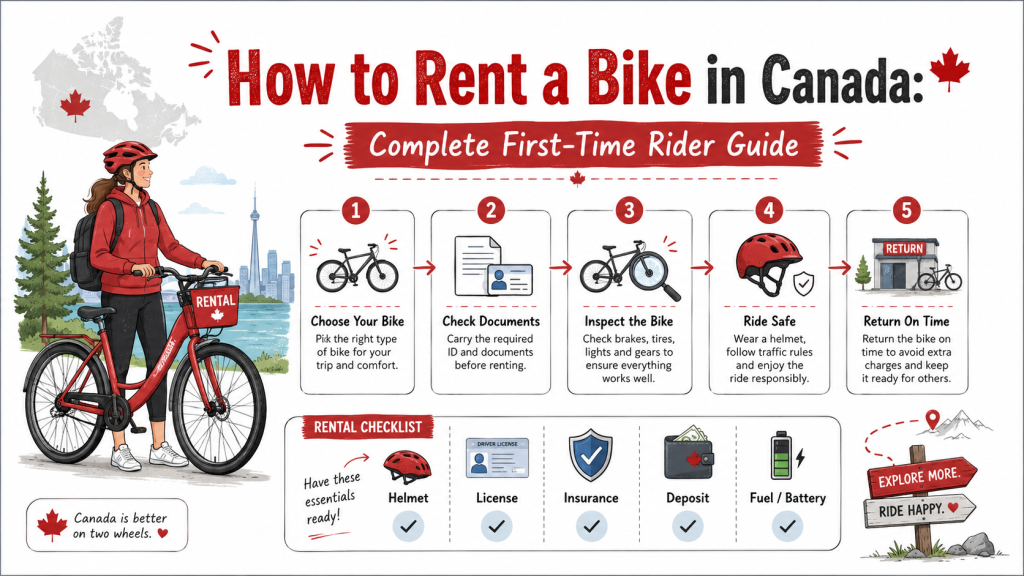
Step-by-Step Guide: How to Rent a Bike in Canada
Step 1: Choose Your City and Travel Dates
Start by selecting your pickup city, travel dates, and rental duration. Your choices may vary depending on season, demand, and vehicle availability.
Step 2: Select the Right Bike Type
Choose a scooter, commuter bike, motorcycle, cruiser, adventure bike, or electric bike based on your licence, route, budget, and comfort level.
Step 3: Review Vehicle Details
Check photos, features, fuel type, mileage policy, deposit amount, insurance terms, helmet availability, pickup location, and owner rules.
Step 4: Upload or Carry Required Documents
Keep your valid driving licence, ID proof, and any required permit ready. Tourists should carry passport and travel documents.
Step 5: Confirm Pricing and Deposit
Review rental price, taxes, deposit, insurance, extra charges, cancellation policy, and refund terms before payment.
Step 6: Inspect the Bike at Pickup
Check the bike carefully and record photos or videos. Confirm fuel or battery level, helmet condition, tire condition, brakes, lights, and visible damage.
Step 7: Ride Safely and Follow Local Rules
Follow traffic laws, wear a helmet, ride within speed limits, avoid unsafe weather, and use responsible parking.
Step 8: Return the Bike on Time
Return the bike as agreed. Refill fuel if required, return accessories, and complete the handover process properly.
Best Places in Canada Where Bike Rentals Can Be Useful
Toronto
Toronto is a busy city where a rental bike can be useful for short trips, neighborhood exploration, waterfront rides, and flexible movement between local attractions. Parking and traffic can be challenging, so smaller vehicles may be practical for confident riders.
Vancouver
Vancouver offers scenic roads, coastal views, parks, and nearby nature routes. Bike rental can be a great way to enjoy the city when weather conditions are favorable.
Montreal
Montreal is known for culture, food, festivals, historic streets, and lively neighborhoods. A rental scooter or bike can help travelers explore more areas in less time.
Calgary
Calgary can be a good starting point for urban travel and seasonal scenic rides. Riders should pay close attention to weather, wind, and road conditions.
Ottawa
Ottawa has museums, government buildings, riverside areas, and peaceful neighborhoods. A bike rental can help visitors explore the city in a flexible and budget-friendly way.
Quebec City
Quebec City offers historic charm, beautiful streets, and scenic areas. Riders should be careful with hills, older roads, traffic zones, and seasonal weather.
Victoria
Victoria is popular for relaxed travel, coastal views, gardens, and local attractions. A scooter or commuter bike may be useful for short, comfortable trips.
FAQs
1- Can tourists rent a bike in Canada?
Yes, tourists can usually rent a bike in Canada if they meet the rental company’s age, licence, ID, and deposit requirements. The licence should match the vehicle category you want to ride. International visitors should also check whether they need an International Driving Permit along with their original licence.
2- Is an International Driving Permit required to rent a bike in Canada?
It depends on your original licence, province, language of the licence, and rental provider policy. Some visitors may be able to use their valid foreign licence for a limited time, while others may need an International Driving Permit. Always confirm before booking, especially if your licence is not in English or French.
3- How much does bike rental cost in Canada?
Bike rental costs in Canada vary by city, season, bike type, rental duration, and insurance plan. Scooters may start around CAD 35 to CAD 80 per day, while commuter bikes may range from CAD 50 to CAD 120 per day. Premium and adventure bikes usually cost more.
4- Are helmets provided with rental bikes?
Many rental providers offer helmets, but availability and pricing can vary. Some include one helmet in the rental price, while others charge separately. Always confirm helmet availability before booking and make sure the helmet fits properly.
5- Can I rent a bike without a deposit?
Some providers may offer low-deposit or no-deposit rentals, but most bike rentals require a refundable security deposit. The deposit amount depends on the vehicle type, rental duration, insurance coverage, and provider policy. Always check deposit terms before payment.
6- What happens if the bike breaks down?
If the bike breaks down, contact the rental provider immediately. Do not attempt major repairs without approval. Depending on the rental terms, the provider may offer roadside assistance, replacement vehicle support, repair guidance, or towing support.
7- Can I take the rental bike to another city?
Some rentals allow intercity travel, while others restrict the vehicle to a specific city or region. If you plan to ride from one city to another, confirm permissions, mileage limits, insurance coverage, and return location rules before booking.
8- Can I rent a scooter in Canada?
Yes, scooter rental may be available in selected Canadian cities, depending on local rules and provider availability. Requirements may vary by scooter type, engine size, speed limit, and province. Always check whether your licence allows you to ride the scooter category.
9- Is bike rental safe for first-time travelers in Canada?
Bike rental can be safe if you choose the right vehicle, follow traffic rules, wear a helmet, avoid unsafe weather, and ride within your skill level. First-time travelers should avoid powerful bikes, unfamiliar highways, night riding, and snowy or icy conditions.
10- Do I need insurance for a rental bike?
Insurance is important for rental bikes. Basic coverage may be included, or you may need to purchase additional protection. Always check what is covered, what is excluded, and what amount you may be responsible for in case of damage, theft, or an accident.
11- Can students rent a bike in Canada?
Yes, students can rent bikes if they meet age, licence, ID, and payment requirements. Bike rental can be useful for campus travel, part-time work, grocery trips, and weekend plans. Students should compare daily, weekly, and monthly rental options for better value.
12- What should I check before accepting a rental bike?
Check brakes, tires, lights, indicators, horn, mirrors, fuel or battery level, scratches, dents, helmet, registration documents, and rental agreement terms. Take photos or videos before riding so that existing damage is clearly recorded.
Conclusion
Renting a bike in Canada is a practical and enjoyable way to travel with more freedom, flexibility, and control. Whether you are a tourist exploring Vancouver, a student commuting in Toronto, a backpacker visiting Montreal, or a professional needing short-term mobility in Calgary or Ottawa, bike rental can make your journey easier and more personal. The key is to choose the right bike, carry proper documents, understand rental terms, check safety details, and ride responsibly according to local road and weather conditions. From scooters and commuter bikes to cruisers and adventure motorcycles, Canada offers many riding possibilities for different travel styles. For a smoother and more transparent booking experience, visit MotoShare Canada at motoshare.ca and book your next bike rental online with confidence.