Introduction
Canada’s major cities are large, diverse, and filled with attractions spread across different neighbourhoods. Public transportation is useful in central areas, but it may not always provide the flexibility travellers need. Taxis and ride-hailing services can also become expensive when used several times a day.
Renting a bike, scooter, motorcycle, or other self-drive vehicle can give travellers greater control over their schedules. It allows them to explore popular attractions, discover quieter neighbourhoods, stop at scenic locations, and plan day trips without depending entirely on public transportation.
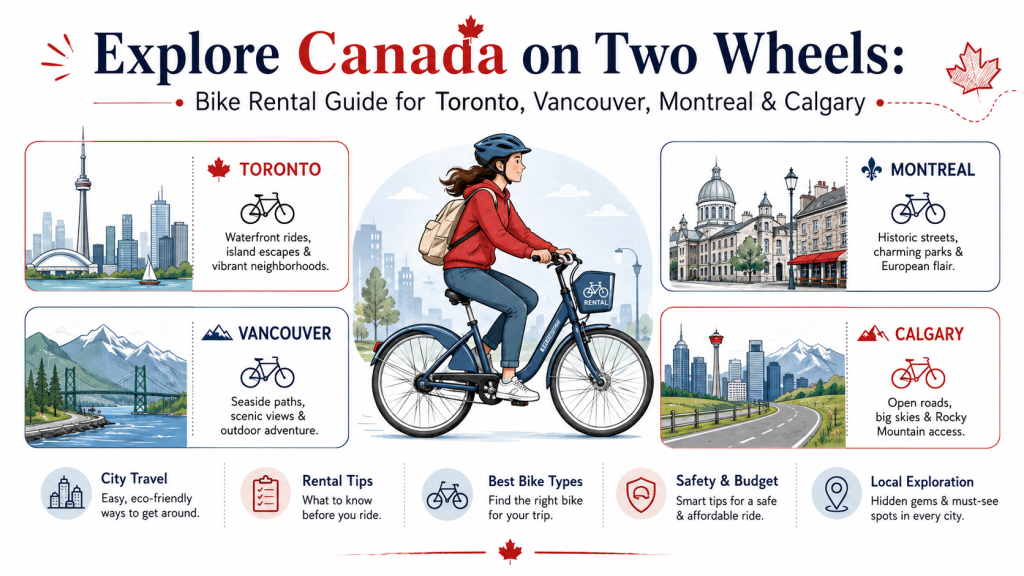
Toronto offers waterfront routes, multicultural neighbourhoods, museums, shopping areas, and nearby destinations around Southern Ontario. Vancouver combines city roads with mountain and coastal scenery. Montreal is known for its historic districts, food culture, festivals, and cycling-friendly neighbourhoods. Calgary provides access to urban attractions, open roads, and routes leading toward the Canadian Rockies.
This first-time bike rental guide explains how to rent a bike in Canada, what documents may be required, how rental prices work, and what travellers should check before beginning their journey. It also compares rental bikes with taxis and public transportation and explains how MotoShare Canada can simplify vehicle booking through motoshare.ca.
Why Renting a Bike in Canada Is a Smart Choice
A bike rental in Canada can be a practical transportation option for tourists, students, professionals, backpackers, commuters, and local residents. It gives riders more independence than fixed-route transportation and can be more economical than taking multiple taxis.
Some important reasons to consider a rental bike include:
Greater Travel Flexibility
A rental vehicle allows you to decide when to leave, where to stop, and how long to remain at each location. You do not have to plan your day around bus or train schedules.
Easier Short-Distance Travel
Many attractions in Canadian cities are separated by several kilometres. A bike or scooter may make it easier to travel between neighbourhoods without paying for repeated taxi journeys.
Better Access to Scenic Routes
Vancouver’s coastal roads, Calgary’s surrounding landscapes, Montreal’s riverside areas, and Toronto’s waterfront can be more enjoyable when explored at a comfortable pace.
Convenient Day Trips
Motorcycles and suitable scooters may help experienced riders plan short trips outside the city. However, renters must confirm mileage restrictions, permitted travel areas, weather conditions, and intercity policies before departure.
Potential Cost Savings
A rental bike may offer better daily value for travellers planning several stops. The final cost depends on the vehicle category, insurance, deposit, taxes, fuel, mileage allowance, and rental duration.
Who Should Rent a Bike in Canada?
Bike and motorcycle rentals are suitable for different types of travellers, but riders should select a vehicle that matches their licence, experience, comfort level, and travel plans.
Tourists
Visitors who want to see several neighbourhoods in one day may appreciate the freedom of a self-drive rental. A scooter or small motorcycle may be suitable for short urban trips when legally permitted.
Students
Students may use short-term rentals for errands, appointments, weekend activities, and temporary commuting. They should compare daily, weekly, and monthly rental costs before booking.
Working Professionals
Professionals visiting Toronto, Vancouver, Montreal, or Calgary may use a rental vehicle for meetings, coworking spaces, temporary assignments, or local business travel.
Backpackers and Budget Travellers
Travellers following a limited budget can compare bike rentals with public transit passes and ride-hailing costs. A rental becomes more useful when several destinations are planned in one day.
Local Residents
Residents may rent a bike when their personal vehicle is unavailable, when they want to test a different model, or when they need transportation for a weekend trip.
Experienced Touring Riders
Licensed and experienced motorcyclists may rent touring, cruiser, or adventure motorcycles for longer routes. These riders should carefully review insurance, kilometre allowances, road restrictions, and weather forecasts.
Benefits of Renting a Bike for First-Time Travellers
First-time visitors often have limited knowledge of local routes and transportation systems. A well-planned rental can make travel easier, but preparation is essential.
Control Over Your Daily Schedule
You can begin early, return late, or change your itinerary without waiting for a specific bus or train.
Easier Neighbourhood Exploration
A rental vehicle can help travellers explore areas beyond the main downtown attractions. This is useful in cities where interesting neighbourhoods are spread across a large area.
More Direct Transportation
Public transit journeys may involve transfers or walking between stations. A rental bike can provide more direct transportation when parking and road access are available.
Flexible Stops
Travellers can stop at viewpoints, cafés, parks, local markets, and photography locations instead of travelling directly from one fixed point to another.
Familiar Booking Process
Online vehicle-sharing platforms can make it easier to compare vehicle types, rental periods, prices, and owner requirements before confirming a reservation.
City-by-City Bike Rental Guide
Each Canadian city has different traffic patterns, weather conditions, road layouts, parking environments, and provincial licensing rules. Renters should plan according to the city in which they will ride.
Bike Rental in Toronto
Toronto is one of Canada’s busiest cities. It has heavy traffic, streetcars, expressways, bicycle lanes, construction zones, and a wide range of neighbourhoods.
A bike rental in Toronto may be useful for visiting:
- Harbourfront and nearby waterfront areas
- The Distillery District
- Kensington Market
- Queen Street West
- High Park
- The Beaches
- Scarborough and surrounding neighbourhoods
- Areas outside the downtown transit network
Riders should be especially careful around streetcar tracks. Motorcycle and scooter tyres can lose stability if they cross the tracks at a shallow angle. Downtown parking may also be limited or expensive, so renters should research legal parking options before beginning the journey.
Ontario requires the appropriate motorcycle licence for operating a motorcycle. International visitors staying in Ontario for less than three months may generally use a valid licence from their home jurisdiction, provided it authorizes the vehicle being driven. Visitors staying longer may need an International Driving Permit. Rental companies may impose stricter licence, experience, age, and deposit requirements.
Bike Rental in Vancouver
Vancouver is popular with travellers who enjoy coastal scenery, parks, mountains, and outdoor activities. Its surroundings offer beautiful riding routes, but weather can change quickly.
Popular areas and routes may include:
- Downtown Vancouver
- Stanley Park surroundings
- Kitsilano
- Spanish Banks
- North Vancouver
- Richmond
- Sea-to-Sky region for qualified and experienced riders
- Coastal viewpoints outside the central city
Vancouver often experiences wet road conditions. Rain can reduce visibility and tyre grip, particularly on painted road markings, metal surfaces, and leaves. Riders should wear waterproof protective clothing and avoid sudden acceleration, braking, or steering movements.
British Columbia requires motorcycle operators and passengers to wear approved safety helmets. Visitors may generally use qualifying foreign licences during a temporary visit, but the licence must authorize the correct vehicle category. Rental companies can require additional experience and documentation.
Bike Rental in Montreal
Montreal offers historic streets, vibrant neighbourhoods, food destinations, festivals, riverside routes, and a strong urban cycling culture. However, motorcyclists must distinguish between pedal-bike infrastructure and roads legally available to motor vehicles.
Popular areas to explore may include:
- Old Montreal
- Downtown Montreal
- Plateau-Mont-Royal
- Mile End
- Parc Jean-Drapeau
- Lachine Canal surroundings
- Mount Royal area
- Neighbourhoods outside the central tourist district
Some streets are narrow, busy, or affected by seasonal construction. Road signs may be displayed primarily in French, so visitors should understand common traffic and parking terms before driving.
Quebec requires an appropriate licence category to operate motorcycles, mopeds, and scooters. A non-resident may use a valid licence that authorizes the relevant vehicle, subject to provincial rules and the duration of the stay. An International Driving Permit may be necessary or strongly advisable when the original licence is not in French or English. Approved helmets are mandatory for motorcycle, moped, and scooter riders.
Bike Rental in Calgary
Calgary has wide roads, modern neighbourhoods, open landscapes, and access to destinations west of the city. It can be a useful starting point for experienced riders planning scenic trips toward the foothills or Canadian Rockies.
Potential areas and routes include:
- Downtown Calgary
- Kensington
- Inglewood
- Fish Creek area
- Northwest Calgary
- Bragg Creek
- Kananaskis region
- Routes toward Canmore and Banff, where permitted
Weather is an important consideration. Calgary can experience strong winds, rapid temperature changes, rain, hail, and occasional late- or early-season snow. Mountain-bound riders must also prepare for lower temperatures at higher elevations.
Alberta uses a Class 6 licence for motorcycle operation. All motorcycle drivers and passengers are generally required to wear an approved helmet, subject to limited legal exemptions. Visitors using a foreign licence should ensure that it authorizes motorcycles, and carrying an International Driving Permit is strongly recommended when appropriate.
Types of Bikes You Can Rent in Canada
Vehicle availability differs by city, season, provider, and owner. MotoShare Canada listings may include several categories depending on local inventory.
Scooters
Scooters are generally lightweight, easy to handle, and suitable for short urban journeys. They may offer automatic transmission and storage space under the seat.
They are best for:
- City sightseeing
- Short commutes
- Local errands
- Riders who prefer lighter vehicles
Do not assume that a regular car licence is sufficient. Licensing rules depend on the scooter’s engine size, speed classification, and province.
Commuter Motorcycles
Commuter bikes usually provide a balanced combination of fuel economy, manageable weight, and comfortable riding posture.
They are useful for:
- Daily commuting
- Urban and suburban travel
- Medium-distance journeys
- Newer riders with appropriate training and licensing
Sports Bikes
Sports motorcycles provide responsive acceleration, sharper handling, and a more aggressive riding position. They may not be suitable for inexperienced riders or crowded city travel.
Rental providers often apply stricter age, licence, experience, insurance, and deposit requirements to high-performance motorcycles.
Adventure Bikes
Adventure motorcycles are designed for comfort, touring, and varied road conditions. They may be appropriate for longer trips outside Calgary, Vancouver, Toronto, or Montreal.
They are generally taller and heavier than commuter motorcycles. Riders should confirm that they can comfortably control the vehicle at low speeds and while parking.
Cruiser Motorcycles
Cruisers usually offer a relaxed riding position and are popular for scenic routes and highway journeys. They may be heavier than they appear, so low-speed handling experience is important.
Electric Bikes and Electric Scooters
Electric bicycles can be useful for recreational trips, waterfront routes, and local commuting. They are different from road-registered electric motorcycles and motor scooters.
Users must understand:
- Where the vehicle can legally operate
- Maximum assisted speed
- Helmet requirements
- Minimum age rules
- Whether a licence or insurance is required
- Battery range
- Charging arrangements
How to Choose the Right Bike for Your Trip
Selecting the right vehicle is one of the most important parts of the rental process.
Consider Your Riding Experience
Choose a vehicle similar to one you have already ridden. A holiday is not the right time to learn how to control a heavy touring motorcycle or powerful sports bike.
Match the Vehicle to the Route
A small scooter may work well for urban travel, while a touring or adventure motorcycle may be better for longer highway journeys.
Check Seat Height and Weight
You should be able to balance the motorcycle confidently and operate the controls without stretching. Consider the additional weight of luggage and a passenger.
Consider Weather Protection
Canadian weather can change rapidly. A motorcycle with a windscreen, luggage system, heated grips, or improved weather protection may be more comfortable for longer trips.
Review Luggage Capacity
Backpackers and touring riders should check whether the vehicle includes panniers, a top case, straps, or secure storage.
Check Fuel or Charging Range
Plan fuel stops for petrol motorcycles and charging opportunities for electric vehicles. Do not rely only on the estimated maximum range.
Documents Usually Needed to Rent a Bike in Canada
Requirements differ between providers, provinces, vehicle categories, and insurance policies. Common documents include the following.
Valid Motorcycle Driving Licence
Your licence must authorize the category of motorcycle, scooter, or moped you intend to rent. A car-only licence may not be accepted for a road motorcycle.
International Driving Permit
International visitors may need an International Driving Permit depending on their province, length of stay, licence language, and rental provider. An IDP normally supports rather than replaces the original licence, so carry both documents.
Government-Issued Photo Identification
Providers may request a passport, provincial identification card, permanent resident card, or another accepted photo ID.
Address Verification
Some owners or companies may request a local or permanent address, accommodation information, or supporting document.
Payment Card
A valid credit card is commonly required for payment, security authorization, or damage deposits. Some providers may accept other payment methods, but renters should confirm this before booking.
Security Deposit
The deposit depends on the motorcycle’s value, insurance arrangement, renter profile, and provider policy. Premium motorcycles generally require higher deposits than basic scooters or commuter bikes.
Things to Check Before Renting a Bike
Never begin a rental journey without inspecting the vehicle and understanding the agreement.
Vehicle Condition
Check:
- Tyres and visible tread
- Front and rear brakes
- Headlight and brake light
- Turn signals
- Mirrors
- Horn
- Chain or drive system
- Fluid leaks
- Bodywork and existing scratches
- Fuel or battery level
Record existing damage through clear photographs or video and ensure it is acknowledged by the owner or provider.
Fuel or Charging Policy
Confirm whether the vehicle must be returned with a full tank, at the original fuel level, or at a specified battery percentage.
Insurance Coverage
Ask what the insurance includes and excludes. Important questions include:
- Is third-party liability included?
- Is collision damage covered?
- What deductible applies?
- Is theft included?
- Is roadside assistance included?
- Are passengers covered?
- Are specific roads or regions excluded?
Kilometre Limits
Some rentals include unlimited kilometres, while others provide a daily allowance. Additional-kilometre charges can significantly increase the final bill.
Helmet Availability
Confirm whether an approved helmet is included, available for an additional fee, or must be supplied by the renter. Check its size, condition, visor, fastening system, and certification.
Rental Agreement Terms
Review cancellation terms, late-return charges, cleaning fees, damage responsibilities, prohibited uses, border restrictions, interprovincial travel rules, and breakdown procedures.
Seasonal Availability
Motorcycle rental inventory may be limited during the colder months. Winter conditions can make two-wheeler travel unsafe or impractical in all four cities.
Safety Tips for Riding a Rental Bike in Canada
Follow Provincial Traffic Rules
Traffic laws vary across provinces. Review local speed limits, lane rules, parking regulations, signage, and restrictions before riding.
Wear an Approved Helmet
Helmet requirements apply to motorcycle riders across the provinces covered in this guide. Wear a properly fitted, approved helmet even when travelling a short distance.
Use Full Protective Equipment
A responsible rider should consider:
- Abrasion-resistant jacket
- Riding trousers
- Full-finger gloves
- Over-the-ankle footwear
- Eye protection
- Waterproof layers
- High-visibility clothing
Avoid Overspeeding
A rental bike may respond differently from your usual motorcycle. Ride conservatively until you understand its braking, throttle, balance, and turning behaviour.
Check Weather and Road Conditions
Rain, fog, strong wind, snow, ice, gravel, and construction can affect riding safety. Mountain routes near Calgary and Vancouver may have conditions very different from those in the city.
Watch for Streetcar Tracks
Toronto riders should cross tracks carefully and as close to a right angle as safely possible. Avoid braking or turning sharply directly on the rails.
Stay Visible
Use lights, position yourself clearly in traffic, avoid remaining in vehicle blind spots, and wear visible protective clothing.
Keep Emergency Information Available
Save the rental provider’s number, roadside-assistance details, insurance contact, local emergency information, and accommodation address.
Do Not Ride While Fatigued or Impaired
Alcohol, cannabis, medication, fatigue, and dehydration can reduce judgement and reaction time. Canadian impaired-driving laws are strict and may carry serious penalties.
Average Cost of Bike Rental in Canada
Rental prices vary widely according to location, season, vehicle, rental period, age, experience, demand, insurance, taxes, and mileage allowance.
The following ranges are general planning estimates rather than guaranteed MotoShare Canada prices.
| Vehicle Category | Approximate Daily Rental Range |
|---|---|
| Electric bicycle | CAD 35–90 |
| Basic scooter or moped | CAD 60–130 |
| Commuter motorcycle | CAD 90–180 |
| Premium or cruiser motorcycle | CAD 160–300 |
| Adventure or touring motorcycle | CAD 180–350+ |
| High-performance sports motorcycle | CAD 200–400+ |
Additional costs may include:
- Provincial and federal taxes
- Insurance upgrades
- Security deposits
- Helmet or riding-gear rental
- Extra kilometres
- Fuel
- Charging fees
- Delivery and collection
- Additional rider charges
- Late-return fees
- Roadside assistance
- Cleaning or damage charges
Weekly rentals may offer a lower average daily cost. However, renters should compare the complete payable amount rather than focusing only on the advertised base price.
Common Mistakes First-Time Travellers Should Avoid
Booking a Vehicle Without the Correct Licence
A regular car licence does not automatically permit motorcycle operation. Verify the legal licence class and the rental provider’s requirements.
Choosing a Bike That Is Too Powerful
Renters sometimes choose a premium motorcycle for appearance rather than suitability. A lighter, familiar vehicle is usually safer and more comfortable.
Ignoring Canadian Weather
A sunny morning does not guarantee a dry afternoon. Carry suitable layers and avoid riding when road conditions exceed your experience.
Skipping the Pre-Rental Inspection
Failure to document existing damage may create disputes when the vehicle is returned.
Misunderstanding Insurance
Basic insurance may include a high deductible or exclude certain damage. Read the agreement and request clarification before accepting the vehicle.
Assuming Unlimited Travel Is Allowed
Some rentals prohibit gravel roads, border crossings, racetrack use, delivery work, or travel outside an approved area.
Forgetting Parking Restrictions
Parking rules differ by city and neighbourhood. Illegal parking may result in tickets, towing, or additional provider charges.
Planning Excessive Distances
New visitors often underestimate travel time, traffic, rest stops, and weather changes. Build extra time into every route.
Bike Rental vs Public Transport vs Taxi
The best transportation option depends on your itinerary, budget, riding experience, weather, and group size.
| Factor | Rental Bike or Motorcycle | Public Transport | Taxi or Ride-Hailing |
| Cost | Good value for multiple trips, but fuel, insurance and parking may apply | Usually the lowest cost for central-city travel | Convenient but can become expensive with repeated journeys |
| Convenience | Direct travel with responsibility for parking and vehicle care | Depends on routes, schedules and transfers | Door-to-door service with no parking responsibility |
| Flexibility | High flexibility for changing routes and making stops | Limited by service areas and timetables | Flexible, but availability and surge pricing may vary |
| Comfort | Weather exposure and limited luggage capacity | Climate-controlled on many services but can be crowded | Generally comfortable and suitable for luggage |
| Travel Experience | Independent and immersive for qualified riders | Practical for routine city travel | Simple and low-effort |
| Best Use Cases | Multi-stop itineraries, scenic routes and independent travel | Downtown sightseeing and budget commuting | Airport transfers, poor weather and group travel |
A traveller staying entirely in downtown Toronto or Montreal may find public transportation sufficient. Someone exploring suburban areas, planning a scenic route near Vancouver, or travelling toward the foothills from Calgary may value the flexibility of an appropriate rental vehicle.
How MotoShare Canada Can Help Travellers
MotoShare Canada is designed to connect travellers and local users with vehicle rental and sharing options through a convenient online platform.
Easy Online Booking
Users can search for available vehicles, review important details, choose rental dates, and submit booking requests online.
Wide Range of Vehicles
Depending on city availability, travellers may find scooters, commuter motorcycles, premium bikes, cars, and other self-drive vehicles.
Transparent Pricing
Clear pricing helps users understand the base rental charge, rental duration, deposit conditions, and other applicable costs before confirming a booking.
Verified Vehicle Owners
A structured vehicle-sharing platform can help create a more dependable rental experience by supporting owner and listing verification processes.
Flexible Rental Options
Travellers may require a vehicle for several hours, one day, a weekend, a week, or a longer period. Flexible options make it easier to match the rental to the itinerary.
Availability Across Major Canadian Cities
MotoShare Canada can support travellers searching for rentals in Toronto, Vancouver, Montreal, Calgary, and other Canadian locations as platform availability expands.
Support for Different Travel Needs
The platform can serve tourists, students, professionals, commuters, backpackers, residents, and experienced riders searching for temporary transportation.
Frequently Asked Questions
1. Can tourists rent a bike in Canada?
Yes, tourists may rent motorcycles, scooters, or bicycles in Canada when they meet the provider’s age, licence, identification, payment, experience, and deposit requirements. For motorized vehicles, the licence must authorize the correct vehicle category.
2. Is an International Driving Permit required in Canada?
The requirement depends on the province, licence language, duration of stay, and rental provider. Travellers should obtain an IDP before leaving their home country when recommended and carry it together with the original valid licence.
3. Can an Indian tourist rent a motorcycle in Canada?
An Indian visitor may be able to rent a motorcycle when holding a valid Indian licence with the appropriate motorcycle authorization, an IDP where required, a passport, a payment card, and any additional documents requested by the rental provider.
4. How much does a bike rental cost in Canada?
Electric bicycles may start around CAD 35 per day, while scooters and motorcycles may range from approximately CAD 60 to more than CAD 350 per day. The total depends on the city, vehicle, season, insurance, taxes, kilometre limits, and rental duration.
5. Are helmets provided with motorcycle rentals?
Some rentals include one helmet, while others charge separately. Always confirm availability, certification, condition, and sizing before booking.
6. Can I rent a bike without paying a deposit?
Some low-value rentals may offer reduced-deposit options, but motorcycles commonly require a security deposit or credit-card authorization. Requirements depend on the provider, insurance policy, and vehicle value.
7. What happens if the bike breaks down?
Move to a safe location, turn on hazard lights when available, and contact the provider or roadside-assistance service. Do not authorize major repairs unless the rental provider gives permission.
8. Can I take a rental bike to another city or province?
Possibly, but only when the rental agreement permits it. Confirm intercity and interprovincial travel, mileage limits, roadside coverage, prohibited roads, and return-location requirements.
9. Can I ride a rental motorcycle from Calgary to Banff?
Some providers may allow the trip when the rider is properly licensed and the agreement permits the route. Check weather, mountain conditions, kilometre limits, park requirements, fuel range, and roadside coverage.
10. Can I rent a bike in Vancouver during winter?
Availability may be limited, and winter riding can be unsafe because of rain, low temperatures, snow, ice, and reduced daylight. Rent only when the provider allows it and conditions are suitable for your experience.
11. Is insurance included in a bike rental?
Some level of insurance may be included, but coverage varies. Review third-party liability, collision, theft, deductible, roadside assistance, passenger coverage, and exclusions.
12. Can a beginner rent a sports motorcycle?
Many providers restrict high-performance motorcycle rentals to experienced riders above a certain age. Beginners should select a lighter, less powerful bike that matches their training and licence.
13. Are electric bicycles treated like motorcycles?
Not always. Electric bicycle classifications depend on motor power, assisted speed, design, and provincial rules. Faster electric motorcycles and scooters may require registration, insurance, licensing, and approved helmets.
14. Is bike rental cheaper than using taxis?
It can be cheaper for travellers completing several journeys in one day. However, compare the full rental price, including insurance, taxes, fuel, parking, equipment, and deposits.
15. What should I do before returning the bike?
Refuel or recharge it according to the agreement, remove personal belongings, photograph the vehicle, return all keys and equipment, and obtain confirmation that the rental has been completed.
Conclusion
Renting a bike in Toronto, Vancouver, Montreal, or Calgary can make Canadian travel more flexible, independent, and enjoyable. It allows qualified riders to create personalised itineraries, visit several neighbourhoods, take scenic routes, and reduce their dependence on taxis and fixed public transportation schedules.
Successful bike rental begins with choosing the correct vehicle. Travellers should verify their licence, understand provincial rules, inspect the bike, review insurance, check the weather, wear approved protective equipment, and follow every condition in the rental agreement.
Toronto is suitable for urban exploration and waterfront travel, Vancouver offers coastal scenery and access to mountain routes, Montreal combines historic neighbourhoods with vibrant city culture, and Calgary can provide a starting point for scenic journeys toward Alberta’s foothills. Each destination requires different preparation, especially regarding traffic, road surfaces, weather, parking, and licence rules.
Visit motoshare.ca to explore available bikes, motorcycles, cars, and self-drive rental options. Compare suitable vehicles, review rental conditions, and book your next Canadian journey with MotoShare Canada.