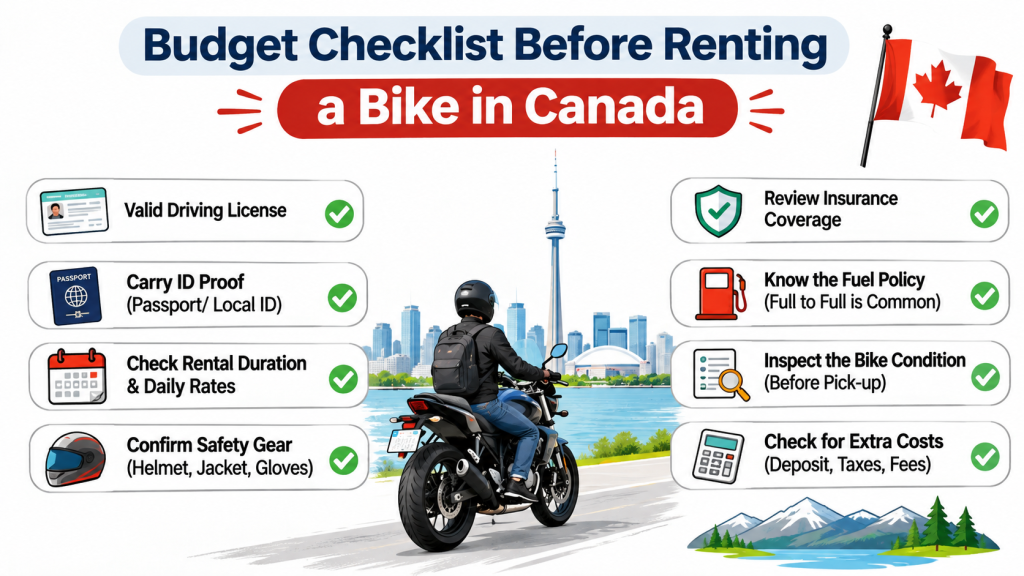
Introduction
Canada offers many exciting places to explore. From busy city streets to peaceful coastal roads, there is something for every traveler. Renting a bike can make these journeys more flexible and enjoyable.
However, renting a bike requires more than paying the daily rental fee. You must also consider insurance, fuel, security deposits, safety equipment, and additional charges.
For first-time travelers, these expenses can affect the overall travel budget. A bike that looks affordable at first may become expensive after extra fees.
This is why preparing a budget checklist before booking is important. It helps you compare rental options, understand the agreement, and avoid unexpected expenses.
Whether you are a tourist, student, working professional, or backpacker, proper planning can improve your rental experience.
MotoShare Canada aims to make vehicle rental more convenient by connecting travelers with vehicle rental options. With the right preparation, you can enjoy greater travel flexibility while managing your expenses.
2. Why Renting a Bike in Canada Is a Smart Choice
Canada has large cities, beautiful countryside, coastal destinations, and scenic mountain routes. A rental bike can help you explore these places at your own pace.
Here are some reasons why renting a bike can be a practical transportation choice.
More Freedom to Explore
Public transportation follows fixed routes and schedules. A rental bike gives you more control over your journey.
For example, you can explore different neighborhoods in Toronto or discover local attractions around Vancouver without depending entirely on buses or trains.
Convenient Short-Distance Travel
A bike can make short journeys easier. You can use it to travel between your accommodation, restaurants, shopping areas, and tourist attractions.
This can be useful for students, professionals, and visitors staying in one city for several days.
Flexible Travel Plans
A rental bike allows you to manage your own travel schedule. You can change your route and stop whenever you find an interesting place.
This flexibility is helpful when visiting destinations outside busy city centers.
Potential Travel Savings
A rental bike may cost less than taking repeated taxi or ride-hailing trips.
However, compare the complete rental cost before deciding. Include fuel, insurance, parking, taxes, and additional fees.
3. Who Should Rent a Bike in Canada?
Bike rental can suit different types of travelers and residents.
1. Tourists: Visitors can explore local attractions, neighborhoods, and scenic destinations at their own pace.
2. Students: Students may use affordable rental options for local transportation. They must meet the applicable licensing and rental requirements.
3. Working Professionals: Temporary rentals can help professionals travel between their accommodation, offices, and meeting locations.
4. Backpackers: Backpackers can enjoy flexible transportation during short trips and local sightseeing.
5. Daily Commuters: People waiting for vehicle repairs may consider temporary rentals for their regular journeys.
6. Adventure Travelers: Experienced riders can choose suitable motorcycles for planned road trips and scenic routes.
Before booking, check the provider’s age, licence, experience, and insurance requirements.
4. Benefits of Renting a Bike for First-Time Travelers
First-time visitors often need convenient and flexible transportation. Renting a bike can provide several advantages.
Easy Local Exploration
You can explore nearby attractions without depending on fixed public transportation schedules.
This can help you visit local restaurants, shopping areas, parks, and tourist attractions.
Flexible Travel Plans
You can decide when to start your journey and which routes to follow.
You can also make additional stops when you discover interesting places.
Different Rental Periods
Depending on availability, rental providers may offer daily, weekend, and longer rental packages.
This helps travelers select a rental period that matches their schedule.
Multiple Vehicle Choices
You can compare scooters, commuter motorcycles, premium bikes, and adventure motorcycles.
This makes it easier to find a vehicle that suits your budget and travel plans.
Independent Transportation
You can manage your travel schedule without depending on another person’s availability.
However, first-time riders should understand Canadian traffic rules and local road conditions before riding.
5. Types of Bikes You Can Rent in Canada
Choosing the right bike is an important part of budget planning. Different vehicle categories have different rental prices, fuel requirements, and insurance costs.
Scooters
Scooters are suitable for short city trips and local transportation. They are generally easy to handle and convenient for visiting nearby attractions.
They can be useful for exploring cities such as Vancouver and Victoria, where suitable rental services are available.
Best for: Short-distance travel, local sightseeing, and suitable beginner riders.
Commuter Motorcycles
Commuter motorcycles offer a practical balance between comfort and running costs.
They can suit regular city travel and longer local journeys. Compare engine size, fuel consumption, seating comfort, and insurance expenses.
Best for: Students, working professionals, and regular commuters.
Sports Bikes
Sports bikes offer strong performance and a sporty riding position.
However, they may have higher rental and insurance costs. They are better suited to experienced riders who understand motorcycle handling.
Best for: Experienced riders and recreational trips.
Adventure Bikes
Adventure bikes are designed for longer journeys and varied road conditions.
They often provide comfortable seating and luggage options. They can be useful for exploring scenic destinations in Alberta and British Columbia.
Best for: Long-distance travel and experienced touring riders.
Cruiser Motorcycles
Cruiser motorcycles focus on relaxed riding positions and comfortable journeys.
They can be suitable for scenic highways and weekend trips. However, larger engines may increase fuel expenses.
Best for: Leisure rides and experienced motorcycle enthusiasts.
Electric Bikes
Electric bikes provide pedal assistance and can make cycling easier.
They are useful for city exploration and shorter recreational journeys. Before renting, check battery range, charging access, and return conditions.
Best for: Tourists, casual riders, and short urban journeys.
6. How to Choose the Right Bike for Your Trip
The cheapest bike is not always the best option. Your choice should match your travel plans, experience, and available budget.
Consider these factors before booking.
1. Understand Your Travel Distance: Estimate how many kilometres you plan to travel daily. A bicycle may suit short sightseeing trips, while a motorcycle may suit longer journeys.
2. Check Your Riding Experience: Choose a vehicle that matches your skills. Avoid powerful motorcycles if you have limited riding experience.
3. Compare Fuel and Charging Costs: Fuel expenses can increase your total budget. Electric bikes also require suitable charging arrangements.
4. Consider Passenger Requirements: If you plan to travel with another person, check passenger seating and safety equipment.
5. Check Luggage Capacity: Backpackers and tourists may need additional storage. Confirm whether luggage boxes or carriers are included.
6. Consider Seasonal Conditions: Canadian weather can change quickly. Check temperature, rain, snow, and road conditions before choosing a vehicle.
7. Compare Complete Rental Prices: Include taxes, deposits, insurance, and additional charges before making your decision.
For example, a tourist exploring downtown Toronto may prefer a bicycle for suitable cycling routes. A traveler planning a longer journey through Alberta may need a properly licensed touring motorcycle.
7. Documents Usually Needed to Rent a Bike in Canada
Rental providers have different document requirements. Preparing everything before booking can make the process easier.
Valid Driving Licence
You need the correct licence for the vehicle you plan to operate.
A motorcycle rental generally requires a valid motorcycle licence or endorsement. A standard car licence does not automatically permit motorcycle riding.
Check the rules in the province where you plan to ride.
Government ID Proof
Providers may request identification to verify your identity.
Common examples include:
- Passport for international visitors.
- Provincial or territorial identification.
- Other accepted government-issued photo identification.
Confirm which documents the rental provider accepts.
International Driving Permit
International visitors should check whether their home-country driving licence is accepted.
Some providers may require an International Driving Permit (IDP), especially when the original licence does not meet their language or format requirements.
An IDP does not replace your original licence. It also does not give you permission to operate a vehicle class that your original licence does not cover.
Address Proof
Some rental providers may request proof of residential address.
A hotel booking confirmation or another accepted document may help. However, confirm the provider’s requirements before booking.
Security Deposit Requirements
Many rental companies require a refundable security deposit or credit card authorization.
The amount depends on the motorcycle, insurance conditions, and provider policies.
Before paying, ask:
- How much is the security deposit?
- Is it charged or temporarily blocked?
- When will it be released?
- What deductions can apply?
- Is a credit card mandatory?
Do not assume the deposit will be returned immediately after the bike is dropped off.
8. Things to Check Before Renting a Bike
A careful inspection can help prevent unexpected expenses.
Vehicle Condition
Inspect the bike before accepting it.
Check the following items:
- Tyre condition and pressure.
- Brakes and brake lights.
- Headlights and indicators.
- Mirrors and horn.
- Fuel level.
- Visible scratches and damage.
- Battery and dashboard warnings.
Take photographs of existing damage. Ask the provider to record it in the rental agreement.
Fuel Policy
Rental providers may follow different fuel policies.
Some expect you to return the bike with the same fuel level. Others may offer prepaid fuel or charge for missing fuel.
Understand the policy before booking. Keep your fuel receipts if required.
Insurance Coverage
Insurance is one of the most important parts of your rental budget.
Check what the rental price includes. Basic liability coverage may not cover damage to the rental motorcycle.
Ask about collision coverage, theft protection, deductibles, exclusions, and damage responsibilities.
Never assume that every insurance option provides complete protection.
Mileage Limits
Some motorcycle rentals include a daily kilometre allowance.
For example, a provider may include a fixed number of kilometres per day and charge extra for additional distance.
Calculate your planned route before selecting a rental package.
Helmet Availability
Ask whether the provider supplies helmets.
Check that each helmet fits properly and meets applicable safety standards. Also confirm whether gloves, jackets, and other protective equipment are available.
Rental Agreement Terms
Read the agreement carefully before signing.
Pay attention to:
- Pickup and return times.
- Late-return charges.
- Cancellation rules.
- Damage responsibilities.
- Insurance deductibles.
- Mileage restrictions.
- Geographic travel restrictions.
- Additional rider rules.
- Breakdown and roadside assistance.
A low daily price may not represent good value if the agreement includes expensive additional charges.
9. Safety Tips for Riding a Rental Bike in Canada
Safety should always be part of your travel budget. Proper equipment and careful planning can help reduce risks.
Follow Traffic Rules
Each Canadian province and territory has its own traffic regulations.
Learn local speed limits, lane rules, parking restrictions, and motorcycle requirements before riding.
Wear a Helmet
Wear an approved, properly fitted helmet. Follow the helmet laws in your province.
A helmet can help reduce the risk of serious head injuries.
Avoid Overspeeding
Ride within posted speed limits. Keep a safe distance from other vehicles.
Avoid sudden braking and aggressive overtaking, especially on unfamiliar roads.
Check Weather and Road Conditions
Canadian weather can change quickly.
Rain, strong winds, snow, and icy roads can make riding dangerous. Check forecasts and road conditions before starting your journey.
Avoid riding when conditions exceed your experience or the rental vehicle’s permitted use.
Keep Emergency Contacts Handy
Save the rental provider’s contact number and roadside assistance details.
Keep your insurance information and emergency contacts accessible. Understand what to do if the vehicle breaks down or becomes damaged.
Protect Your Rental Bike
Use approved parking areas and suitable security locks where applicable.
Never leave valuable belongings inside the vehicle. Follow the rental provider’s parking and storage instructions.
10. Cost of Bike Rental in Canada
Understanding rental prices is essential when preparing your travel budget.
Prices depend on vehicle category, rental duration, location, season, demand, and insurance package.
The following figures are general planning estimates in Canadian dollars. They are not fixed MotoShare Canada prices.
| Bike Type | Estimated Daily Rental Cost (CAD) |
|---|---|
| Basic Scooters | $60–$130 |
| Commuter Motorcycles | $90–$180 |
| Premium or Cruiser Bikes | $160–$300 |
| Adventure or Touring Bikes | $180–$350+ |
| Sports Motorcycles | $200–$400+ |
| Electric Bikes | $35–$120 |
Actual prices can differ between providers and locations.
Additional Expenses to Include
Your rental budget should include more than the advertised daily rate.
| Expense | What to Consider |
|---|---|
| Security Deposit | Temporary payment or credit card hold |
| Insurance | Coverage and deductible |
| Fuel | Petrol expenses during the trip |
| Helmet | Rental or purchase cost |
| Riding Gear | Gloves, jacket, and protective clothing |
| Mileage | Charges for extra kilometres |
| Taxes | Applicable provincial and federal taxes |
| Parking | Paid parking and overnight storage |
| Delivery | Vehicle pickup or drop-off charges |
| Late Return | Charges for returning after the agreed time |
Example of a Rental Budget
Imagine you plan to rent a commuter motorcycle for three days.
Your estimated budget might look like this:
| Expense | Estimated Cost |
|---|---|
| Bike rental ($120 × 3 days) | $360 |
| Insurance upgrade ($20 × 3 days) | $60 |
| Fuel | $35 |
| Parking | $25 |
| Protective gear | $30 |
| Estimated Subtotal | $510 |
This is an illustrative example. Taxes, security deposits, and other applicable charges are not included.
This example shows why comparing the complete rental cost matters. A bike advertised at $120 per day may require a larger travel budget after additional expenses.
Practical Ways to Save Money
- Compare daily and weekly rental packages.
- Book early during busy travel seasons.
- Avoid unnecessary insurance upgrades.
- Check whether helmets and riding gear are included.
- Choose a vehicle that matches your actual travel needs.
- Avoid unnecessary mileage charges.
- Understand cancellation and refund policies.
- Compare the final price before confirming payment.
11. Common Mistakes First-Time Travelers Should Avoid
First-time renters sometimes focus only on the advertised rental price. This can lead to unexpected expenses and booking problems.
Avoid these common mistakes.
1. Ignoring Additional Charges: Always check taxes, insurance, deposits, and equipment fees. Ask for the complete rental amount before confirming.
2. Choosing the Wrong Bike: A powerful motorcycle may look attractive, but it may not suit your experience. Choose a comfortable vehicle that matches your riding skills.
3. Not Checking Licence Requirements: Never assume that your regular driving licence allows you to operate every type of rental bike. Check provincial rules and provider requirements.
4. Skipping Vehicle Inspection: Do not leave the pickup location without checking the brakes, tyres, lights, and existing damage. Photograph the vehicle before riding.
5. Ignoring Insurance Conditions: Read the coverage details and understand your financial responsibility after an accident or theft.
6. Overlooking Mileage Restrictions: Long-distance travel can become expensive when extra kilometre charges apply. Estimate your complete route before booking.
7. Booking at the Last Minute: Popular destinations may have limited vehicle availability during busy travel periods. Early planning gives you more time to compare prices.
8. Returning the Bike Late: Late returns can lead to additional charges. Understand the return deadline and plan your journey accordingly.
9. Ignoring Weather Conditions: Rain, snow, and icy roads can affect your safety. Check local forecasts and avoid unsuitable riding conditions.
10. Not Reading the Agreement: Never sign a rental agreement without understanding its important terms. Keep a copy for your records.
12. Bike Rental vs Public Transport vs Taxi
Canada offers different transportation options for visitors and residents. The right choice depends on your destination, travel distance, group size, and budget.
Here is a comparison to help you decide.
| Comparison Factor | Bike Rental | Public Transport | Taxi or Ride-Hailing |
|---|---|---|---|
| Cost | Rental and additional expenses | Usually affordable for regular routes | Can become expensive with frequent trips |
| Convenience | Flexible personal travel | Depends on routes and schedules | Convenient door-to-door service |
| Flexibility | High within rental restrictions | Limited to available routes | High, depending on availability |
| Comfort | Depends on weather and vehicle | Comfortable for many city journeys | Convenient and comfortable |
| Travel Experience | Independent and adventurous | Local everyday travel experience | Less responsibility for navigation |
| Best Use Cases | Sightseeing and flexible trips | Daily commuting and city travel | Airport transfers and occasional trips |
When Should You Choose Bike Rental?
Bike rental can be a good choice when you want independent travel and plan several journeys.
For example, a visitor exploring Vancouver may enjoy cycling around suitable waterfront routes. An experienced motorcyclist may prefer a touring motorcycle for a longer scenic journey.
However, consider weather, road conditions, parking, and insurance before choosing a motorcycle.
When Is Public Transport Better?
Public transport is often more practical for busy downtown areas.
Toronto, Montreal, and Vancouver offer public transportation options that help visitors reach many popular locations.
It is also useful when you do not have the required driving licence.
When Should You Choose a Taxi?
Taxis and ride-hailing services can be useful for airport transfers, late-night journeys, and trips involving heavy luggage.
They are also suitable when weather conditions make cycling or motorcycle riding uncomfortable.
The smartest approach is to compare all three options. You do not need to use the same transportation method for every journey.
13. How MotoShare Canada Can Help Travelers
Finding a suitable rental vehicle can take time, especially when visiting an unfamiliar city.
MotoShare Canada aims to make vehicle rental discovery and booking more convenient. The platform focuses on connecting people looking for rental vehicles with available rental options.
Here are some ways an online vehicle rental platform can help travelers.
Easy Online Booking
Online browsing can make it easier to explore available vehicles and compare rental options.
Instead of visiting several rental locations, travelers can review listings and booking information before making a decision.
Always check booking conditions and availability for your chosen dates.
Wide Range of Vehicles
Different travelers have different transportation needs.
Some may prefer a scooter for local journeys. Others may need a commuter motorcycle, premium bike, or car for longer trips.
A vehicle rental platform can help users explore different vehicle categories in one place.
Transparent Pricing
Understanding the complete rental price is important for budget planning.
Review the listed rental rate, deposit, insurance, mileage allowance, and additional charges before confirming a booking.
MotoShare Canada can be a starting point for comparing available rental options.
Vehicle Owner and Provider Information
Before booking, review the available provider details and vehicle information.
Check any verification information displayed on the listing. Confirm the vehicle’s condition, insurance, and rental policies through the booking process.
Flexible Rental Options
Travelers may need a vehicle for a few hours, one day, a weekend, or a longer period.
Compare available rental durations and choose one that matches your travel schedule.
Availability Across Canadian Cities
Travelers may look for rental options in major Canadian destinations such as:
- Toronto: Useful for exploring different neighborhoods and surrounding destinations.
- Vancouver: Suitable for local exploration and scenic cycling routes.
- Montreal: Convenient for discovering local attractions and nearby areas.
- Calgary: A potential starting point for exploring Alberta.
- Ottawa: Useful for city travel and sightseeing.
- Victoria: Popular with visitors interested in waterfront exploration.
Availability depends on the vehicles and providers listed at the time of booking. Always confirm your selected location and dates.
For travelers planning their next journey, MotoShare Canada can be a useful place to begin exploring vehicle rental options.
14. Frequently Asked Questions About Renting a Bike in Canada
1. Can tourists rent a bike in Canada?
Yes. Tourists can rent bikes in Canada if they meet the applicable licensing, identification, age, and rental provider requirements.
International visitors should check local driving rules before booking. Motorcycle rentals generally require the correct motorcycle licence.
2. Is an International Driving Permit required?
It depends on your country of origin, licence language, province, and rental provider.
Some providers may require an IDP or an official translation. Carry your original driving licence along with any required supporting documents.
3. How much does bike rental cost in Canada?
The cost depends on the vehicle type, city, rental duration, and insurance.
As a general planning estimate, scooters may cost CAD 60–130 per day. Commuter motorcycles may cost CAD 90–180 per day. Premium and adventure motorcycles can cost CAD 160–350 or more per day.
Always confirm current prices before booking.
4. Are helmets provided with rental bikes?
Some rental providers include helmets, while others charge an additional fee.
Confirm helmet availability before booking. Make sure the helmet fits correctly and meets applicable safety standards.
5. Can I rent a bike without a security deposit?
This depends on the rental provider and vehicle category.
Many motorcycle rental companies require a security deposit or credit card authorization. Ask about the deposit amount and refund conditions before confirming.
6. What happens if the rental bike breaks down?
Contact the rental provider immediately.
Follow the roadside assistance instructions in your rental agreement. Do not attempt major repairs without permission.
Check whether towing, replacement vehicles, and repair costs are covered.
7. Can I take a rental bike to another city?
Some providers allow travel between cities, while others impose geographic restrictions.
Ask for written permission before planning a long-distance trip. Check mileage limits, insurance coverage, and cross-province travel conditions.
8. What documents do I need to rent a motorcycle in Canada?
Common requirements include:
- A valid motorcycle driving licence.
- Passport or accepted government identification.
- International Driving Permit, if required.
- Credit card for the security deposit.
- Additional documents requested by the provider.
Requirements vary by province and rental company.
9. Is renting a bike cheaper than taking a taxi?
It can be cheaper when you make several journeys during your rental period.
However, you must include insurance, fuel, parking, taxes, and other charges. For occasional short trips, public transport or taxis may offer better value.
10. Can beginners rent motorcycles in Canada?
Some providers accept beginners, but requirements vary.
Beginners should choose an appropriate vehicle and understand its controls before riding. You must also meet the legal licensing and insurance requirements.
11. Can I rent a bike for a weekend in Canada?
Yes. Many rental providers offer multi-day packages.
Weekend rentals can be useful for sightseeing and short road trips. Compare the total weekend price with separate daily rates.
12. What should I do before returning a rental bike?
Follow the provider’s return instructions.
Check the fuel level, remove personal belongings, and return the bike at the agreed time. Take photographs of its condition and request confirmation that the vehicle has been returned.
15. Conclusion
Renting a bike in Canada can make travel more flexible and enjoyable. It gives tourists, students, working professionals, and adventure travelers another way to explore their destinations.
However, a successful rental experience starts with proper budget planning. Looking only at the daily rental price can lead to unexpected expenses.
Before booking, check the security deposit, insurance, fuel policy, mileage allowance, helmet availability, and rental agreement. Also, make sure you have the correct driving licence and understand local road rules.
Choosing the right vehicle is equally important. A scooter may suit short city trips, while a commuter motorcycle can work well for regular journeys. Premium and adventure bikes may suit experienced riders planning longer trips.Most importantly, compare the complete rental cost and choose a vehicle that matches your needs.