Introduction
Canada offers many exciting places to explore, from busy cities to beautiful mountain roads. Renting a bike can make these journeys more flexible and enjoyable. You can plan your own schedule, visit different attractions, and discover places beyond regular public transport routes.
However, renting a motorcycle requires careful planning. You should not choose a vehicle based only on its appearance or daily rental price. Licence requirements, insurance coverage, vehicle condition, fuel policies, and rental agreements also matter.
First-time renters often overlook small details that can create unexpected expenses. A damaged tyre, unclear insurance policy, or strict mileage limit can affect your travel experience. Checking these details before booking can help you avoid unnecessary problems.
Whether you are a tourist, student, working professional, backpacker, or local resident, this guide will help you make an informed decision. We will explain the important things to check before renting a bike in Canada, including rental prices, required documents, safety rules, and common mistakes. You will also learn how MotoShare Canada can help you explore suitable vehicle rental options.
Why Renting a Bike in Canada Is a Smart Choice
Canada has a large geographical area and many interesting travel destinations. Public transportation works well in several major cities, but some attractions require additional travel planning.
A rental motorcycle can provide more flexibility for certain journeys.
Explore Destinations at Your Own Pace
A rental bike allows you to plan your travel schedule independently. You can stop for photographs, visit local attractions, and explore nearby places without following fixed transport timings.
For example, travellers in Vancouver can explore different neighbourhoods and nearby coastal destinations. Visitors in Calgary can plan trips toward scenic areas in Alberta.
Save Time on Short Journeys
A motorcycle or scooter can make some short journeys more convenient.
You can travel between nearby attractions without waiting for buses or trains. However, consider traffic conditions, parking availability, and road restrictions.
Enjoy Scenic Road Trips
Canada offers several scenic routes for motorcycle enthusiasts.
Some popular destinations include:
- Sea-to-Sky Highway near Vancouver.
- Niagara region in Ontario.
- Kananaskis Country in Alberta.
- Coastal routes in Nova Scotia.
- Scenic roads around Banff and Canmore.
Before choosing a route, check weather conditions and rental travel restrictions.
Get More Travel Flexibility
A rental bike can help you adjust your travel plans.
You can explore additional places, change your route, or spend more time at a destination. This flexibility can make short holidays more enjoyable.
Choose a Suitable Rental Period
Rental providers may offer daily, weekly, or longer booking options.
Choose a rental period that matches your itinerary. Compare the total cost before confirming your booking.
Who Should Rent a Bike in Canada?
Bike rentals can suit different travellers and transportation needs. However, renters must meet legal licensing requirements and provider conditions.
Tourists and International Visitors
Tourists can consider motorcycle rentals for sightseeing and independent travel.
A rental bike may help them explore local neighbourhoods and nearby destinations. International visitors should check foreign licence requirements before booking.
Students
Students may need temporary transportation for weekend trips, local journeys, or special occasions.
A scooter or commuter motorcycle may suit some travel requirements. Compare rental expenses with public transportation before deciding.
Working Professionals
Professionals may need temporary transportation during business visits or personal travel.
A rental motorcycle can provide flexibility when several destinations are spread across different areas.
Backpackers and Budget Travellers
Backpackers often prefer flexible transportation options.
Renting a suitable bike can help them explore destinations outside regular transport routes. However, they should consider fuel, insurance, deposits, and equipment costs.
Local Residents
Local residents may rent motorcycles when their personal vehicles are unavailable.
Short-term rentals can provide temporary transportation without requiring a vehicle purchase.
Benefits of Renting a Bike for First-Time Travellers
First-time visitors may find Canada’s transportation systems unfamiliar. A rental bike can make selected journeys easier and more flexible.
Here are some important benefits.
1. Independent travel: You can plan your schedule without depending entirely on public transport.
2. Flexible sightseeing: You can visit multiple nearby attractions during one trip.
3. Scenic experiences: You can enjoy beautiful roads and explore destinations at your own pace.
4. Temporary transportation: You can use a vehicle without purchasing one for a short visit.
5. Multiple vehicle choices: You can select scooters, commuter motorcycles, cruisers, or adventure bikes.
6. Flexible rental periods: You can explore daily or longer rental options based on availability.
Remember that motorcycle rental is not always the cheapest transportation option. Compare the total cost with public transportation and ride-hailing services.
Types of Bikes You Can Rent in Canada
Choosing the right vehicle is an important part of rental planning. Different motorcycle categories offer different features and riding experiences.
Scooters
Scooters can work well for short urban journeys.
They generally offer simple controls and convenient storage. They may suit riders who need practical transportation around town.
Check the vehicle classification and licence requirements before renting.
Commuter Bikes
Commuter motorcycles suit regular road travel and everyday transportation.
They often provide a practical balance between comfort, fuel use, and performance.
Check the engine size, seat height, and riding position before booking.
Sports Bikes
Sports motorcycles focus on performance and responsive handling.
They may suit experienced riders who understand motorcycle controls and handling.
Beginners should avoid powerful motorcycles that exceed their riding experience.
Adventure Bikes
Adventure motorcycles suit longer journeys and touring.
Many models offer comfortable seating, luggage options, and riding positions designed for extended travel.
They may suit experienced travellers exploring scenic destinations in Alberta and British Columbia.
Cruiser Motorcycles
Cruisers offer a relaxed riding position and distinctive appearance.
They may suit riders who prefer comfortable journeys. However, some models have considerable weight and seat height.
Check whether you can handle the motorcycle comfortably before renting.
Electric Bikes
Electric bicycles offer another transportation option.
They can suit local sightseeing, short journeys, and cycling routes. Their legal classification depends on provincial rules and vehicle specifications.
Check battery range, charging arrangements, motor power, and speed limits.
How to Choose the Right Bike for Your Trip
The right motorcycle depends on your travel plans, budget, experience, and comfort.
Consider these factors before making a booking.
Understand Your Travel Distance
Think about how far you plan to travel each day.
A small scooter may suit short city journeys. A touring motorcycle may offer better comfort for longer trips.
Choose a vehicle that matches your actual travel needs.
Consider Your Riding Experience
Your experience should influence your motorcycle choice.
If you are a beginner, select a manageable vehicle. Avoid heavy or high-powered motorcycles until you develop suitable riding skills.
Check Seat Height and Weight
A motorcycle should feel comfortable when you stop, turn, and park.
Check whether you can reach the ground comfortably. Make sure you can balance and move the vehicle safely at low speeds.
Consider Your Luggage Requirements
Think about how much luggage you need to carry.
Some scooters have built-in storage compartments. Touring motorcycles may offer additional luggage options.
Confirm whether storage accessories come with the rental.
Check the Weather
Canadian weather can change quickly.
Rain, snow, cold temperatures, and strong winds can affect motorcycle travel.
Check the forecast before choosing your rental dates.
Documents Usually Needed to Rent a Bike in Canada
Rental providers may request different documents based on their policies, vehicle categories, and provincial regulations.
Prepare these documents before booking.
Valid Driving Licence
You need a valid licence that allows you to operate the selected vehicle.
A regular car driving licence does not automatically authorize motorcycle operation.
For example, Ontario requires an appropriate motorcycle licence class for motorcycles and certain motorized two-wheelers.
International Driving Permit
International visitors may need an International Driving Permit (IDP).
Requirements differ between provinces. Ontario, for example, generally allows visitors to use a valid foreign motorcycle licence for visits under three months. Longer visits require an IDP from the visitor’s home country.
Quebec and Alberta follow different rules and time limits.
An IDP does not replace your original licence. Carry both when required.
Government-Issued Identification
Rental providers may request additional identification.
Common examples include:
- Passport.
- Provincial photo identification.
- Another accepted government-issued ID.
International tourists should keep their travel documents available.
Address Proof
Some rental providers may request your residential or temporary address.
They may accept accommodation details or other address documents.
Confirm which documents they accept before visiting the rental location.
Security Deposit Requirements
Many rental providers require a refundable deposit or credit-card authorization.
The amount depends on the motorcycle and rental conditions.
Before paying, confirm the deposit amount, refund timeline, and possible deductions.
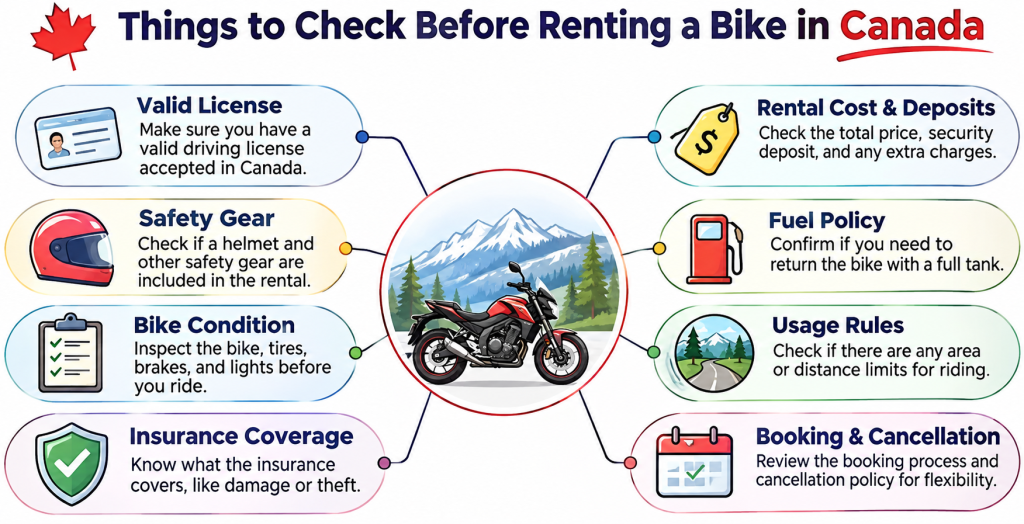
Things to Check Before Renting a Bike in Canada
A proper inspection can help prevent rental disputes and unexpected expenses.
Never rush through the vehicle handover process. Review the motorcycle and rental conditions before accepting the keys.
Check the Vehicle’s Physical Condition
Inspect the motorcycle carefully before leaving the rental location.
Pay attention to these areas:
- Scratches and dents.
- Broken mirrors.
- Damaged indicators.
- Tyre condition.
- Brake response.
- Headlights and tail lights.
- Turn signals and horn.
- Steering and suspension.
- Visible oil or fluid leaks.
Take clear photographs of existing damage.
Ask the provider to record these issues before handing over the vehicle. This can help prevent disagreements when you return it.
Understand the Fuel Policy
Different providers follow different fuel policies.
Some expect renters to return the motorcycle with the same fuel level. Others require a full tank.
Ask these questions before booking:
- What fuel level will the bike have at pickup?
- What fuel level must it have at return?
- Are refuelling charges applicable?
- Which fuel type does the motorcycle require?
For electric bikes, check the battery level, charging cable, and expected range.
Review Insurance Coverage
Insurance is one of the most important parts of a motorcycle rental.
Never assume the rental price includes complete protection.
Ask the provider about:
- Third-party liability coverage.
- Collision damage coverage.
- Theft protection.
- Personal injury coverage.
- Passenger coverage.
- Deductibles.
- Roadside assistance.
- Insurance exclusions.
A deductible is the amount you may need to pay before insurance covers the remaining eligible expenses.
Confirm that your licence and intended use meet the insurance conditions.
Check Mileage Limits
Some rental providers offer unlimited kilometres. Others set daily distance limits.
For example, a rental provider may include 200 or 300 kilometres per day.
Additional distance may attract extra charges.
Ask for the daily allowance and additional-kilometre rate before confirming your booking.
Confirm Helmet Availability
A helmet is essential safety equipment.
Ask whether the rental includes an approved helmet. Check its size, condition, straps, visor, and safety certification.
You may also need:
- Riding gloves.
- Protective jacket.
- Riding trousers.
- Suitable footwear.
- Rain protection.
Choose equipment that fits properly and provides suitable protection.
Read the Rental Agreement Carefully
Never accept a rental agreement without understanding its conditions.
Check these important details:
- Pickup and return times.
- Late-return charges.
- Cancellation policy.
- Security deposit.
- Insurance coverage.
- Damage responsibilities.
- Fuel requirements.
- Mileage limits.
- Passenger restrictions.
- Travel restrictions.
- Cleaning fees.
- Breakdown procedures.
Keep a copy of the signed agreement.
Check Roadside Assistance
Mechanical problems can interrupt your journey.
Ask whether the provider includes roadside assistance.
Save the emergency contact number before starting your trip. Understand whether towing, repairs, and replacement vehicles involve additional charges.
Confirm Permission for Long-Distance Travel
Some providers restrict motorcycles to specific areas.
Others allow intercity or interprovincial travel.
Ask for written permission before taking the vehicle outside its approved rental area.
Safety Tips for Riding a Rental Bike in Canada
Safe riding should always come before speed and convenience.
Canadian road conditions can change between provinces and seasons. First-time visitors should take extra care when riding in unfamiliar areas.
Follow Local Traffic Rules
Learn the traffic rules of your destination province.
Understand speed limits, road signs, lane markings, parking rules, and intersection behaviour.
Remember that traffic regulations can differ between provinces.
Wear an Approved Helmet
Wear a properly fitted helmet whenever required by law.
Fasten the chin strap before starting your journey.
Never use a damaged helmet or one that does not fit securely.
Avoid Overspeeding
Maintain a safe speed according to road and weather conditions.
Wet roads, sharp turns, poor visibility, and loose surfaces can increase accident risks.
Keep enough distance from other vehicles.
Check Weather and Road Conditions
Canadian weather can change quickly.
Check the forecast for rain, snow, strong winds, and poor visibility.
Avoid riding when conditions exceed your experience or the motorcycle’s capabilities.
Keep Emergency Contacts Handy
Save these important contact details:
- Rental provider.
- Roadside assistance.
- Insurance company.
- Accommodation contact.
- Local emergency services.
Canada uses 911 for emergencies.
Never Ride Under the Influence
Never ride after consuming alcohol or cannabis.
Avoid riding when medication, illness, or fatigue affects your concentration.
Impaired riding can cause serious injuries and legal consequences.
Cost of Bike Rental in Canada
Rental prices depend on several factors.
These include motorcycle type, location, season, rental duration, insurance, and provider policies.
The following figures are broad estimated daily planning ranges in Canadian dollars. They are not fixed market prices or guaranteed quotations.
| Bike Category | Estimated Daily Rental Cost |
|---|---|
| Scooters | CAD $35–$80 |
| Commuter Bikes | CAD $50–$120 |
| Premium Bikes | CAD $120–$250 |
| Adventure Bikes | CAD $150–$350 |
Individual motorcycle models and rental providers may charge different rates.
Some Canadian adventure motorcycle listings show daily prices above CAD $200. Longer bookings may offer lower daily rates.
Additional Rental Expenses
Your final rental bill may include:
- Security deposit.
- Insurance upgrades.
- Applicable taxes.
- Fuel.
- Helmet rental.
- Riding equipment.
- Vehicle delivery.
- Additional kilometres.
- Late-return fees.
- Cleaning charges.
- One-way return fees.
Practical Ways to Save Money
You can manage your rental budget with a few simple steps.
- Book early during busy travel periods.
- Compare similar motorcycle models.
- Check weekly and monthly discounts.
- Review the complete pricing breakdown.
- Avoid unnecessary equipment charges.
- Select a motorcycle that matches your needs.
- Read the cancellation and refund policy.
A low advertised price does not always mean a cheaper rental. Compare the final payable amount before booking.
Common Mistakes First-Time Bike Renters Should Avoid
First-time renters often focus only on the daily rental price. However, other details can affect their travel experience.
Avoid these common mistakes.
Booking Without Checking Licence Requirements
A valid driving licence does not always authorize every motorcycle category.
Check the licence class, provincial rules, and provider conditions before paying.
Ignoring Existing Vehicle Damage
Never collect a motorcycle without inspecting it.
Take photographs of scratches, dents, broken mirrors, and other visible damage.
Ask the provider to acknowledge existing problems.
Choosing Only by Price
The cheapest motorcycle may not offer the comfort or features you need.
Compare vehicle condition, insurance, equipment, and rental conditions before choosing.
Overlooking Insurance Details
Some renters assume the rental fee includes complete insurance protection.
Check deductibles, exclusions, theft protection, and liability coverage.
Forgetting About Weather
Canadian weather varies throughout the year.
A motorcycle suitable for summer may not suit cold or wet conditions.
Check the forecast and select suitable travel dates.
Ignoring Return Timings
Late returns may result in additional charges.
Confirm the return deadline and allow enough time to reach the rental location.
Carrying Too Much Luggage
Motorcycles have limited storage space.
Pack essential items and check the vehicle’s luggage capacity before departure.
Skipping the Rental Agreement
Never accept unclear rental conditions.
Read the agreement carefully and ask questions before signing.
Bike Rental vs Public Transport vs Taxi in Canada
Canada offers several transportation choices for visitors and local residents.
The best option depends on your destination, budget, journey length, and personal preferences.
| Comparison Factor | Bike Rental | Public Transport | Taxi or Ride-Hailing |
|---|---|---|---|
| Cost | Includes rental and running costs | Usually affordable for regular city travel | Can become expensive with frequent trips |
| Convenience | Provides independent travel | Depends on routes and schedules | Offers door-to-door travel |
| Flexibility | High, subject to rental restrictions | Limited to available services | Flexible when vehicles are available |
| Comfort | Depends on weather and motorcycle type | Comfortable on many services | Generally comfortable |
| Travel Experience | Offers independent and scenic travel | Provides a local commuting experience | Offers convenient transportation |
| Best Use Cases | Road trips and multiple stops | Daily commuting and city sightseeing | Airport transfers and short journeys |
When Should You Choose a Rental Bike?
Choose a rental bike when you have the correct licence and suitable riding experience.
It can suit travellers who want to explore several destinations independently.
When Is Public Transport a Better Choice?
Public transportation may be better for busy downtown areas.
Toronto and Montreal have established public transportation networks. Visitors may not need a motorcycle for every sightseeing journey.
When Should You Use a Taxi?
Taxis and ride-hailing services can help with airport transfers, rainy days, late-night travel, and heavy luggage.
They also suit visitors who do not have the required motorcycle licence.
Compare all available options before deciding.
How MotoShare Canada Can Help Travellers
Finding a suitable rental vehicle is an important part of travel planning.
MotoShare Canada aims to support people looking for flexible vehicle rental options.
Whether you are planning a short city ride or a longer journey, choosing a suitable vehicle can improve your travel experience.
Easy Online Booking
Online vehicle discovery can make rental planning easier.
You can explore available vehicle options and review their details before making a decision.
Check availability and booking conditions for your preferred dates.
Wide Range of Vehicles
Different journeys require different vehicles.
A short city trip may need a scooter or compact vehicle. A longer road trip may require a comfortable motorcycle or car.
MotoShare Canada focuses on vehicle rental options for travellers with different transportation needs.
Confirm the exact model and features before booking.
Transparent Pricing
Clear pricing helps renters manage their travel budgets.
Before confirming a booking, review the base rental price, taxes, insurance, deposit, and other applicable charges.
Always compare the complete rental cost.
Vehicle Owner Information
Review the available vehicle owner or provider information before booking.
Check the vehicle description, rental conditions, communication details, and customer feedback where available.
Ask questions whenever information seems unclear.
Flexible Rental Options
Travel requirements can change depending on the journey.
Some people need transportation for one day. Others need it for several weeks.
Explore the rental periods offered by the provider.
Rental Opportunities Across Canadian Destinations
Travellers may explore rental opportunities around popular Canadian destinations.
Some examples include:
- Toronto: Suitable for city travel and exploring Southern Ontario.
- Vancouver: Popular for coastal journeys and nearby scenic destinations.
- Montreal: Offers opportunities for urban sightseeing and regional travel.
- Calgary: Provides access to city attractions and scenic Alberta destinations.
Vehicle availability and rental conditions may differ by location.
Support for Better Travel Planning
Before booking through MotoShare Canada, compare available vehicles and read their rental conditions.
Select a vehicle that matches your licence, riding experience, travel distance, and budget.
Visit MotoShare Canada to explore rental options and plan your next journey.
Frequently Asked Questions About Bike Rentals in Canada
1. Can tourists rent a bike in Canada?
Yes. Tourists can rent motorcycles or scooters if they meet the applicable licensing and rental requirements.
They may need a valid motorcycle licence, an International Driving Permit where required, government identification, and a security deposit.
2. Is an International Driving Permit required to rent a bike in Canada?
Requirements depend on the province and the length of your visit.
Ontario, Quebec, and Alberta have different rules for foreign driving licences and IDPs.
Check the local requirements before booking. An IDP does not replace your original licence.
3. How much does bike rental cost in Canada?
Rental prices vary by vehicle category and location.
As general estimates, scooters may cost CAD $35–$80 per day. Commuter bikes may cost CAD $50–$120. Premium bikes may cost CAD $120–$250. Adventure bikes may cost CAD $150–$350.
Taxes, insurance, and other charges may increase the final price.
4. Are helmets provided with bike rentals?
Some providers include helmets in their rental packages. Others charge an additional fee.
Confirm availability before booking. Check the helmet’s size, condition, and safety certification.
5. Can I rent a bike without paying a security deposit?
Some providers may offer reduced deposit requirements.
However, many motorcycle rental providers require a refundable deposit or credit-card authorization.
Check the deposit amount and refund conditions before paying.
6. What happens if my rental bike breaks down?
Contact the rental provider immediately.
Follow their breakdown instructions and check whether roadside assistance is included.
Avoid arranging expensive repairs without approval from the provider.
7. Can I take a rental bike to another city?
Some providers allow intercity travel, while others restrict their motorcycles to specific areas.
Ask for written permission before leaving the approved rental area.
Also check for additional charges and one-way return fees.
8. Can international students rent motorcycles in Canada?
Yes, international students may rent motorcycles if they meet provincial licensing rules and provider requirements.
They should prepare their driving licence, identification, and any other requested documents.
9. Can I rent a motorcycle with a regular car licence?
Not necessarily.
A regular car licence does not automatically permit motorcycle operation.
You must hold the correct licence class for the selected vehicle. Some electric bicycles follow different rules.
10. What documents should I carry while riding a rental motorcycle?
Carry your valid driving licence and International Driving Permit when required.
Keep relevant vehicle and insurance documents accessible. You should also carry your rental agreement and emergency contact information.
11. Can beginners rent premium motorcycles in Canada?
Some providers allow beginners to rent certain motorcycles. Others require minimum riding experience.
Premium motorcycles may have stricter rental conditions.
Beginners should choose manageable vehicles that match their riding skills.
12. Can I rent a bike for one day in Canada?
Yes, some providers offer daily motorcycle rentals.
However, minimum rental periods may differ by vehicle category and location.
Check availability and pricing before booking.
13. Should I inspect a rental bike before accepting it?
Yes. Always inspect the motorcycle before leaving the rental location.
Check the tyres, brakes, lights, mirrors, fuel level, and visible damage.
Take photographs and report existing problems to the provider.
14. What should I do before returning a rental bike?
Return the motorcycle at the agreed time and location.
Follow the fuel and cleanliness requirements. Take photographs of the final vehicle condition.
Request return confirmation and check the security deposit refund process.
15. Is renting a bike better than buying one for a short visit?
Renting can be more practical for short visits.
You avoid the long-term costs and responsibilities of purchasing a motorcycle.
However, compare rental charges, insurance, deposits, and other expenses before deciding.
Conclusion
Renting a bike in Canada can make your travel more flexible and enjoyable. It allows you to explore different destinations without depending entirely on public transportation.
However, a successful rental experience starts with careful preparation. Check the motorcycle’s condition, insurance coverage, licence requirements, fuel policy, mileage limits, and rental agreement before booking.
Choose a vehicle that matches your riding experience and travel plans. Always wear suitable safety equipment and follow local traffic rules. Check road and weather conditions before starting your journey.
Whether you are exploring Toronto, enjoying Vancouver’s coastal scenery, visiting Montreal, or discovering Alberta, the right rental vehicle can make your trip more convenient.