Introduction
A trip across Europe can offer much more than famous landmarks. Local festivals, music performances, creative workshops, and business gatherings add new experiences to every journey.
However, finding suitable activities takes time. People often search across different websites to compare event dates, locations, and ticket options.
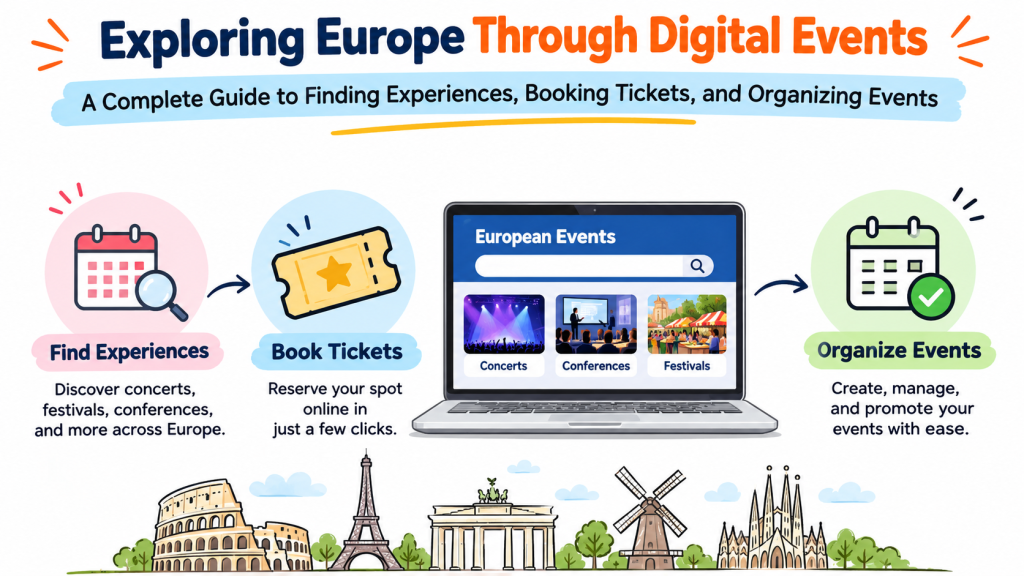
Online Event Ticket Booking Europe helps simplify this search. Digital marketplaces bring event information and booking opportunities together. They help visitors explore activities before planning their schedules.
These platforms also serve event organizers. Businesses, venues, and independent professionals can publish activities online. They can organize ticket categories and review attendee registrations.
Imagine visiting Paris for a weekend concert. You might also want to attend a cultural festival. Another visitor may travel to Berlin for a technology conference.
An online event marketplace can help both visitors explore suitable activities. MyEventsNow EU connects European attendees, venues, businesses, and organizers through one event marketplace.
This guide explores the European event experience. It explains how people discover events and how organizers manage them.
2. Why Digital Event Platforms Matter Across Europe
Digital platforms have changed how people explore local activities. Visitors can search for events before leaving home.
They can also compare different activities without visiting multiple ticket offices.
One Place for Different Event Interests
People have different reasons to attend events.
- Music fans search for concerts and festivals.
- Tourists explore cultural celebrations and local activities.
- Students look for educational workshops.
- Entrepreneurs attend startup gatherings.
- Professionals explore industry conferences.
- Families search for suitable community activities.
An online marketplace can bring these interests together. Visitors can choose categories based on their needs.
Easier Planning for International Visitors
Travelers often face extra planning challenges. They may not know local venues or event schedules.
A digital listing helps them review important information. They can check the location, timing, and ticket options.
International visitors should also consider language differences. Currency and ticket conditions may vary between European countries.
Therefore, they should review the event details carefully.
More Convenient Event Publishing
Organizers also need a simple way to share activities. Printed advertisements may not reach every interested visitor.
Online event publishing gives organizers another way to present their activities. They can add descriptions, schedules, venue details, and ticket categories.
MyEventsNow EU supports these activities through its European marketplace. It brings event discovery and organizer management into one experience.
3. Upcoming Events in Europe: What Can You Discover?
Europe offers many types of events throughout the year. Each destination brings different activities and cultural experiences.
Visitors can choose events based on their interests and travel plans.
Music and Entertainment
Music events attract local audiences and international visitors. People can explore live concerts, DJ performances, and music festivals.
Entertainment options also include theatre, comedy, dance, and film events.
Cultural and Community Celebrations
Cultural activities help visitors understand local traditions. They may include art exhibitions, food celebrations, and heritage events.
Community gatherings also create opportunities to meet local residents.
Learning and Creative Workshops
Workshops help people develop practical skills. Popular subjects include photography, painting, design, cooking, and technology.
Some sessions welcome beginners. Others require specific knowledge or experience.
Professional and Business Gatherings
Business events help professionals exchange knowledge. They also create opportunities for industry discussions.
Common subjects include entrepreneurship, digital marketing, technology, and business development.
How to Choose an Event
Follow these steps before selecting an activity.
- Choose your preferred destination.
- Decide which event category interests you.
- Compare event dates and schedules.
- Review venue locations.
- Read the event description.
- Check ticket categories and prices.
- Review registration and entry conditions.
These steps help visitors make better decisions.
Planning Your European Event Calendar
Travelers should match events with their travel dates. A suitable activity may take place before or after their visit.
Also, check local transport and accommodation options. Some venues may sit outside central areas.
MyEventsNow EU helps visitors explore Upcoming Events in Europe. Its marketplace covers entertainment, cultural, educational, and professional activities.
4. Berlin: A Destination for Music, Technology, and Creative Activities
Berlin attracts visitors with different interests. Music, technology, creative industries, and nightlife shape many local experiences.
People searching for Events in Berlin can explore several event categories.
Live Music and Concert Experiences
Berlin offers opportunities to explore live music performances. Visitors can search for concerts, DJ shows, and independent music events.
Before choosing a performance, review the artist and venue. Check the event schedule and entry conditions.
Technology and Startup Gatherings
Berlin also attracts technology professionals and entrepreneurs. Visitors can explore conferences, startup events, and industry meetups.
Common discussion topics include:
- Artificial intelligence and digital innovation.
- Software development and cloud technology.
- Startup management and entrepreneurship.
- Cybersecurity and data protection.
- Digital marketing and business growth.
These gatherings help professionals exchange ideas. They may also support useful business connections.
Creative Learning and Workshops
Creative activities provide another reason to explore Berlin. Visitors may find photography sessions, design workshops, and art classes.
Check the experience level before registering. Some workshops require previous knowledge or special materials.
Nightlife and Social Entertainment
Berlin offers different evening activities. Visitors can explore dance performances, comedy shows, and nightlife events.
Check age restrictions before booking. Also, review venue access and transport arrangements.
Finding Suitable Berlin Events
Start by choosing your preferred activity. Then compare dates, schedules, and venue locations.
MyEventsNow EU supports Berlin event discovery across entertainment and professional categories. Visitors can explore concerts, technology conferences, workshops, and networking activities.
5. Paris: Explore Culture, Creativity, and Professional Opportunities
Paris attracts visitors interested in culture and entertainment. It also offers opportunities for learning and business networking.
People searching for Events in Paris can explore different experiences.
Art and Cultural Activities
Paris offers many cultural experiences. Visitors can explore exhibitions, local celebrations, and creative gatherings.
These activities provide opportunities to understand local culture. They also help visitors discover different artistic interests.
Live Music and Performance Events
Music fans can search for concerts and live performances. Other options include theatre, dance, and entertainment shows.
Before choosing an event, review its performance details. Check the venue and starting time.
Professional Conferences and Seminars
Paris also hosts business and professional activities. These events cover several industries.
Common subjects include:
- Business development.
- Entrepreneurship.
- Digital marketing.
- Technology innovation.
- Leadership.
- Creative industries.
Professionals should review conference topics before registering. This helps them select relevant sessions.
Creative Workshops and Social Gatherings
Creative workshops allow visitors to learn new skills. Activities may include art, photography, design, and crafts.
Social events also create opportunities to meet people. Some gatherings focus on community activities and professional networking.
Planning Your Paris Event Visit
Choose events that match your travel schedule. Compare their locations and registration conditions.
MyEventsNow EU supports Paris event discovery across cultural, educational, social, and professional categories.
Visitors can explore different listings before choosing suitable experiences.
6. Concert Tickets Europe: A Guide for Music Lovers
Music brings people together across countries and cultures. Europe offers many opportunities to enjoy live performances.
Music fans can explore concerts in different cities. They can also discover festivals and local performances.
Different Music Experiences
Artist concerts: Individual singers and music groups perform live.
Music festivals: These events feature several artists and performances.
Electronic music events: DJs perform for audiences at different venues.
Classical performances: Orchestras and musicians perform classical compositions.
Independent music shows: Local performers present their music at smaller venues.
How to Search for Concert Tickets Europe
Start with your preferred artist or music style. Then select your destination and event date.
Compare available ticket categories before booking. Some events offer reserved seating, while others use general admission.
Check whether the ticket seller has proper authorization. Avoid sellers who provide unclear ownership details.
Important Details to Review
| Booking Detail | What Visitors Should Check |
|---|---|
| Artist | Confirm the performer or music group |
| Date | Check the correct performance date |
| Timing | Review starting and entry times |
| Venue | Confirm the complete address |
| Ticket type | Understand seating or standing access |
| Price | Check the displayed price and extra charges |
| Age rules | Review age restrictions |
| Entry | Understand identification and security rules |
| Cancellation | Read applicable ticket conditions |
Plan Beyond the Concert
Concert planning involves more than buying tickets. Visitors should consider transport and accommodation.
Check the venue’s location before booking your hotel. Also, allow enough time for travel and entry checks.
MyEventsNow EU gives music enthusiasts another way to explore concerts and festivals. Its event marketplace supports music discovery across European destinations.
7. Business Conferences in Europe: Learn, Connect, and Grow
Professional events help people understand industry developments. They also create opportunities for business discussions.
Business Conferences in Europe attract entrepreneurs, employees, business owners, and industry experts.
Major Conference Categories
Technology and innovation conferences
These events explore artificial intelligence, software, cybersecurity, and digital products.
Startup and entrepreneurship gatherings
Founders can learn about business planning and growth. They can also meet other entrepreneurs.
Digital marketing conferences
These events cover search marketing, content strategy, social media, and advertising.
Leadership seminars
Professionals can explore team management and business leadership.
Industry networking events
These gatherings help people exchange knowledge. They may also create opportunities for professional partnerships.
How to Select a Useful Conference
Choosing a conference requires some research.
- Identify your professional goals.
- Select an industry-related topic.
- Review the conference agenda.
- Check speaker backgrounds.
- Understand the expected audience.
- Compare registration options.
- Confirm the event location.
Make the Most of Professional Events
Preparation can improve your conference experience.
Read the agenda before attending. Select sessions that match your interests.
Prepare questions for speakers and other participants. Keep useful contact details when people agree to share them.
You can also review follow-up opportunities after the event.
MyEventsNow EU supports the discovery of professional gatherings. Visitors can explore conferences, technology events, and networking opportunities.
8. How an Event Ticketing Platform Europe Works
An event ticketing platform connects event information with ticket booking. It helps organizers manage ticket options and booking records.
Attendees can review listings before choosing suitable activities.
Main Functions of Ticketing Platforms
Event discovery
Visitors can explore event listings by category and destination.
Ticket configuration
Organizers can create different ticket categories. They can explain the access or benefits of each option.
Availability management
Organizers can monitor available ticket quantities. They can also update ticket information when needed.
Booking records
Digital records help organizers review ticket bookings. They can use these details during event preparation.
Attendee information
Registration workflows can collect information required for participation.
Event details
Listings can display schedules, dates, venues, and descriptions.
Why Ticket Categories Matter
Different attendees may need different access options.
For example, a conference may offer standard and premium tickets. A concert may offer general admission and reserved seating.
Organizers should explain each category clearly. Visitors should understand what each ticket includes.
What Should Attendees Look For?
A useful ticketing experience should provide clear event information.
Check the event schedule and venue. Review the ticket category and applicable terms.
Also, understand the booking process before submitting personal information.
Every platform has different capabilities. Therefore, organizers should compare features before making a choice.
9. Event Registration Platform Europe: Managing Participants Effectively
Event registration helps organizers collect participant information. It also helps them prepare for upcoming activities.
An Event Registration Platform Europe can support different event formats. These include workshops, conferences, seminars, and networking gatherings.
A Simple Registration Process
A typical registration journey follows these steps:
- The organizer publishes an event.
- A visitor opens the event listing.
- The visitor reviews the event details.
- The visitor chooses a registration option.
- The visitor enters the required details.
- The system creates a registration or booking record.
- The organizer reviews participant information.
The exact process depends on the event and platform.
Events That Need Registration
Conferences: Organizers can coordinate professional attendees.
Training sessions: Registration helps estimate participant numbers.
Educational seminars: Organizers can prepare learning materials.
Networking gatherings: Participant records can support event planning.
Community activities: Registration helps groups plan their activities.
Information Organizers May Collect
Organizers should request only necessary information.
Common details include:
- Full name.
- Contact email.
- Selected ticket category.
- Registration status.
- Relevant participation details.
Organizers must handle personal data responsibly. They should explain how they use attendee information.
GDPR applies to relevant personal data processing in Europe. Organizers should understand their responsibilities under these rules.
Improve Registration Management
Review participant records regularly. Check whether the information remains accurate.
Update event details when schedules change. Keep registration information secure and limit access.
These steps help organizers prepare for event day.
10. A Practical Guide to Publishing European Events Online
Event publishing helps organizers share activities with interested audiences. It gives visitors a place to review important event information.
Businesses, venues, agencies, and independent organizers can use online listings.
Why List Your Event Online?
Online publishing offers several useful benefits.
- Gives visitors access to event details.
- Helps organizers share event information.
- Supports digital event promotion.
- Provides space for ticket categories.
- Helps attendees review schedules.
- Creates a central event listing.
However, online publishing cannot guarantee ticket sales. Organizers still need suitable planning and promotion.
Prepare Your Event Information
Before publishing, organize the following details.
| Information | What Organizers Should Provide |
|---|---|
| Event title | A clear and relevant name |
| Description | Purpose and main activities |
| Category | Suitable event type |
| Date | Confirmed event date |
| Time | Starting and ending times |
| Venue | Complete location information |
| Schedule | Sessions and planned activities |
| Tickets | Categories and prices |
| Images | Relevant event photographs or graphics |
| Entry rules | Age and access conditions |
| Organizer details | Appropriate contact information |
Steps to List Your Event Online
- Choose a suitable event marketplace.
- Prepare your event description.
- Select the correct category.
- Add the venue and schedule.
- Configure ticket options.
- Include relevant images.
- Review all information.
- Publish the event listing.
- Monitor changes and registrations.
Publishing With MyEventsNow EU
MyEventsNow EU supports event publishing across Europe. Independent organizers, agencies, businesses, and venues can list activities.
Organizers can create listings and publish schedules. They can also configure ticket categories and manage event information.
This helps different providers present their activities online. Visitors can explore listings based on their interests.
11. Sell Event Tickets Online: Better Planning for Organizers
Online ticket sales can simplify event management. Organizers can publish ticket categories and review booking activity.
However, good ticket management starts with accurate information.
Create Ticket Options That Make Sense
Organizers should design categories around actual event access.
Common examples include:
Standard tickets: Provide regular event entry.
VIP tickets: Offer additional benefits when organizers provide them.
Early booking tickets: Give visitors an option during an earlier sales period.
Group tickets: Support people attending together.
Reserved seating: Connect tickets with specific seating areas.
Explain the differences between categories. Do not promise benefits that the event cannot provide.
Display Clear Ticket Prices
Show ticket prices in an easy-to-understand format. Explain additional charges before visitors complete bookings.
European visitors may use different currencies. Therefore, organizers should identify the correct currency.
Also, review applicable tax and pricing requirements. These rules can differ between countries.
Monitor Ticket Availability
Check ticket quantities regularly. Update available options when circumstances change.
Accurate availability helps visitors understand their choices. It also helps organizers plan event capacity.
Keep Booking Information Organized
Booking records can support event preparation.
Organizers should review:
- Registration numbers.
- Ticket categories.
- Booking status.
- Participant information.
- Changes to attendee records.
Protect personal information during this process. Give access only to authorized people.
Promote Events With Useful Information
Good promotion starts with a clear message.
- Explain the event’s main purpose.
- Share the correct schedule.
- Use relevant event images.
- Describe the target audience.
- Highlight confirmed activities.
- Provide clear ticket information.
Organizers should avoid misleading claims. Honest descriptions help visitors understand the experience.
Select a Suitable Ticketing Marketplace
Compare the platform’s available features. Check whether it supports your event requirements.
MyEventsNow EU supports event listings, schedules, ticket categories, and registration management.
Organizers can explore these capabilities when planning their event publishing process.
12. Event Planning Problems and Ways to Prevent Them
Both attendees and organizers can face avoidable problems. A little preparation can reduce confusion.
Here are eight common mistakes and their solutions.
Problems Attendees Should Avoid
1. Ignoring Important Event Information
Some people book tickets after reading only the title. They may miss details about the event.
Solution: Read the complete description. Confirm the date, time, venue, and event format.
2. Forgetting About Travel Arrangements
A venue may sit far from the visitor’s accommodation. Poor planning can create delays.
Solution: Check the venue address before booking. Review local transport options.
3. Skipping Ticket Terms
Some tickets include specific entry or transfer conditions. Visitors may overlook these rules.
Solution: Read the applicable terms carefully. Check age limits and identification requirements.
4. Overlooking the Event Schedule
Some events include several sessions. Visitors may miss activities they wanted to attend.
Solution: Review the complete schedule. Note important starting times.
Problems Organizers Should Avoid
5. Writing Weak Event Descriptions
A short or unclear description may confuse visitors. They may not understand the event’s purpose.
Solution: Explain the event, audience, activities, and main details. Use simple language.
6. Creating Confusing Ticket Categories
Visitors may struggle to compare ticket options. Unclear benefits can create complaints.
Solution: Explain every category. Show the correct price and access conditions.
7. Forgetting to Update Event Listings
Schedules and venue details may change. Old information can mislead attendees.
Solution: Review event information regularly. Publish confirmed updates quickly.
8. Ignoring Registration Records
Poor record management can affect event preparation. Organizers may lose track of participant details.
Solution: Check registration records regularly. Monitor ticket availability and required attendee information.
Organizer Preparation Checklist
| Planning Task | Action | Expected Benefit |
|---|---|---|
| Event description | Explain the activity clearly | Better visitor understanding |
| Venue planning | Confirm location and access | Easier arrival |
| Ticket categories | Describe each ticket option | Clearer choices |
| Registration | Set participation requirements | Organized registrations |
| Attendee records | Review participant details | Better preparation |
| Schedule | Update confirmed changes | Accurate information |
| Booking records | Monitor ticket activity | Better event control |
| Promotion | Share useful event details | Improved event awareness |
A consistent review process helps organizers manage their activities. It also creates a clearer experience for attendees.
13. MyEventsNow EU: Bringing European Attendees and Organizers Together
MyEventsNow EU serves as a European event discovery, ticket booking, and management marketplace.
It connects event organizers, venues, businesses, and attendees. Its focus covers several parts of the event journey.
Discover Activities Across European Destinations
Visitors can explore different event categories. These include concerts, festivals, workshops, conferences, and cultural activities.
The marketplace supports event discovery in Berlin and Paris.
Berlin listings cover:
- Live concerts.
- Technology conferences.
- Professional meetups.
- Workshops.
- Nightlife activities.
- Entertainment shows.
Paris listings cover:
- Cultural festivals.
- Live music.
- Business conferences.
- Educational seminars.
- Creative workshops.
- Social gatherings.
These categories help visitors explore different experiences.
Explore Ticket Booking Opportunities
Visitors can review event information before selecting tickets. They can explore available event options and booking details.
Actual availability depends on individual listings. Ticket terms also depend on each event.
Visitors should review these details before completing a booking.
Give Organizers a Place to Publish Activities
MyEventsNow EU supports different event providers.
These include:
- Independent event organizers.
- Event agencies.
- Business organizations.
- Training providers.
- Venues.
- Community groups.
Organizers can create event listings and publish schedules. They can also configure ticket categories and manage event information.
Support Registration and Booking Management
Organizers need accurate participant records. Registration workflows help coordinate attendee information.
The marketplace supports registration and booking management activities. These tools can help organizers prepare for their events.
Explore Venues and Community Activities
Venue information helps visitors plan their attendance. It also helps them understand where events take place.
MyEventsNow EU includes venue exploration within its broader marketplace experience.
The platform also focuses on multilingual accessibility. This supports its goal of connecting different European audiences.
Community engagement adds another benefit. Local groups can present activities to interested visitors.
A Marketplace for Different Event Needs
MyEventsNow EU brings event discovery and organizer activities together. It supports people who want to attend events and those who want to publish them.
Its marketplace covers entertainment, professional gatherings, education, and cultural experiences.
This creates a shared digital space for European event activities.
14. Four Realistic Examples of European Event Platform Use
Different people use event platforms for different reasons. These fictional examples show how digital marketplaces can support them.
Example 1: A Visitor Planning a Cultural Weekend in Paris
Emma plans a weekend trip to Paris. She wants to explore local cultural activities.
She searches for festivals and creative events. Then, she compares event dates and venue locations.
She finds a suitable activity and checks its ticket conditions. She also plans transport around the event schedule.
A marketplace such as MyEventsNow EU can help Emma explore suitable listings.
Example 2: A Music Fan Visiting Berlin
Alex enjoys live performances. He plans a short trip to Berlin with friends.
He searches for concerts and DJ events. He compares artist information, performance times, and ticket categories.
After selecting an event, he checks the venue address. He also reviews the entry requirements.
This helps him plan his evening before travelling.
Example 3: An Entrepreneur Looking for Professional Connections
Sofia runs a small technology business. She wants to meet other industry professionals.
She searches for technology conferences in Europe. She compares conference subjects, speakers, and schedules.
She chooses an event that matches her business interests. Then, she completes the registration process.
The event platform helps her explore relevant professional opportunities.
Example 4: A Creative Professional Publishing a Workshop
Lucas teaches photography in a European city. He wants to organize a beginner workshop.
He prepares an event description and selects a suitable category. Next, he adds the venue, date, and schedule.
He creates ticket categories and publishes the event listing. After publication, he monitors registrations and booking information.
An event marketplace can support these tasks. It gives Lucas a digital place to present his workshop.
15. Frequently Asked Questions
1. What Is Online Event Ticket Booking in Europe?
Online Event Ticket Booking Europe allows people to explore and purchase event tickets through digital platforms. Visitors can search for concerts, festivals, conferences, and workshops. They can review dates, venues, prices, and ticket categories before booking. Some events offer free registration, while others require payment. The exact booking process depends on the organizer and ticket seller.
2. How Can I Discover Upcoming Events in Europe?
Start by choosing your preferred country or city. Then, search for music, cultural, educational, or professional activities. Compare event dates and venue locations before selecting an experience. Online event marketplaces bring different listings together. MyEventsNow EU supports event discovery across European destinations and helps visitors explore activities that match their interests.
3. What Types of Events Can I Find in Berlin?
Berlin offers different entertainment and professional activities. Visitors can explore concerts, DJ performances, technology conferences, workshops, and networking meetups. You can select an event category and compare available listings. Always check the venue, schedule, and entry conditions. MyEventsNow EU supports Berlin event discovery across several activity categories.
4. How Can Tourists Explore Events in Paris?
Tourists can search for cultural festivals, music performances, creative workshops, and business gatherings. Start with your travel dates and preferred activities. Then, compare venue locations and ticket options. Check registration requirements before making plans. MyEventsNow EU supports Paris event discovery and gives visitors another way to explore local experiences.
5. How Can I Find Concert Tickets Across Europe?
Search for your preferred artist, music style, or destination. Compare concert dates, venues, and ticket categories. Review entry rules and cancellation conditions before paying. Use official or authorized sellers whenever possible. Concert ticket availability can change between events. Therefore, check the latest information before making travel arrangements.
6. Where Can Professionals Find Business Conferences in Europe?
Professionals can explore business conferences through event marketplaces and organizer listings. Search for topics such as technology, entrepreneurship, digital marketing, and leadership. Review the conference agenda and speaker details. Also, compare registration options and venue locations. MyEventsNow EU supports the discovery of professional conferences and networking activities across Europe.
7. What Does an Event Ticketing Platform Do?
An event ticketing platform helps organizers manage event listings and ticket options. It can support ticket categories, booking records, availability, and attendee information. Visitors can review event details before selecting suitable tickets. Platform features differ between providers. Organizers should compare available tools and terms before selecting a service.
8. Why Do Organizers Need an Event Registration Platform?
Registration platforms help organizers collect participant information. They support activities such as conferences, seminars, workshops, and professional gatherings. Organizers can review registration records and prepare event arrangements. Visitors can submit the details required for participation. Good registration management also helps organizers keep their information accurate and organized.
9. What Information Do I Need to List an Event Online?
Prepare the event title, description, category, date, and time. Add the complete venue address and event schedule. Explain ticket categories and prices clearly. Include relevant images and entry conditions. Organizers should also provide suitable contact information. Review every detail before publishing to reduce confusion among potential attendees.
10. How Can Organizers Sell Event Tickets Online?
Choose a platform that supports your event requirements. Prepare clear ticket categories and display accurate prices. Explain availability and entry conditions. After publishing, review booking records and participant information regularly. Organizers should also share useful event details through suitable promotional channels. Clear information helps visitors understand their booking choices.
11. What Should Visitors Check Before Booking an Event?
Visitors should check the event date, starting time, and venue. They should also review ticket categories and displayed prices. Read entry requirements and cancellation terms before paying. International visitors should consider local transport and currency differences. Careful checking helps prevent booking mistakes and makes event planning easier.
12. How Does MyEventsNow EU Support European Events?
MyEventsNow EU connects attendees, organizers, venues, and businesses through a European event marketplace. Visitors can explore concerts, festivals, conferences, workshops, and cultural activities. Organizers can publish listings, add schedules, configure ticket categories, and manage registrations. The marketplace also supports venue exploration, multilingual accessibility, and community engagement.
16. Final Thoughts
Discovering the right event can add value to any European trip or local experience. Digital marketplaces make this process easier by bringing event information and booking opportunities together. Attendees can explore concerts, festivals, conferences, and workshops. Organizers can publish activities, configure ticket categories, and manage registrations. Clear descriptions and accurate schedules help everyone plan better. MyEventsNow EU supports these needs through its growing European event marketplace. It connects visitors, businesses, venues, and organizers through event discovery and management. Whether someone plans to attend a concert or publish a workshop, digital event platforms offer practical ways to connect people with experiences across Europe.