Introduction
Traveling across Canada can be an exciting experience. The country offers beautiful landscapes, busy cities, peaceful towns, and scenic road trip routes. Having access to a rental vehicle can make these journeys easier and more flexible.
However, renting a vehicle also requires careful planning. Rental prices, insurance, fuel, deposits, parking, and additional charges can affect your travel budget. A poor rental decision may also create safety problems during your journey.
First-time visitors often struggle to understand rental agreements and local driving requirements. They may also find it difficult to choose between economy cars, SUVs, motorcycles, and other rental options.
The good news is that a little preparation can prevent many common problems. You can save money by comparing rental prices, checking vehicle conditions, and understanding payment policies before booking.
This guide shares practical budget safety tips for vehicle rentals in Canada. It explains how to choose suitable vehicles, prepare documents, avoid extra expenses, and follow safe driving practices.
Whether you are a tourist, student, working professional, family traveler, or backpacker, these suggestions can help you make better rental decisions.
Why Vehicle Rentals Are Useful for Traveling in Canada
Canada covers a large geographical area. Many popular attractions sit outside major city centers. Public transportation provides good access to many urban destinations, but it may not reach every tourist location.
A rental vehicle offers more control over your travel plans.
Freedom to Explore Different Destinations
Rental vehicles allow travelers to create flexible travel schedules. You can visit attractions, stop for photographs, and explore nearby towns without depending entirely on public transport.
For example, travelers in Vancouver may prefer a rental car for exploring surrounding coastal destinations.
Visitors in Calgary can also consider renting a suitable vehicle for journeys toward nearby mountain attractions.
Convenient Transportation for Families
Families often carry luggage, shopping bags, and travel equipment. A rental car provides private space and makes family transportation easier.
Groups can also share rental expenses, which may reduce individual travel costs.
Suitable for Temporary Transportation Needs
Students and working professionals sometimes need vehicles for short periods.
Renting can provide temporary transportation without the long-term costs of purchasing and maintaining a vehicle.
Better Access to Outdoor Destinations
Some Canadian attractions have limited public transportation connections.
A suitable rental vehicle can help travelers reach hiking areas, countryside destinations, and smaller communities.
However, always check road conditions and rental restrictions before starting longer journeys.
Who Should Consider Renting a Vehicle in Canada?
Vehicle rentals can support different travel and transportation needs.
International Tourists
International tourists may rent vehicles to explore Canadian cities and nearby attractions.
A rental car can make airport transfers, hotel journeys, and road trips more convenient.
First-Time Visitors
Visitors unfamiliar with Canadian transportation systems may prefer a rental vehicle for certain journeys.
They should understand local traffic rules and choose a vehicle that feels comfortable to drive.
Students
Students may need temporary transportation during holidays, internships, or accommodation changes.
An affordable rental can provide flexibility when public transport does not meet their needs.
Working Professionals
Business travelers may need vehicles for meetings, client visits, and temporary work assignments.
A rental vehicle can help them manage busy schedules.
Budget Travelers
Backpackers and budget-conscious visitors often compare transportation options carefully.
A small, fuel-efficient rental car may help reduce expenses during suitable trips.
Benefits of Renting a Vehicle for First-Time Travelers
Renting a vehicle can make a new destination easier to explore.
Here are some important benefits.
1. Flexible travel schedules: You can plan departure times and stops according to your preferences.
2. Better luggage management: Rental cars provide space for suitcases, backpacks, and personal belongings.
3. Private transportation: You can travel with family or friends without sharing your space with large groups.
4. Access to additional destinations: A vehicle can help you visit places with limited public transport.
5. Suitable rental periods: Some providers offer daily, weekly, and longer rental arrangements.
6. Convenient group travel: Friends and family members can share the transportation costs.
Before booking, compare the total rental expense with other available transportation options.
Types of Vehicles Available for Rent in Canada
Different vehicles serve different travel requirements. Consider passenger capacity, driving experience, weather, and rental costs before choosing.
Economy Cars
Economy cars are practical for solo travelers, couples, and small families.
They usually offer affordable rental rates and reasonable fuel efficiency.
Best suited for: City driving, short journeys, and budget travel.
Compact Cars
Compact cars provide a useful balance between comfort and affordability.
They are suitable for everyday transportation and moderate-distance journeys.
Best suited for: Students, professionals, and small groups.
SUVs
SUVs offer additional passenger and luggage space. Some models also provide features that help with challenging driving conditions.
However, they may have higher rental and fuel expenses.
Best suited for: Family holidays, outdoor travel, and trips involving extra luggage.
Premium Cars
Premium cars offer additional comfort and advanced features.
Their rental charges, insurance expenses, and deposits may be higher.
Best suited for: Business travel and special occasions.
Motorcycles
Motorcycles offer a different way to explore suitable Canadian roads.
Riders should have the correct license, suitable protective equipment, and enough riding experience.
Best suited for: Experienced riders and appropriate seasonal journeys.
Electric Vehicles
Electric vehicles can help reduce fuel expenses on suitable routes.
However, charging access, battery range, and charging time require careful planning.
Best suited for: City journeys and routes with reliable charging facilities.
How to Select the Right Rental Vehicle
Choosing the right vehicle can help you avoid unnecessary expenses.
Consider these points before making a reservation.
Understand Your Travel Needs
First, calculate how many people will travel with you.
Consider your luggage, expected distance, and road conditions.
A compact car may be enough for a couple. A larger vehicle may suit a family with several bags.
Compare Rental Providers
Do not select a provider based only on its advertised daily price.
Compare important rental conditions, including:
- Daily and weekly charges.
- Insurance coverage.
- Security deposits.
- Mileage limits.
- Fuel policies.
- Additional driver charges.
- Pickup and return fees.
Consider Fuel Efficiency
Fuel expenses can become significant during long journeys.
A fuel-efficient vehicle may help reduce your overall transportation budget.
Check Seasonal Conditions
Canadian weather changes throughout the year.
Winter travelers should check suitable tire requirements and winter driving conditions. Summer travelers should inspect the cooling system and tire condition.
Review Travel Restrictions
Some providers restrict travel outside specific regions.
Others may charge additional fees for one-way journeys or longer distances.
Read these conditions before confirming your booking.
Documents Required for Vehicle Rentals in Canada
Rental providers usually request identification and driving documents.
Requirements depend on the province, rental company, and visitor’s country of origin.
Valid Driving License
You generally need a valid driving license for the vehicle category you want to rent.
Check whether your existing license meets the applicable provincial requirements.
International Driving Permit
Some international visitors may need an International Driving Permit.
The requirement depends on the province and the language or format of the original license.
An IDP generally accompanies your original license. It does not replace it.
Government-Issued Identification
Rental providers may request a passport or another acceptable identification document.
International visitors should keep their identification available during booking and vehicle collection.
Address Details
Some providers request residential or local address information.
Ask about the required documents before arriving at the rental location.
Payment Card and Security Deposit
Many rental companies require a payment card for the security deposit.
The amount depends on the provider, vehicle, and rental conditions.
Always ask when the provider will release the deposit after returning the vehicle.
Important Checks Before Collecting a Rental Vehicle
Never start your journey without inspecting the rental vehicle.
A few simple checks can prevent disagreements and unexpected repair charges.
Inspect the Exterior
Look for existing scratches, dents, broken lights, and damaged mirrors.
Take clear photographs of any visible damage.
Ask the provider to record these issues before you accept the vehicle.
Check the Tires and Brakes
Inspect the tires for visible damage and unusual wear.
Confirm that the brakes work properly before entering busy roads.
If something feels unsafe, ask the provider to address the problem.
Test the Lights and Indicators
Check the headlights, brake lights, hazard lights, and turn signals.
These features help other road users understand your movements.
Review the Fuel Policy
Some providers expect the same fuel level at return.
Others offer prepaid fuel arrangements.
Understand the policy to avoid additional charges.
Confirm Insurance Coverage
Ask what happens if the vehicle gets damaged or stolen.
Understand the deductible, exclusions, and liability conditions.
Never assume that the basic rental price includes complete protection.
Read the Rental Agreement
Check the return time, cancellation policy, mileage limits, and damage charges.
Keep a copy of the agreement and booking confirmation.
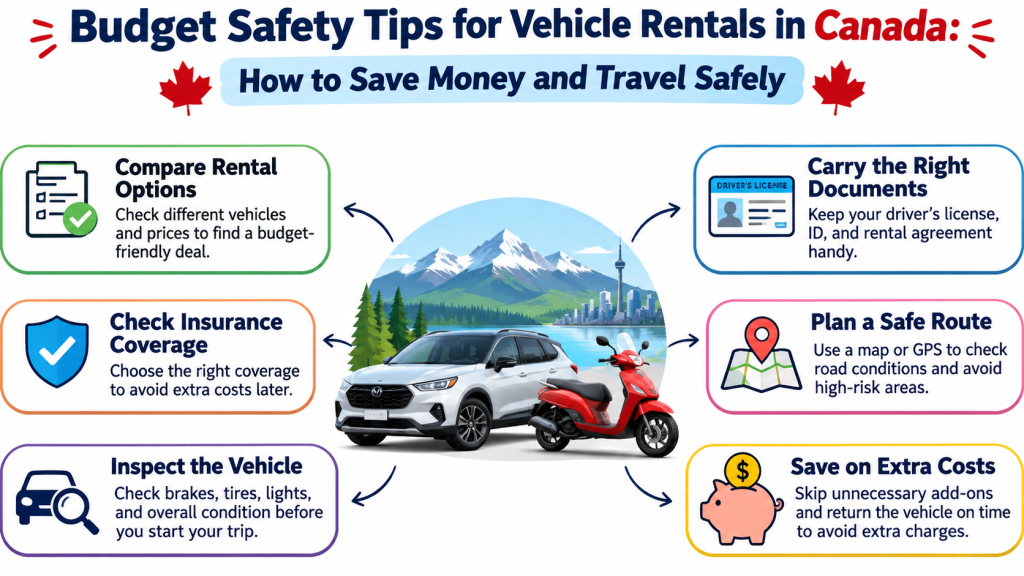
Practical Budget Safety Tips for Vehicle Rentals in Canada
A safe rental experience starts with smart spending decisions.
The following tips can help you control expenses without ignoring important safety requirements.
Book Early
Booking early can provide more vehicle choices.
It may also help you avoid limited availability during busy travel periods.
Compare different providers before paying.
Choose a Vehicle That Matches Your Budget
Do not rent a larger or more expensive vehicle without a clear reason.
Choose a suitable option based on passenger numbers, luggage, and travel distance.
Avoid Unnecessary Extras
Rental companies may offer optional services and accessories.
Review these charges carefully.
Pay only for the additional services you actually need.
Understand Insurance Costs
Insurance can significantly affect your rental budget.
Review available protection and check whether an existing personal policy or payment card offers relevant rental coverage.
Confirm the terms directly with the insurer or card provider.
Keep Inspection Records
Take photographs of the vehicle before departure.
Record existing scratches, dents, and interior damage.
Keep these records until the provider confirms the return inspection.
Plan Fuel Expenses
Estimate your travel distance and expected fuel consumption.
Avoid unnecessary journeys when several attractions are located close together.
Check Roadside Assistance
Ask whether the rental provider includes roadside assistance.
Save the contact number before starting your trip.
Understand the procedure for breakdowns and mechanical problems.
Return the Vehicle on Time
Late returns can increase rental expenses.
Allow enough time for traffic, refueling, and vehicle inspection.
Request a return confirmation and keep it with your booking records.
Safe Driving Practices for Canadian Roads
Driving conditions can change between cities, highways, and rural areas.
Weather can also affect road safety.
Follow these precautions throughout your journey.
Follow Provincial Traffic Rules
Learn the traffic rules of the province or territory where you plan to drive.
Pay attention to speed limits, traffic signs, parking regulations, and local restrictions.
Always Wear Seat Belts
Drivers and passengers should use seat belts.
Motorcycle riders should wear approved helmets and appropriate protective clothing.
Maintain a Safe Speed
Follow posted speed limits and adjust your speed to road conditions.
Avoid sudden braking and aggressive driving.
Prepare for Snow and Ice
Winter roads may become slippery and difficult to navigate.
Check weather forecasts and road conditions before traveling.
Make sure the rental vehicle meets applicable seasonal tire requirements.
Avoid Phone Distractions
Do not handle your phone while driving.
Set your navigation system before starting the vehicle.
Stop safely if you need to check directions.
Keep Emergency Information Ready
Save the rental provider’s contact details and roadside assistance information.
Call 911 for emergencies involving immediate danger or urgent medical assistance.
Take Breaks During Long Journeys
Driving while tired increases accident risks.
Take regular breaks and avoid continuing when you feel sleepy.
Average Vehicle Rental Prices in Canada
Rental costs depend on vehicle category, location, season, availability, and booking duration.
The following figures are broad planning estimates in Canadian dollars. They are not guaranteed market rates.
| Vehicle Category | Estimated Daily Rental Cost |
|---|---|
| Economy Car | CAD $35–$70 |
| Compact Car | CAD $40–$85 |
| Standard Sedan | CAD $50–$100 |
| SUV | CAD $65–$140 |
| Premium Car | CAD $100–$250+ |
| Motorcycle | CAD $70–$180+ |
| Electric Vehicle | CAD $60–$140 |
These estimates may exclude taxes, insurance, fuel, deposits, and optional services.
Ways to Reduce Your Rental Budget
- Compare daily and weekly rental packages.
- Avoid unnecessary vehicle upgrades.
- Check airport pickup charges.
- Review mileage restrictions.
- Understand fuel return conditions.
- Book before peak travel periods.
- Compare cancellation policies.
- Check all additional fees before payment.
A complete cost comparison helps you avoid unpleasant surprises.
Common Vehicle Rental Mistakes to Avoid
First-time renters sometimes focus too much on booking speed and advertised prices.
This can lead to avoidable problems.
Here are mistakes worth avoiding.
Ignoring additional charges: Taxes, insurance, deposits, and optional services can increase the final bill.
Skipping the inspection: Existing damage should always be recorded before departure.
Choosing the wrong vehicle: A small car may not suit a large family or luggage-heavy journey.
Ignoring mileage restrictions: Additional distance charges can increase your expenses.
Forgetting fuel requirements: Returning a vehicle with insufficient fuel may create extra costs.
Not checking insurance: Understand what the policy covers before accepting the vehicle.
Ignoring weather conditions: Choose a suitable vehicle and prepare for seasonal road challenges.
Returning the vehicle late: Plan your return journey carefully.
Not keeping booking records: Save receipts, photographs, payment confirmations, and return documents.
Avoiding these mistakes can make vehicle rentals easier and more predictable.
Vehicle Rental vs Public Transport vs Taxi in Canada
Travelers can choose from several transportation options.
The best choice depends on their destination, budget, and travel plans.
| Comparison Factor | Vehicle Rental | Public Transport | Taxi |
|---|---|---|---|
| Cost | Depends on rental period and vehicle | Often affordable | Can become expensive |
| Convenience | Flexible travel schedule | Depends on routes | Direct transportation |
| Flexibility | High | Limited to available routes | Moderate |
| Comfort | Depends on vehicle | Varies by service | Private travel |
| Travel Experience | Independent exploration | Local city experience | Direct journeys |
| Best Use Cases | Road trips and family travel | Regular city commuting | Short trips and transfers |
When Is a Rental Vehicle Better?
A rental vehicle may be useful when visiting several attractions or traveling between different towns.
It can also suit families and groups who share the rental cost.
When Is Public Transport Better?
Public transportation often works well for regular city travel.
Cities such as Toronto, Montreal, and Vancouver offer public transit options for many common journeys.
When Is a Taxi More Convenient?
Taxis can help with short trips, airport transfers, and journeys where driving is inconvenient.
However, frequent taxi use may increase transportation expenses.
Compare all three options before deciding.
How MotoShare Canada Supports Convenient Vehicle Rentals
Finding the right vehicle is an important part of planning a successful journey.
MotoShare Canada aims to make vehicle rental discovery and booking more convenient by connecting renters with vehicle providers.
Here are some platform features and benefits travelers should consider.
Easy Online Booking
Online booking helps travelers explore rental choices before reaching their destination.
It can make the vehicle selection process more convenient.
Different Vehicle Choices
Travelers have different transportation requirements.
Some need compact vehicles for city travel. Others prefer cars or motorcycles for longer journeys.
Available vehicle categories can help customers find suitable options.
Clear Pricing Information
Transparent rental information helps customers understand potential expenses.
Travelers should check the rental price, security deposit, insurance, and additional charges before confirming payment.
Vehicle Owner Information
Rental providers play an important role in the customer experience.
Review available vehicle details and provider information before making a reservation.
Confirm vehicle condition and applicable rental requirements directly.
Flexible Rental Durations
Different travelers need vehicles for different periods.
Some require short-term transportation, while others need longer rental arrangements.
Check available rental durations and provider conditions.
Canadian Destination Planning
Travelers may need vehicles in different Canadian cities.
Popular destinations include:
- Toronto for sightseeing and business travel.
- Vancouver for coastal journeys and city exploration.
- Montreal for cultural attractions.
- Calgary for city transportation and nearby outdoor destinations.
- Ottawa for business and leisure travel.
Check actual platform availability before making travel plans.
For a reliable customer experience, always review the latest booking conditions and vehicle details.
Frequently Asked Questions About Vehicle Rentals in Canada
1. How Can I Find Affordable Vehicle Rentals in Canada?
Compare multiple providers and check the complete rental cost. Book early when possible, choose a suitable vehicle, and avoid unnecessary extras.
2. Can International Tourists Rent Vehicles in Canada?
Yes. International tourists can generally rent vehicles if they meet applicable licensing, identification, age, and payment requirements.
3. Do Foreign Visitors Need an International Driving Permit?
Some visitors may need an IDP, depending on their original driving license and provincial requirements. Check local rules before booking.
4. What Is the Average Daily Car Rental Price in Canada?
Economy car rentals may cost approximately CAD $35–$70 per day as a planning estimate. Prices vary by location, season, and rental provider.
5. Are Helmets Included With Motorcycle Rentals?
Helmet availability depends on the provider. Confirm the equipment, condition, fit, and applicable safety requirements before accepting the motorcycle.
6. Can I Rent a Vehicle Without Paying a Deposit?
Many rental providers require a security deposit. Requirements differ between companies, so confirm payment conditions before booking.
7. What Should I Do if My Rental Vehicle Breaks Down?
Contact the rental provider or roadside assistance service. Follow their instructions and avoid unauthorized repairs.
8. Can I Drive a Rental Vehicle Between Canadian Cities?
Many providers allow travel between cities. However, geographical restrictions and one-way fees may apply. Read the rental agreement carefully.
9. Does Rental Insurance Cover All Vehicle Damage?
No. Coverage depends on the insurance policy and rental agreement. Check exclusions, deductibles, liability limits, and other conditions.
10. What Should I Inspect Before Driving a Rental Vehicle?
Check tires, brakes, lights, mirrors, seat belts, windshield, and dashboard warnings. Photograph existing damage before departure.
11. Is Renting a Car Better Than Taking a Taxi?
A rental car may offer better value for multiple journeys and longer trips. Taxis can be more convenient for occasional short journeys.
12. Can Students Rent Vehicles in Canada?
Students can generally rent vehicles if they meet the provider’s licensing, age, identification, and payment requirements.
13. Are Electric Rental Cars Affordable?
Electric vehicles may reduce fuel expenses on suitable routes. However, rental prices, charging costs, and charging availability affect the overall budget.
14. Which Vehicle Is Best for a Canadian Road Trip?
The right vehicle depends on your destination, passenger count, luggage, and road conditions. Economy cars suit many regular routes, while SUVs may offer extra space.
15. How Can I Avoid Hidden Vehicle Rental Charges?
Read the rental agreement and ask about insurance, mileage, fuel, deposits, cleaning, late returns, and additional driver charges.
Conclusion
Renting a vehicle can make Canadian travel more flexible and convenient. It gives tourists, families, students, and working professionals greater control over their transportation plans.
However, finding an affordable rental requires careful planning. Compare providers, choose the right vehicle, understand insurance, and check all additional charges before booking.
Vehicle safety deserves equal attention. Inspect the tires, brakes, lights, and other essential features before departure. Follow local traffic rules and prepare for changing weather conditions.
A good rental experience depends on balancing cost, convenience, and safety. Small decisions, such as booking early and checking the rental agreement, can help prevent unnecessary expenses.