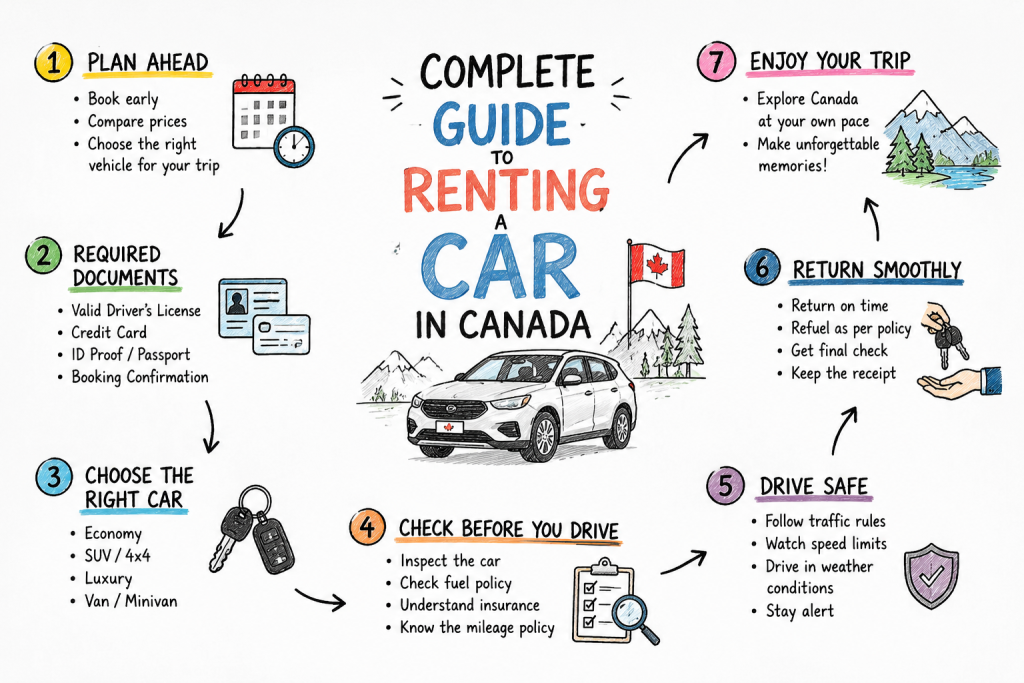
Introduction
Renting a car in Canada can transform your travel experience. Whether you’re exploring the scenic Rocky Mountains, cruising along the Cabot Trail in Nova Scotia, or navigating the bustling streets of Toronto and Vancouver, having your own vehicle offers unmatched freedom and convenience. Unlike public transport, which can be restrictive and time-consuming, a rental car allows you to set your own pace, explore hidden gems, and enjoy a stress-free journey.
This guide covers everything first-time travelers need to know about renting a car in Canada, including benefits, vehicle options, safety tips, costs, and how MotoShare Canada simplifies the entire process.
Why Renting a Car in Canada Is a Smart Choice
- Flexibility: Travel on your schedule without relying on public transport.
- Comfort: Avoid crowded buses and trains while enjoying air-conditioned vehicles.
- Accessibility: Reach remote areas and scenic spots that aren’t well-connected by public transit.
- Cost-Effective for Groups: Sharing a rental car with friends or family can be more economical than multiple taxis.
- Time-Saving: Minimize wait times and transfers, especially on tight itineraries.
Who Should Rent a Car in Canada?
- Tourists: Explore cities, national parks, and countryside at your own pace.
- Students & Exchange Visitors: Ideal for commuting between campuses or city exploration.
- Business Travelers: Attend meetings across multiple locations efficiently.
- Backpackers & Adventurers: Access remote trails, camping sites, and road trips.
- Daily Commuters or Short-Term Visitors: Flexible options for temporary stays.
Benefits of Renting a Car for First-Time Travelers
- Freedom of Itinerary: No restrictions on schedules or stops.
- Personal Space: Comfortable, private environment compared to public transit.
- Tailored Travel: Choose a vehicle that suits your trip length, passenger count, and luggage needs.
- Cost Transparency: Clear rental rates with optional insurance and add-ons.
- Support & Assistance: Rental agencies provide breakdown support, roadside assistance, and 24/7 helplines.
Types of Vehicles You Can Rent in Canada
Sedans
- Comfortable for city driving and long highway trips.
- Fuel-efficient and easy to park in urban areas.
SUVs
- Ideal for families or groups.
- More space for luggage and safer on winter roads.
Minivans
- Suitable for large groups or travelers with multiple bags.
- Extra seating and cargo space for road trips.
Pickup Trucks
- Great for adventure travelers needing off-road capability.
- Can carry sports equipment or camping gear.
Electric Vehicles
- Eco-friendly option for short trips in cities.
- Access to charging infrastructure in urban areas.
How to Choose the Right Car for Your Trip
- Trip Distance: City trips vs long-distance drives require different fuel capacities.
- Passenger & Luggage Count: Consider seating and trunk space.
- Road Conditions: Winter driving may require 4WD or AWD.
- Fuel Efficiency: Helps manage cost for longer journeys.
- Rental Budget: Compare compact cars, sedans, and premium vehicles.
Documents Usually Needed to Rent a Car in Canada
- Valid Driving License: International Driving Permit recommended for non-Canadian residents.
- Government ID Proof: Passport or national ID card.
- Address Proof (if applicable): May be requested by certain agencies.
- Credit Card: Usually required for deposit and payment.
- Security Deposit Requirements: Typically refundable upon vehicle return.
Things to Check Before Renting a Car
- Vehicle Condition: Inspect for scratches, dents, and mechanical issues.
- Fuel Policy: Full-to-full is most common.
- Insurance Coverage: Verify liability, collision, and personal coverage.
- Mileage Limits: Understand daily or total mileage restrictions.
- Rental Agreement Terms: Check for additional fees, late return policies, and cancellation rules.
Safety Tips for Driving a Rental Car in Canada
- Follow Traffic Rules: Observe speed limits and road signs.
- Wear Seatbelts: Mandatory for all passengers.
- Plan for Winter: Check for snow tires, chains, and road alerts.
- Keep Emergency Contacts Handy: Know local emergency numbers and rental support.
- Avoid Distracted Driving: Use hands-free devices and avoid multitasking.
Cost of Renting a Car in Canada
| Vehicle Type | Average Price per Day (CAD) | Notes |
|---|---|---|
| Sedans | 40–70 | Compact cars ideal for city travel. |
| SUVs | 70–120 | Larger space, safer on long drives. |
| Minivans | 90–150 | For 5–7 passengers and luggage. |
| Pickup Trucks | 80–130 | Adventure and equipment transport. |
| Electric Vehicles | 60–100 | Eco-friendly option in urban areas. |
Prices may vary based on location, season, and rental duration.
Common Mistakes First-Time Travelers Should Avoid
- Ignoring insurance options or coverage limits.
- Failing to inspect the vehicle for damages before departure.
- Not understanding fuel policies.
- Overlooking winter driving requirements.
- Leaving contact information or documents unverified with the rental agency.
Car Rental vs Public Transport vs Taxi
| Mode | Cost | Convenience | Flexibility | Comfort | Travel Experience | Best Use Case |
|---|---|---|---|---|---|---|
| Rental Car | Moderate | High | High | High | Personalized | Road trips, sightseeing, group travel |
| Public Transport | Low | Moderate | Low | Moderate | Local experience | Budget travel, city commute |
| Taxi / Ride-hailing | High | High | Moderate | High | Short trips, flexible | Airport transfers, single trips |
How MotoShare Canada Can Help Travelers
- Easy Online Booking: Reserve vehicles in minutes via website.
- Wide Range of Vehicles: Sedans, SUVs, minivans, pickup trucks, and EVs.
- Transparent Pricing: No hidden charges; upfront quotes.
- Verified Vehicle Owners: Quality assurance for all vehicles.
- Flexible Rental Options: Hourly, daily, and weekly rentals.
- Availability Across Canadian Cities: Toronto, Vancouver, Montreal, Calgary, Ottawa, and more.
MotoShare Canada simplifies self-drive vehicle rental, ensuring a smooth and cost-effective experience for travelers.
FAQs
1- Can tourists rent a car in Canada?
Yes, tourists can rent vehicles with a valid international driving license or permit. Age restrictions may apply depending on the rental agency.
2- Is an international driving permit required?
It is recommended for non-Canadian residents, especially when your home license is not in English or French.
3- How much does car rental cost in Canada?
Costs vary by vehicle type, season, and city. Sedans typically start at 40 CAD/day, while SUVs range between 70–120 CAD/day.
4- Are insurance and breakdown coverage included?
Basic liability is usually included. Comprehensive coverage and roadside assistance may be optional or additional.
5- Can I rent a car without a deposit?
Most agencies require a refundable deposit using a credit card. Exceptions may exist with prepaid plans.
6- What happens if the car breaks down?
Contact the rental provider immediately. MotoShare Canada offers support and alternative arrangements.
7- Can I take the car to another city or province?
Generally yes, but verify restrictions in your rental agreement. Cross-provincial travel may have additional fees.
8- Do I need to return the car with a full tank?
Typically, rental agreements follow a full-to-full fuel policy. Check your agreement for details.
9- Are child seats available?
Yes, agencies may provide car seats upon request for an additional fee.
10- What should I do in case of an accident?
Report immediately to the rental company and local authorities, and follow the insurance protocol outlined in your rental agreement.
Conclusion
Renting a car in Canada provides unmatched freedom, comfort, and flexibility for travelers of all types. Whether exploring urban centers or remote scenic destinations, a rental car ensures you have full control of your journey. With MotoShare Canada, you can enjoy a seamless self-drive experience with verified vehicles, transparent pricing, and flexible rental options across major cities.