Introduction
Owning a car comes with a steady stream of financial responsibilities. From monthly loan payments and routine maintenance to insurance premiums and rapidly rising fuel costs, keeping a vehicle on the road requires a continuous investment. However, for a significant portion of the week, many personal cars remain parked in driveways or apartment garages, sitting completely idle. Transforming this depreciating asset into a productive source of supplementary income is one of the smartest financial decisions a modern vehicle owner can make.
Whether you want to offset your monthly auto expenses, build a reliable side hustle, or fully maximize the value of your vehicle, peer-to-peer car sharing and smart rental strategies present an accessible solution. This comprehensive guide explores practical, budget-friendly methods vehicle owners can utilize to turn their cars into revenue-generating assets while maintaining full control over safety, scheduling, and vehicle care.
Why Renting Out Your Car Is a Smart Financial Choice
For decades, vehicle ownership was viewed strictly as a sunk cost. Once you drive a car off the dealership lot, depreciation begins immediately, compounded by ongoing insurance and upkeep. Listing your vehicle on a trusted platform shifts this financial paradigm completely.
- Offset Ownership Costs: The revenue generated from sharing your car can easily cover your monthly auto loan, insurance, and routine servicing.
- Maximize Asset Utilization: Most personal vehicles are used for only a fraction of the day. Renting them out during idle hours puts that unused capacity to work.
- Zero Upfront Investment: Unlike starting a traditional business, you do not need to buy inventory or commercial property; your existing vehicle is your enterprise.
- Flexible Participation: You decide when your car is available and when you need it for personal use, ensuring complete schedule autonomy.
Who Can Benefit from Sharing Their Vehicle?
Vehicle sharing is not restricted to commercial fleets or professional rental agencies. Everyday car owners from diverse backgrounds can benefit greatly by opening their vehicles up to verified renters:
- Remote Workers: Individuals who work from home and leave their cars parked for days at a time.
- Urban Commuters: Professionals who rely on public transit during weekdays and leave their cars idle.
- Multi-Car Households: Families or couples who own two vehicles but primarily use only one.
- Frequent Travelers: People who frequently fly out for business or vacations, leaving their cars sitting unused at home or airport parking lots.
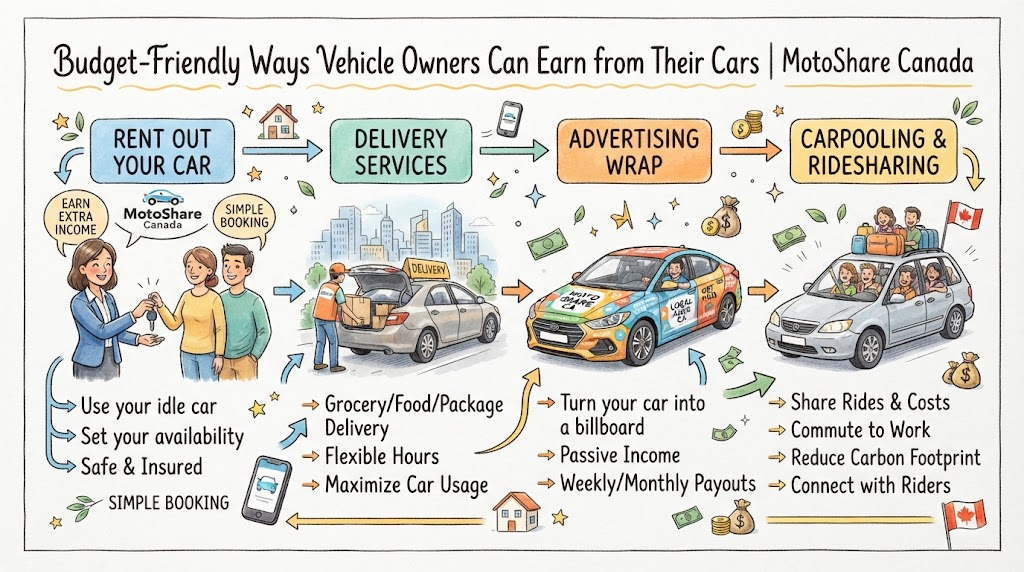
Practical Ways Vehicle Owners Can Earn from Their Cars
Monetizing your car goes beyond traditional long-term leasing. Modern peer-to-type networks and flexible sharing models offer several pathways to suit your comfort level and schedule.
1. Peer-to-Peer Car Sharing Marketplaces
Listing your car on a reputable platform allows you to rent it out by the hour, day, or week. The platform handles digital bookings, user verification, and payment processing, making it a seamless experience for everyday owners.
2. Targeted Weekend Rentals
Many city dwellers look for cars only on weekends for getaways or road trips. By setting your vehicle availability specifically for Friday through Sunday, you capture high-demand rental periods while keeping the car free for your own weekday routine.
3. Long-Term Fleet or Specialized Sharing
If you own multiple cars or commercial vehicles, you can rent them out to rideshare drivers, delivery contractors, or individuals needing temporary transportation for specific employment contracts.
Benefits of Vehicle Sharing for Car Owners
Participating in a vehicle-sharing ecosystem provides numerous distinct advantages over traditional car-leasing arrangements:
- Comprehensive Insurance Protection: Modern platforms feature robust insurance policies that protect your vehicle against physical damage and third-party liabilities during active rentals.
- Thorough Renter Screening: Advanced identity verification ensures that only licensed drivers with clean driving records get behind the wheel of your car.
- Transparent Pricing Control: You retain the authority to set your daily rates based on seasonal demand, vehicle model, and local market trends.
- Secure Payment Systems: Automated payout structures eliminate the risk of delayed payments or cash handling issues.
Types of Vehicles That Perform Best on Rental Platforms
Different types of vehicles cater to varying consumer demands. Understanding where your vehicle fits helps optimize your earnings potential:
- Fuel-Efficient Hatchbacks and Sedans: Highly sought after by daily commuters and budget-conscious urban travelers looking for low fuel consumption.
- Spacious SUVs and Crossovers: Popular among families and groups planning weekend road trips or outdoor excursions.
- Luxury and Premium Vehicles: Ideal for special occasions, business meetings, corporate events, and upscale tourism.
- Electric and Hybrid Vehicles: Attracting eco-friendly drivers seeking sustainable mobility options with minimal running costs.
Steps to Prepare Your Car for Successful Rentals
Maximizing your rental income requires presenting your vehicle in top-tier condition. Cleanliness, reliability, and accuracy are vital for attracting repeat renters.
- Deep Cleaning and Detailing: Regularly vacuum the interior, clean the windows, wipe down dashboard surfaces, and wash the exterior.
- Mechanical Inspection: Check tire pressure, brake pads, fluid levels, and battery health to prevent unexpected breakdowns.
- Keep Documents Updated: Ensure vehicle registration, insurance papers, and inspection certificates are securely stored in the glove compartment.
- Remove Personal Valuables: Clear out all personal items, chargers, and documents that are not relevant to the renter.
Essential Safety Precautions for Vehicle Owners
Protecting your investment is just as important as generating income from it. Implementing basic safeguards ensures peace of mind throughout every rental period.
- Verify Renter Profiles: Always check that the platform has successfully validated the renter’s driver’s license and identity.
- Document Vehicle Condition: Take clear photographs of the interior and exterior before and after every trip to track any changes.
- Set Clear Ground Rules: Establish straightforward policies regarding smoking, pet transport, and mileage limits.
- Monitor Mileage and Usage: Keep track of odometer readings to ensure vehicles are driven within agreed boundaries.
Financial Breakdown: Estimating Your Potential Earnings
Your earning potential depends on several factors, including your vehicle’s make, model, location, and how many days a month it is available. Below is a general average breakdown of daily rental rates based on vehicle category:
| Vehicle Category | Average Daily Rental Rate | Best Suited For |
| Economy Hatchback | Moderate | Daily commuting, city errands, students |
| Sedan / Family Car | Competitive | Road trips, small family travel, professionals |
| Premium / Luxury Car | High | Corporate events, weddings, luxury tourism |
| SUV / Crossover | High | Adventure travel, group trips, outdoor excursions |
Common Mistakes Vehicle Owners Should Avoid
Avoiding common pitfalls ensures a smooth, profitable, and stress-free vehicle-sharing experience:
- Ignoring Maintenance Schedules: Delaying routine oil changes or brake inspections can lead to poor renter reviews and costly mechanical issues.
- Setting Unrealistic Pricing: Pricing your car too high reduces booking frequency, while pricing it too low leaves money on the table. Balance rates according to local market demand.
- Skipping Pre-Trip Inspections: Failing to document existing scratches or dents can create disputes regarding damage liability.
- Neglecting Communication: Slow response times to booking requests often drive prospective renters to competing listings.
Vehicle Sharing vs Traditional Leasing vs Selling
Evaluating how vehicle sharing stacks up against other alternatives helps clarify its long-term financial benefits:
| Feature | Vehicle Sharing | Traditional Leasing | Selling the Car |
| Cost Control | Generates income to offset expenses | Fixed monthly payments with no return | Eliminates asset control entirely |
| Flexibility | Complete control over availability | Rigid long-term contracts | Permanent loss of vehicle access |
| Comfort | Retain vehicle ownership for personal use | Temporary usage rights | No personal vehicle available |
| Financial Impact | Turns an idle asset into a revenue source | Continuous out-of-pocket expense | One-time cash influx with high replacement cost |
How MotoShare Canada Helps Vehicle Owners Succeed
Partnering with a reliable platform makes the entire earning process seamless and secure. MotoShare Canada offers a comprehensive ecosystem designed to empower vehicle owners:
- Easy Online Listing: Publish your vehicle within minutes using an intuitive, user-friendly digital interface.
- Zero Hidden Fees: Enjoy a transparent platform structure focused on connecting owners directly with dependable renters.
- Verified Community: Connect with pre-screened, trusted drivers who respect your vehicle and adhere to platform guidelines.
- Flexible Scheduling: Block out dates whenever you need your car for personal travel or family use.
- Nationwide Reach: Access a broad audience of travelers, tourists, and commuters actively looking for reliable transportation options.
Frequently Asked Questions
1. Can anyone list their car on MotoShare Canada?
Yes, any individual who legally owns a registered vehicle in good working condition can list their car on the platform.
2. How is my car protected during a rental?
Platform partnerships include robust insurance coverage and verification protocols to safeguard your vehicle against damage and unauthorized use.
3. Can I choose who rents my car?
Owners have visibility into renter profiles, ratings, and verification details before approving booking requests.
4. What happens if the car gets a parking ticket or toll fine?
Renters are legally responsible for any traffic violations, parking tickets, or toll charges incurred during their active rental period.
5. How are earnings paid out to vehicle owners?
Earnings are securely transferred directly to your designated bank account following the completion of successful rentals.
6. Can I set custom availability for my car?
Yes, you maintain full control over your calendar and can block out specific days or weeks when you need the car yourself.
7. What types of vehicles can be listed?
You can list a wide range of vehicles, including economy hatchbacks, sedans, SUVs, and luxury models.
8. Are there any upfront fees to list my car?
Listing your vehicle is completely free, with transparent terms designed to maximize your net earnings.
9. What if my car breaks down during a rental trip?
Most rentals include roadside assistance support to handle unexpected mechanical issues safely and efficiently.
10. How do I determine the right daily rate for my car?
You can review similar vehicle listings in your area on MotoShare Canada to set a competitive and attractive price point.
Conclusion
Turning your idle vehicle into a revenue-generating asset is a practical, effective way to combat the rising costs of modern car ownership. By leveraging peer-to-peer sharing networks, you retain full ownership of your vehicle while helping travelers, commuters, and tourists find reliable transportation.
Ready to transform your parked car into a steady stream of extra income? List your vehicle today and start earning with MotoShare Canada (motoshare.ca)!