Introduction
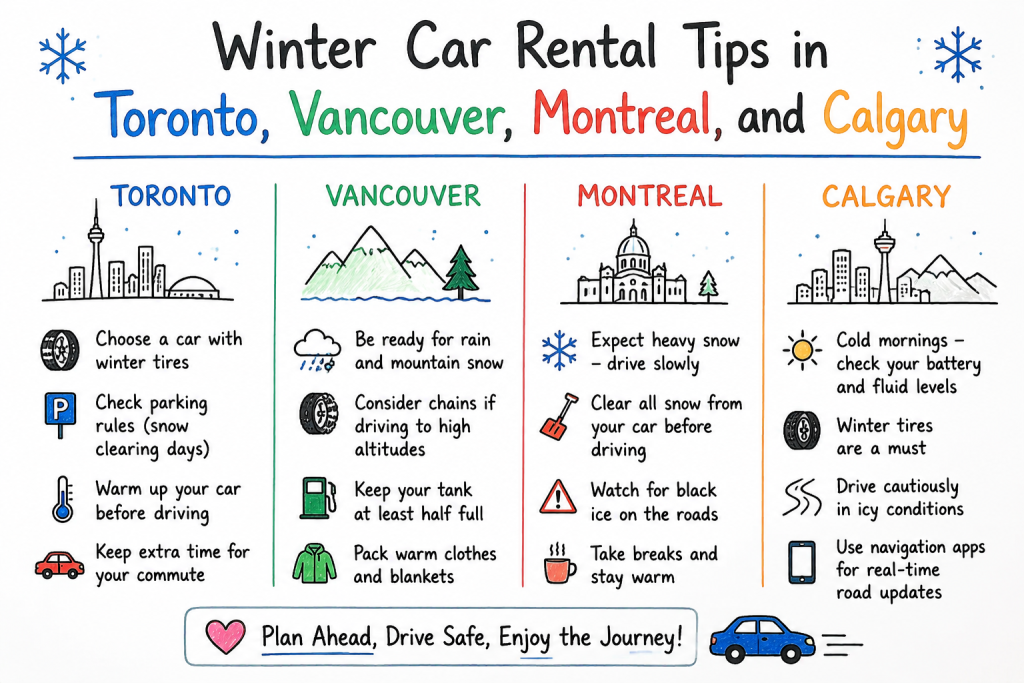
Winter in Canada brings picturesque snow-covered landscapes but also challenging driving conditions, especially in cities like Toronto, Vancouver, Montreal, and Calgary. Renting a car during these months can provide flexibility, comfort, and convenience, but it requires careful planning to navigate icy roads, snowstorms, and reduced visibility. Whether you’re a first-time traveler, tourist, student, or working professional, understanding winter car rental tips can make your trip safer, smoother, and more enjoyable.
Real-world use cases include:
- Exploring snow-covered tourist destinations like Banff near Calgary or Grouse Mountain near Vancouver.
- Commuting between airports and hotels during peak winter hours in Toronto and Montreal.
- Visiting family and friends during the holiday season safely.
- Short trips for work or leisure while avoiding public transport delays.
What travelers should evaluate:
- Vehicle types and availability for winter conditions.
- Winter tires, snow chains, and safety features.
- Insurance coverage for winter-specific incidents.
- Fuel policies and mileage limits for snowy terrain.
Best for:
Travelers seeking comfort, flexibility, and safety during winter months.
Not ideal for:
Those unfamiliar with driving in snow or icy conditions without prior experience or winter driving knowledge.
Why Renting a Car in Winter Is a Smart Choice
Renting a car during Canadian winters offers several advantages:
- Safety: Modern rental vehicles often come equipped with ABS brakes, traction control, and winter tires.
- Flexibility: Avoid waiting for delayed public transportation in snowstorms.
- Comfort: Stay warm and maintain control of travel routes, stops, and schedules.
- Cost-effectiveness: For groups or families, renting can be cheaper than multiple taxi rides.
Who Should Rent a Car in Winter?
- Tourists and travelers exploring Canadian cities.
- Students commuting to universities in snowy regions.
- Professionals attending winter conferences or business meetings.
- Families on holiday trips seeking flexibility.
- Backpackers or solo travelers needing mobility for winter excursions.
Benefits of Renting a Car for First-Time Travelers
- Ease of navigation: GPS-enabled rental cars help newcomers find destinations safely.
- Controlled travel pace: Avoid rushing or waiting in extreme cold.
- Local experience: Access scenic winter destinations beyond city limits.
- Peace of mind: Properly maintained rental cars reduce breakdown risks.
Types of Cars You Can Rent in Winter
- Compact Cars: Fuel-efficient, ideal for city driving in light snow.
- Sedans: Comfortable for small families and moderate snow conditions.
- SUVs: Best for heavy snow, icy roads, and mountain excursions.
- Luxury Vehicles: For travelers wanting premium comfort and safety features.
- Electric Vehicles: Environment-friendly, but consider battery performance in cold weather.
How to Choose the Right Car for Your Trip
- Assess road conditions: Heavier snow may require an SUV or AWD vehicle.
- Consider passenger and luggage needs: Families may need larger sedans or SUVs.
- Check winter-specific features: Ensure ABS, winter tires, and defrosters are included.
- Fuel type: Diesel or petrol options based on local fuel availability.
Documents Usually Needed to Rent a Car
- Valid Driving License: Must be recognized in Canada; International Driving Permit recommended for tourists.
- Government ID Proof: Passport or national ID card.
- Address Proof: Required for residents, not tourists.
- Security Deposit Requirements: Usually held on a credit card.
Things to Check Before Renting a Car
- Vehicle Condition: Check brakes, lights, tires, and windshield wipers.
- Fuel Policy: Full-to-full is recommended for transparency.
- Insurance Coverage: Verify winter-related coverage.
- Mileage Limits: Understand daily or total mileage restrictions.
- Rental Agreement Terms: Read cancellation, roadside assistance, and damage clauses carefully.
Safety Tips for Driving in Winter
- Follow Traffic Rules: Adjust speed for icy roads.
- Wear Seat Belts and Use Headlights: Visibility is crucial.
- Avoid Overspeeding: Even a minor skid can cause accidents.
- Check Weather and Road Conditions: Use local apps or radio alerts.
- Keep Emergency Contacts Handy: Tow services, rental agency, and roadside assistance numbers.
Cost of Car Rental in Winter
Average rental price ranges in Canadian cities:
- Compact Cars: CAD 40–60 per day
- Sedans: CAD 50–80 per day
- SUVs: CAD 70–120 per day
- Luxury Vehicles: CAD 100–200 per day
Prices vary depending on location, insurance, and seasonal demand.
Common Mistakes First-Time Winter Drivers Make
- Driving without checking tire conditions.
- Ignoring weather alerts.
- Overestimating vehicle handling in snow.
- Not carrying emergency supplies (blankets, water, food).
- Failing to check rental insurance and roadside assistance.
Car Rental vs Public Transport vs Taxi
| Factor | Car Rental | Public Transport | Taxi/Ride-share |
|---|---|---|---|
| Cost | Moderate | Low | High |
| Convenience | High | Medium | Medium |
| Flexibility | High | Low | Medium |
| Comfort | High | Low | Medium |
| Travel Experience | Scenic, private | Crowded | Limited |
| Best Use Case | Families, tourists, multi-stop trips | Daily commuting, budget travel | Short trips, city center |
How MotoShare Canada Can Help Travelers
- Easy Online Booking: Reserve cars in a few clicks.
- Wide Range of Vehicles: From compact cars to SUVs.
- Transparent Pricing: No hidden fees or surprise charges.
- Verified Vehicle Owners: Ensure reliability and safety.
- Flexible Rental Options: Hourly, daily, or weekly rentals.
- Availability Across Cities: Toronto, Vancouver, Montreal, Calgary, and more.
FAQs
1- Can tourists rent a car in Canada during winter?
Yes, tourists can rent cars with a valid driving license and an international driving permit.
2- Is an international driving permit required?
It’s recommended for foreign travelers to ensure smooth rental and legal compliance.
3- How much does car rental cost in winter?
Prices vary; compact cars average CAD 40–60/day, SUVs CAD 70–120/day.
4- Are winter tires included in rentals?
Most rentals include winter tires in snowy cities, but always confirm with the provider.
5- Can I rent a car without a deposit?
Usually a security deposit on a credit card is required to cover potential damages.
6- What happens if the car breaks down?
Contact the rental agency or roadside assistance; MotoShare provides verified support options.
7- Can I take the car to another city?
Inter-city travel is usually allowed, but check terms for distance limits and insurance coverage.
8- Do rental cars come with GPS?
Most vehicles provide GPS or allow mobile navigation.
9- Is fuel included in the rental price?
Typically, a full-to-full fuel policy applies; refuel before returning.
10- Are additional drivers allowed?
Yes, with proper ID verification and possible extra fees.
Conclusion
Renting a car during winter in Toronto, Vancouver, Montreal, or Calgary provides safety, flexibility, and comfort for travelers navigating snowy roads. First-time drivers, tourists, students, and working professionals can all benefit from a well-planned rental, especially when paired with MotoShare Canada’s reliable services. Always check weather conditions, vehicle readiness, and insurance policies to ensure a hassle-free winter journey. Whether you’re commuting, sightseeing, or exploring Canada’s snowy landscapes, booking through MotoShare Canada (motoshare.ca) ensures an enjoyable, safe, and convenient travel experience.